Top
Best
New

Posted by jasondavies 10/26/2024

We Can Terraform the American West(caseyhandmer.wordpress.com)
246 points | 316 comments
doug_durham 10/26/2024|
At first I thought that this was a satire, but then the joke never landed. The author cites "Cadillac Desert" but then ignores everything in the book. This posting is fantasy in the same vein as "we can build a space habitat at L5 by 1995".

There is a lot of money to be made in water. If desalination was cost effective it would be being done today at scale. It isn't a regulatory issue, it is strictly economics. If someone could demonstrate the technology the author describes indefinite amounts of money would flow to them. It hasn't happened. It's not happening anywhere in the world.

Finally the author talks about pumping water up hill as though it is a trivial thing. 20% of all of the electricity generated in California goes to pumping water today. The author conveniently side steps the issue of building out the vast electrical grid needed just to pump the water. What was this even posted to hacker news?

ctoth 10/27/2024||
Hate to be glib, but this "if it were possible, someone would've done it" thinking is exactly why we're stuck. Your reasons sound smart. Well-reasoned. Totally rational. And they're missing something fundamental.

Know what 4% annual growth looked like from the 40s to the 70s? We doubled Americans' quality of life every 18 years - by building impossible things. The Hoover Dam? "Too big, too expensive." The Interstate Highway System? "Economically unfeasible." California's entire water system? "The requirements are insane!" They all got built anyway.

You're missing that there could be three hundred million more people working on this. That's a lot of clever Americans who could be solving water engineering and energy problems instead of writing HN comments about why it's too hard.

Don't be another NIMBY sad sack who's been rationalizing American decline since 1969. We used to build impossible things that transformed how people lived. Now we write elegant essays about why new infrastructure can't work, citing books about how hard the old infrastructure was to build - infrastructure we somehow built anyway.

Want that back? Stop listing why it's impossible and start asking how we do it anyway.

boringg 10/27/2024|||
I think you underestimate how much larger of a task terraforming the USA west is then say building a rail network through the US (which was an impressive feat) or building hoover dam(also impressive). Not only that the issue with terraforming the West is you are pulling sooo many resources away from productive uses into low value uses.

The American productivity and growth in the past were all large projects that reaped significant benefits of productivity.

Sometimes big projects are great ideas, sometimes they are well intentioned but bad ideas.

Don't worry theres no shortage of dreamers in America -- some of those dreams are great but not all of them.

Also trying to muscle through reasonable questions by trying to label them as some kind of Nimby sad sack is a poor strategy to influence people.

goatmanbah 10/27/2024|||
[flagged]
llamaimperative 10/27/2024||
It reads to me like they’re arguing the ROI and the opportunity cost aren’t worth it for this particular project.

“Why be a sourpuss” is not very convincing…

goatmanbah 10/27/2024||
It's obviously premature to dismiss the idea without actually determining ROI or opportunity cost.
cool_dude85 10/27/2024|||
I'd say it's the onus of the guy saving turn Fresno into a lakefront tech hub or whatever to provide some ROI numbers.
goatmanbah 10/27/2024||
This is why no one can build anything. You can't even have an idea without first doing all the work. That's insane. He doesn't owe anyone anything.
llamaimperative 10/27/2024||
In a way, you’re right. But of course the reason there are so many onerous regulations is because the market has demonstrated an inability to do this kind of thorough analysis itself prior to inflicting vast negative externalities on the commons.

Not that all of these regulations are perfect/necessary/ultimately good, but they’re not coming out of nowhere. There’s no one in some dingy room with filing cabinets dreaming up ways they can “slow down progress” for the fun of it.

llamaimperative 10/27/2024|||
Their analysis looks far more thorough than TFA or yours. Will patiently await a yet more thorough analysis that shows it is worth doing though, let me know if you find one.
narrator 10/27/2024||||
The Limits to Growth and The Population Bomb were published in the early 1970s. These books convinced many developed world politicians to put a break on almost all large scale infrastructure projects. Slowly the ideas of degrowth and depopulation have been pushed through many areas of society and culture.

One small exception, the sudden U-turn on nuclear power last month after 40 years of not building a nuke plant was only made possible by the dire need to beat China in the AI military race. Little of that power will go to civilian use and will be used to power massive data centers.

The failure to build hi-speed rail in the United States is a huge contrast to the non-stop obsession with climate change legislation, administrative agency activities and diplomacy that go on. It's so boring that nobody reports on it, but since I follow the energy sector I get the news alerts and there are non-stop climate negotiations, policy making and legislative pushes and so forth to do everything possible to implement the Limits to Growth and Net Zero 2050 agenda. Voters rank it fairly low on their list of issues they are concerned about though.

If you want to get really dark, there's this guy who's been popular in left of center intellectual publications pushing "Degrowth Communism" which is like communism but there is no prosperity for workers, just endless lowered standards of living to save the planet.

throwaway4220 10/27/2024||||
I feel your sentiment for sure but this is unfair criticism of the top post. Bold claims need proof.

To me it harkens back to the whole hyperloop thing which was such a disappointment that I am very skeptical of details. Doesn’t mean it’s not possible of course!

kibwen 10/27/2024||||
[dead]
SiempreViernes 10/27/2024||||
Why don't you apply that "can do" spirit to describin how we limit climate change within this decade? That would be more helpful for everyone.
ikiris 10/27/2024|||
This can be summed up with “physics isn’t real, we just need some American ingenuity.” Very similar to the argument given by the guy who ignored all engineers and made his own submersible out of carbon fiber.
rnrn 10/26/2024|||
> 20% of all of the electricity generated in California goes to pumping water today.

Hi, this is wrong. The 20% figure includes all electricity for water-related uses, not just pumping. Most of that (80-90%) is heating and other end uses, not pumping and transport.

boringg 10/27/2024||
It is true that end-use heating takes a lions share of the energy from the water-energy nexus in California.

That said conveyance and pumping water over the Tehachapi takes a pretty impressive workload. Water is lifted 1,926 feet by fourteen 80,000 horsepower pumps.

OP comment is that the article is flippant on pumping water. OP is correct that they shouldn't be and it is energy intensive.

Correct quote is "Water conveyance, treatment, delivery, heating, and sewage treatment account for about 20% of California's electricity and 30% of natural gas use."

jeffbee 10/27/2024||
It doesn't matter how inefficient this is because as it stands we are "curtailing" — which means throwing away — an insane amount of energy in the spring just because we can't figure out what to do with it. The amount of solar power curtailed so far in 2024 was more than enough to desalinate one million acre-feet of seawater and pump it to 1000' above sea level.
mike_d 10/27/2024||
Residential solar was a terrible idea. It only works during the day, it is hard to store, and you can't efficiently transport it to where there is demand without a major overhaul of the grid.

I guess you could pump seawater to affluent neighborhoods for processing, but then you need to rethink drinking water distribution.

It would have made so much more sense to just build nuclear plants along side desalination plants, but the oil industry convinced everyone that nuclear is a scary boogie monster.

xp84 10/28/2024||
Naive question: if we expanded a lot of residential and light commercial solar heavily enough, could the excess capacity no longer needed from the grid in the daytime be efficiently transmitted to where it’s needed?
Gibbon1 10/28/2024||
Somewhere I saw someones study that said it's better to build solar and batteries than solar and transmission lines. I think wind is maybe more of an issue since wind and people don't line up geographically as much as solar and people.
lukas099 11/1/2024||
I saw somewhere the opposite: that it’s better to build solar and transmission lines. So idk what the truth is.
oceanplexian 10/26/2024|||
> If desalination was cost effective it would be being done today at scale.

It is being done at scale in places like Israel. It doesn't even need base load power, you could run it with the infinite amount of cheap solar energy available in the Southwest. The only reason it isn't being done is places like California is entirely regulatory. In fact Arizona might get there first, there has been recent progress between them and Mexico to do desalination in the Sea of Cortez, which is only 60 miles from the Arizona boarder.

skybrian 10/26/2024|||
According to the article, intermittent operation is assuming new desalinization technology that needs to be invented:

> Current RO plants cost more like $2000/kW, so they’re both financially and technically unsuited to intermittent operation, which fatigues their membranes. Thermal desalination could achieve radically lower cost, albeit at lower energy efficiencies, so there’s work to be done here designing new, low cost desalination machines that fully exploit the upside of cheap solar PV.

And that’s largely the point of the article. It’s not being done yet, but he thinks it’s technically feasible and could be a game-changer. Big if true.

It’s not something we should plan on until the technology is further developed, but seems like worthwhile R&D to fund.

anon84873628 10/26/2024|||
Sounds like a great way to destroy one of the most diverse and unique marine ecosystems on the planet, thanks to the brine waste.
credit_guy 10/27/2024|||
I heard this concern many times. But with so many desalination plants already built, there must have been some environmental impact studies. I googled around and found one for the Carlsbad desalination plant in San Diego [1]. On page 66 you find this:

  > Concerns over marine life are also associated with increased salinity levels and exposure to high-saline water (brine). The proposed CDP modifications have been designed through an extensive process to minimize the impacts of mortality of fish species and larvae as part of the submittal to and requirements of the RWQCB. 
On page 85 you find that the average salinity prior to dilution is between 64 and 67 ppt (parts per thousand). Once it's diluted, it becomes 42 ppt and discharged in the sea. The average salinity of the sea in that region is 33.5 ppt with a natural variability of 4 ppt.

On page 150 you find out that the salinity of the discharge drops from the 42 ppt to withint 2ppt of the ambient within a circle of 200 meters radius from the discharge point. That zone is called the Brine Mixing Zone, and it has area of 15.5 acres.

[1] https://www.sdcwa.org/wp-content/uploads/2020/11/Final-SEIR-...

linotype 10/26/2024||||
Couldn’t you pump the brine waste into evaporation ponds and extract lithium and other materials from it?
cpeterso 10/26/2024||
Could we convert the brine waste to building materials? Truck it out to the desert and build a giant salt pyramid.
BurningFrog 10/26/2024||||
I'd have to see some real math to be convinced extracting fresh water from the ocean could raise salt levels enough to destroy the Sea of Cortez ecosystems.
alistairSH 10/27/2024||
Reasonable summary… https://www.wired.com/story/desalination-is-booming-but-what...

Hard numbers aren’t readily available because we don’t track discharge consistently (or at least didn’t).

And it’s not just the salt in the brine, but remnants of the chemicals used to defoul the RO systems.

The brine waste is nasty stuff and absolutely deadly to the local environment where it’s discharged.

kylebenzle 10/26/2024||||
It's a funny problem. Too expensive to pump it WAY out to sea, but too salty to be of any use?
mlsu 10/27/2024|||
No no no, you don't understand. We'll remove it from the environment. So the environment will be safe -- the byproducts will be disposed of outside of the environment!
teractiveodular 10/27/2024|||
Downvoters clearly haven't seen the legendary "the front fell off" video: https://youtu.be/3m5qxZm_JqM?feature=shared
burnte 10/27/2024|||
Well what's out there?
xp84 10/28/2024||
Nothing’s out there. All there is out there is sea, and birds and fish. And 20,000 tons of waste brine.
teucris 10/26/2024|||
This post is set in a beautiful, liminal place between fantasy and reality. Could we actually do all of this? Probably not. But we don’t think about the specifics of things like this enough. It challenges us to think about ideas like this in ways more practical problems cannot.

I read somewhere that we dream as a way for our brains, as complex predictive analytical machines, from overfitting. This kind of post feels the same, but for our collective intelligence.

ta_1138 10/26/2024|||
Go read Cadillac Desert: It's precisely about all the efforts, right between fantasy and reality, that have put is in the hole we are today. From straight out wishful thinking to really expensive investments that haven't ever come remotely close to paying for themselves. There's entire sections covering how we have spend very large amounts of money doing water works that just go to feed very low productivity farms. We dreamed, built, and just wasted money.

It's true that as solar gets cheaper, more parts of the world become livable. Byt why should we occupy more of the US with very expensive, low productivity suburbs? Is there no opportunity costs in piling more people into Phoenix?

But no, it's just more poetic to just spend billions upon billions to make the property of people living in a desert more valuable.

mikepurvis 10/26/2024|||
Doubling up on the CD recommendation; I saw it mentioned on HN years ago and read it and it completely changed the way I see water issues in the US, in particular the insight about how “wasted” water has a completely different meaning on the east coast vs the west.

To someone who has lived most of my life in Ontario, it’s an eye opener recognizing that drinkable water is insanely plentiful here relative to most of the rest of the world.

photonthug 10/27/2024||||
> property value of people living in a desert more valuable

People living in the desert (outside of phoenix and Vegas anyway) are probably thinking there is much more value in not being in the suburbs honestly, and I seriously doubt they want to trade this for more neighbors.

They still want infrastructure investment though, because there is little appeal in their taxes funding more development in urban centers that are already rich or repairing coastal areas after the next hurricane, etc. Forward looking investments in rural areas is a great way to boost the economy generally, to curb the scary rise of populist madness, and start to fix one of the major sources of division and angst in the USA and other places. If desalination makes no sense, how about a space elevator, hyper tunnel, or you know, decent cheap old school passenger rail options?

> We dreamed, built, and just wasted money.

A bit more nuance than that. First, there are reasonable arguments that desert living is/can be more energy efficient than heating the great frozen north, even prior to cheap solar. Whether things happen or we give up comes down to who is politically important more often than what is physically or economically easy. And one thing that is often forgotten about such efforts is that even projects that fail can be a net positive.. that is why we don’t cancel the space program after the first rocket crashes.

MichaelZuo 10/27/2024||
Why do you think your arguments/assertions/beliefs/opinions ought to carry greater weight than the parent’s?

Is there some compelling analysis, theoretical proof, etc…?

photonthug 10/27/2024||
You’re confused about the direction for the burden of proof here. I want infrastructure investment, and already mentioned that it really doesn’t matter if it’s desalination specifically. This creates jobs and general prosperity while it increases possibilities and capabilities historically, and has essentially already created everything you know and love about modern life.

If your position is that it’s better to do absolutely nothing, then it’s on you to show that railroads, dams, and interstates are useless and that the New Deal, the Hoover dam, the Ccc, etc were a net negative for society. Maybe you know of countries that were destroyed by good employment numbers or infrastructure investment?

Eagerly awaiting your own proofs and analysis.

tolciho 10/28/2024|||
Several no longer existing civilizations built out infrastructure that proved too complicated to maintain. So they had, for some time, "good employment numbers or infrastructure investment". Then they "were destroyed", or more often faded away as folks adapted, migrated, or died. Details can be scarce, as your stone carving artisans might simply stop making records. If there are any records. Some of these fallen civilizations had water-works that gave short term benefits, but eventually failed: the system became too complicated or too expensive to maintain, soil salinity grew, earthquakes cut the qanats, maybe there was a run of corrupt or incompetent leaders, wars and political unrest can complicate maintenance, or economic and trade changes can make a once profitable area irrelevant, and it's a pity about those changing rainfall patterns.

"Strong Towns" does exist as something of an antidote to mindless "it doesn't matter" infrastructure spending, and has pointed out various problems of popping up yet more suburbs that lack the tax revenue for maintenance. Or perhaps civilizations, like flowers, are all about short term gain before they fade away?

MichaelZuo 10/27/2024|||
You responded to the parent initially… I am not that user, so I didn’t make any such claims?

Are you confusing me with the other user?

photonthug 10/27/2024||
[flagged]
MichaelZuo 10/27/2024||
> No need to mortgage the Ferris wheel. Quadruplicity drinks procrastination whenever colorless green ideas sleep furiously

Huh? Is this an AI response?

mikhailfranco 10/27/2024|||
Cadillac Dessert - 1997 TV series based on the book (4hr)

https://www.youtube.com/watch?v=PR2BSGQt2DU

jazzyjackson 10/26/2024||||
That's a neat way to look at it. I've always thought of dreams as a kind of garbage collection where we produce simulated situations to test whether new information will help us or if it's irrelevant to us, and throw things out that we won't need to remember. I read that one reason we can kind of remember our dreams when we first wake up but can't 5 minutes later is because our brain has some method of forcing our interpretation of what we see into some kind of reasonable cohesion according to what we consider to be physically possible or likely - this region is inactive in our sleep so like you say, we can play in scenarios free from the constraint of what is known to be possible

When we wake up, those impossible and unlikely scenarios in our dreams are still interpretable for a few minutes, but as we fully wake up we're just totally blocked from recalling that memory because what happened defies cohesive reality

Anyway, I agree that not everything needs to fit into a "serious proposal | speculative fiction" dichotomy

TastyDucks 10/27/2024||||
For those who are interested in the concept of dreaming as a mechanism for preventing overfitting (insofar as such a term may be applied to biological processes), I myself first encountered the concept in this paper: https://arxiv.org/abs/2007.09560
kibwen 10/26/2024|||
> Could we actually do all of this? Probably not.

It's the opposite. We could, probably, do all of this, given colossal will, stupefying investment, and an infinite appetite for destruction. The trick here is to exercise the wisdom to know that we should not do this, despite there being, strictly speaking, no technical reason why we could not. It's like an intrusive thought writ large: just because you have the opportunity to jump off the lip of the Grand Canyon and plunge to your death, does not mean that you should.

Like, come on y'all: at least eye-popping megaprojects like the Panama Canal were economically and politically motivated. We don't need Lake Nevada.

hughesjj 10/26/2024||
100%. Also the author citing California and Florida as "successful" terraforming projects is a bit ironic in 2024. Nature seems to be taking them both back... The world is already super fragile, especially in regards to climate change. I'm not convinced doubling down on a country which struggles to maintain it's existing infrastructure and is hyper divided (to my chagrin) is a wise strategy.
rgblambda 10/26/2024|||
>If desalination was cost effective it would be being done today at scale

An official from Irish Water (national water management agency) was being interviewed a while ago explaining that even if desalination was cost effective it has to be cut with fresh water at a ratio of 2:1 (I may be misremembering the exact ratio) because fully desalinated water leeches metal from the pipes.

elcritch 10/26/2024|||
It’s possible to treat high purity water other ways. Essentially just adding in some minerals.
kylebenzle 10/26/2024||
[flagged]
DonHopkins 10/26/2024||
[flagged]
hughesjj 10/26/2024||||
Our of curiosity, is there any way to line the pipes with PVC or similar? Like a large scale version of those "pipe fixers" they pump up with air/water that lines existing pipes and hardens in place?

I could see problems with that, and of course cost is always one of the biggest, possibly health too, it's just weird to me that we don't seem to have a solution for this

rsync 10/26/2024|||
There are many solutions to this, and I would not consider it to be one of the foremost complications in a de salinization project.

Very large format, plastic water, main pipes exist… As do concrete pipes, etc.

noduerme 10/26/2024|||
RO water can strip chemicals from PVC, so it would be substituting one poison for another. Treating the water with minerals seems a much more practical way to go.
3eb7988a1663 10/26/2024||
I am finding numbers that US tap water has on the order of ~10mgs minerals/L water. Doping water with some combination of calcium/potassium/magnesium/whatever certainly sounds easier than alternatives.
idiotsecant 10/27/2024||||
Oh no, how could we ever manage the impossible technique of dissolving minerals back into water?? Truly, this technology is doomed.
wbl 10/26/2024||||
A sacrificial metal bed could work as a solution.
WalterBright 10/27/2024|||
Just have some of the seawater bypass the desalination and mix it in.
mulmen 10/26/2024|||
The entire body of technological progress stands as a counter-argument to “if it was possible someone would be doing it”. Things are only impossible until they aren’t.
hn_throwaway_99 10/26/2024||
And the "until the aren't" part importantly involves a feasible plan to actually get there.

This article is just an art project. There are tons of easily identified questions that would need to be answered to make a project like this feasible. The author conveniently answers none of them because it would show how unrealistic this whole thing would be.

mulmen 10/26/2024|||
You're responding to an argument I didn't make. The lack of an economically feasible implementation today does not prove that one will never exist.
dsign 10/27/2024||||
>> involves a feasible plan to actually get there.

Most plans never realize exactly--they have budget and time overruns--, and that happens in both infrastructure and software development. So, they are not feasible to start with. On that principle, you can shoot down any and all plans, and never should anybody do anything.

JumpCrisscross 10/26/2024|||
> It isn't a regulatory issue, it is strictly economics

We pillage our natural water sheds so the Central Valley can grow almonds. The underpricing of water is absolutely a regulatory issue.

nradov 10/26/2024||
The bigger water waste problem now isn't almonds but alfalfa grown for export to places like Saudi Arabia. Unfortunately this isn't just a regulatory issue; we can't fix it with improved regulations. At the core it's primarily a property rights issue. Many property owners are legally entitled to a certain quantity of water by titles that in some cases go back over a century. The government can't legally just take those away without paying compensation, which would be tremendously expensive.
JumpCrisscross 10/26/2024||
> government can't legally just take those away without paying compensation

No, but it can tax them.

Dig1t 10/26/2024|||
Israel gets most of its water from desalination.

https://en.m.wikipedia.org/wiki/Water_supply_and_sanitation_...

California is discussing rationing water.

Nevada is a dry empty expanse, Arizona is pulling the dregs out of their aquifer.

Cheap energy + desalination is the answer, but we need more energy. Nuclear and other renewables are the obvious answer.

tolciho 10/27/2024||
The answer? Another answer is that the desert population collapses, possibly due to the breakdown of too complicated infrastructure and troublesome hand-offs of political power, factors one may observe in the decline of various other past civilizations. But one must not get too salty when talking about such places as the fertile crescent.
seizethecheese 10/26/2024|||
> What was this even posted to hacker news?

This involves hacking geography, as such it is quite interesting for the general hacker reader.

x3n0ph3n3 10/26/2024|||
> It isn't a regulatory issue, it is strictly economics.

I guess you haven't heard about the desalination plant proposed in Huntington Beach. [1]

> In May 2022, the commissioners of the California Coastal Commission voted unanimously against the plan in agreement with the staff report that recommended denying approval of the project.

1. https://en.wikipedia.org/wiki/Huntington_Beach_Desalination_...

dyauspitr 10/27/2024|||
The Middle East has been doing it for atleast 4 decades. Kuwait has run exclusively on desalinated water for 50+ years. The reason we don’t have a lot of of them in places like California is the same reason we don’t have a lot of big new bridges or new high-speed rail lines or new underground tunnels. Building big things in America is just hard now there’s a lot of regulation, labor is expensive and we just don’t do it as much.
lumost 10/27/2024|||
The article does make an interesting point on our energy usage. As an industrial society - we hit the limits of scaling energy output sometime in the 70s. With the majority of gains coming from improved efficiency as well as incremental expansion since then.

Conceivably, if solar continues its price trajectory - we could see a world where new large scale projects are started.

fhars 10/26/2024|||
It is posted for the same reason people sometimes post about Atlantropa:https://hn.algolia.com/?q=atlantropa
chrisbrandow 10/27/2024|||
It is quite literally a regulatory issue. Orange County just recently shut down a permit for a significant desal plant with a ton of planning. Very frustrating.
jonstewart 10/26/2024|||
I don’t know what else to expect from a scientist who previously worked at can’t-possibly-work-and-didn’t HyperLoop.
aaron695 10/27/2024|||
[dead]
mrthrowaway999 10/26/2024||
At first, I thought this was satire, but then the joke never landed. The author cites "Modern Physics, 8th ed." but then ignores everything in the book. This posting is fantasy in the same vein as "we can have personal jetpacks for everyone by 1995."

There is a lot of money to be made in air travel. If commercial flights were cost-effective, they would be operating today at scale. It isn't a regulatory issue; it's strictly economics. If someone could demonstrate the technology the author describes, indefinite amounts of money would flow to them. It hasn't happened. It's not happening anywhere in the world.

Finally, the author talks about building massive fleets of airplanes as though it is a trivial thing. A significant portion of global fuel consumption goes to aviation today. The author conveniently sidesteps the issue of producing enough fuel and managing the environmental impact just to keep these planes in the air. Why was this even posted to Hacker News?

nyrikki 10/26/2024||
I don't know if invoking the Salton Sea, which is probably the canonical example of the risks of creating endorheic lakes by introducing water into an endorheic basin is really a good argument.

The Great Basin is North America's largest endorheic basin, and the one large natural endorheic lake, the Great Salt Lake is currently drying up.

Those of us who live down wind of it are already suffering the effects of it drying, and if it continues to dry. Millions will be displaced due to the health effects of Arsenic in the dust etc..

This also ignores other parts or hand waves away difficult problems. Brine from continental scale desalination as hazardous waist can be understood by the challenging problems with data center scale problems as an example.

Also water from Lake Meed and Powell would require serious treatment to move anywhere due to Quagga muscles etc.

Also large amounts of currently productive farmland are already at risk due to the Colorado being oversubscribed and declining aquifers.

Heck, just stopping at the dry lake bed at Xyyzyy would show the issue with trying to use the Mojave river.

While I am glad the author had fun with this thought experiment, the idea is simply not realistic in its current form.

rnrn 10/26/2024||
> Those of us who live down wind of it are already suffering the effects of it drying, and if it continues to dry. Millions will be displaced due to the health effects of Arsenic in the dust etc..

It sounds like you agree with the author that refilling the salton sea and the great salt lake would be a big win… I don’t understand this line as a counterargument.

nyrikki 10/26/2024|||
Refilling the salt lake should be a goal to protect existing populations, that is not the same as creating new population centers that we have even greater challenges.

Unfortunately curbing growth and shifting agriculture needs to other locations is probably the only practical way.

The Bear River divide is next to the Green River drainage, as that is already in a state of overallocation to support SW desert populations, that isn't practical.

Pumping water into death valley wouldn't be the way to get water into the the Salt Lake either, and would still have to deal with disposing of the brine in scales gar larger than any municipal supply.

kibwen 10/26/2024|||
Why should the rest of us subsidize the people who want to live in a place that is so inimical to human life?
dgfitz 10/26/2024||
Are you talking about the article or section 8 housing?
iphoneisbetter 10/26/2024||
[dead]
downrightmike 10/26/2024||
The only thing I can think of that might be a net plus for the west if if we start pumping water from the ocean to the Salton and allowing that to evaporate and creating more greenery where it creates rain shadows.
pegas1 10/26/2024||
Before we try to bring water to a desert, we should stop turning livable places into deserts. If you take a ride on the I-20 or I-30, you will see a lot of harmful engineering and inconsiderate land use, both causing regions will lose the rain. You see, the annual average total rain is not given, it can change with the land use and rain handling. Gorchkov and Makarieva put it in good math and named one of these processes a biotic pump. Generally, we need to stop treating the rainwater as an obnoxious waste and we need to stop greedy water management practices and start sharing the water with nature.

BTW: just in case you need to know, I am not a dreamer, but I do have a good education in Hydrology. Currently, I am doing an experiment that will revive a couple of springs with very cheap and simple measures. Everything is measured and documented.

jacobolus 10/26/2024||
For some inspirational promotion of building local-scale water harvesting structures (swales, check dams, ponds, ...) for improving individual watersheds, I've enjoyed the YouTube videos of Oregon State horticulturalist Andrew Millison https://www.youtube.com/@amillison/videos for instance https://www.youtube.com/watch?v=DXqkSh7P7Lc
gaudystead 10/27/2024||
That was a fascinating video to watch. Thank you for the share! :)
triyambakam 10/26/2024|||
Are you sharing your work anywhere? Sounds really interesting
retrac 10/26/2024||
Reminds me of one of the big open secrets of North America: northern Ontario and northwestern Quebec are fertile. There is a 250,000 sq. km clay belt that spans almost from Winnipeg to Ottawa. The growing season is short but sufficient for grains and beans and such.

It's the opposite problem. Drainage is poor and there is too much rain at the wrong time, so the land needs heavy drainage. Also it's miserably cold in winter, and it's far, far from the cities. The government tried settling it but most of them moved back south. Less than 5% of the area is under till or pasture today. The whole thing could be turned into a potato belt on the scale of the Prairies. If we could find anyone willing to live there. Truth is there are other places better suited.

blahedo 10/27/2024||
Also, generally, the Great Lakes region. I've been thinking for decades now that when the big water fights get underway in the Southwest, the late-21st century megalopoleis of North America are going to be Chicago, Toronto, Milwaukee, Detroit... between "access to fresh water" and "cold in winter, but rarely subjected to catastrophic weather", the whole region is vastly better suited to large-scale settlement than, say, Phoenix or Las Vegas.
fifilura 10/26/2024|||
Att 55 degrees latitude is is comparably pretty far south in Scandinavian terms, like Denmark. And we do grow crops in Sweden.

Inland climate in Canada and (for Scandinavia) the Gulf Stream could make the difference. Although I imagine the Hudson bay should give it more of seaside climate?

jseutter 10/26/2024|||
I just looked up Cochrane ON because I hadn't heard of it before and yeah, it seems a bit of a mystery to me why it isn't more settled. I live around Edmonton where farming is a major industry, and just for comparison:

Mean daily temperature range (min to max): Cochrane -19c to +24c, Edmonton -15 to +23

Growing season: Cochrane 155 days, Edmonton 123 days

Frost free days: Cochrane 99 days, Edmonton 135 days

Precipitation: Cochrane 90cm, Edmonton 42cm

Around the first world war when the area was being settled, wikipedia quotes "7 months of snow, two months of rain, and the rest black flies and mosquitos. If I had to describe Edmonton, it would be 6 months of winter, one month of rain (June), 2 months of mosquitos, and 10 months of sun.

If I had to guess, the frost free days is a big factor. Even though Edmonton is further north, we benefit from the jet stream coming over the mountains and largely keeping the arctic air mass away from us. The jet stream tilts further south into the US by the time you get over to Ontario so Manitoba and Northern Ontario can get some bitterly cold winds.

cgh 10/26/2024||||
No, northern Canada is just really cold. The Gulf Stream makes a difference in Europe in general, not just the seaside.

Eg, Lillehammer, Norway is around the same latitude as Whitehorse, Canada but the average December high/low is a balmy -3°/°-8 compared to -10°/-18°. And Bergen is at the same latitude as those places but is even warmer, with a climate similar to Vancouver! That always amazes me.

As far as Hudson’s Bay being “seaside”, Churchill, Manitoba is on the southwest shore and is a great place to go and see polar bears.

If climate change does end up affecting the Gulf Stream, northern Europe is in for a tremendous cold shock.

ovis 10/26/2024|||
From a map I found[0], it looks like Sweden has an average annual temperature of around +5⁰C, and northern Ontario and Quebec are closer to -5⁰C?

[0] https://upload.wikimedia.org/wikipedia/commons/9/92/Annual_A...

fifilura 10/26/2024||
Thanks. Must be the Gulf stream and general seaside climate. We have it better than we deserve.

But only 20000 years ago Sweden was covered in 3km of ice.

jhide 10/26/2024||
The Laurentide ice sheet over North America was similar depth and receded 15000 years ago. A blink in geologic time
whiplash451 10/26/2024||
Anyone… or robots?
ben_w 10/26/2024|||
Depends on what counts as a robot and how far you want to take them.

In the extreme case, we can do aeroponics in greenhouses anywhere on the planet. Or another planet. Or space stations.

But how much does it cost compared to open-air in soil?

ysofunny 10/26/2024|||
[flagged]
hn_throwaway_99 10/26/2024||
The great question is why.

That is, if we build a ton of solar and storage capacity, wouldn't it actually make a ton more sense to use that to decarbonize the rest of our energy infrastructure, rather than going into a giant desalinization project? I'm not arguing that what TFA proposes is technically impossible, I'm just arguing that it makes 0 sense from an economic or societal perspective. For all the advancements the world has made in renewable energy, we still pump out a record (or near record) amount of greenhouse gases every year: https://ourworldindata.org/greenhouse-gas-emissions

photonthug 10/26/2024||
> I'm just arguing that it makes 0 sense from an economic or societal perspective

Arguments like this might be true, but will always feel incomplete if you don’t explain why the situation now is so different from the 1930s. The Hoover dam enabling the city of Las Vegas, and the new deal employing millions to drag the US out of the depression is usually regarded as a success story. There must have been status quo naysayers at the time too, but they look wrongheaded today.

Environmental arguments about carbon or greenhouse gases add color but also can’t make the case completely. Before you can really argue against anything new on the basis of carbon, you kind of need to show that not doing the thing is actually significantly improving things and also that this is low hanging fruit compared to, say, enforcing existing regulations that companies or countries are ignoring.

oceanplexian 10/26/2024|||
It makes a lot of sense for the same reason California is the most productive agricultural region in the world. The arid climate is optimal for consistently growing crops with low risk of disease year-round. Instead of having to import winter crops from overseas we could instead grow them in Arizona, and transport them on rail across the United States vs. importing them on ships from around the world. That also would have a huge impact on greenhouse emissions, and farmland really does "Terraform" the desert and make it more livable by lowering temperatures and helping to keep down dust.
hn_throwaway_99 10/26/2024||
I obviously have no idea how the math works out in detail, but I'd be pretty surprised if the economics of this were feasible. That is, spend a ton of money (and energy) to terraform sizable swaths of the Arizona desert just to avoid transporting in crops from Mexico right across the boarder? I'd be skeptical that even a back-of-the-napkin estimate would consider this possible. Relevant example: there are a bunch of rice farmers near Houston that are dependent on the Colorado River for irrigation (note, this is the Colorado River in Texas that runs through downtown Austin - completely different river from the Colorado River that goes through the Hoover Dam and supplies a ton of the Western US with water). Given how we've been getting drier over the past decades, the rice farmers are now frequently cut off from water because that water is deemed more important for city dwellers upstream where the economic return on that water usage is much greater.

If we can't even get enough water to these rice farmers (where it's actually relatively swampy, and note TX is a leader in renewable energy generation in the US), it seems like a silly pipe dream to talk about growing kale in the Arizona desert.

jes5199 10/26/2024|||
solar has a seasonal cost curve such that if we build enough to displace fossil fuels in the winter, then during the summertime we’ll have more energy than we know what to do with - in fact, we already have to “curtail” energy production in the summer. after we charge all our batteries, what are we going to do with the summer surplus? using it for desalination sounds good to me
reducesuffering 10/26/2024|||
> wouldn't it actually make a ton more sense to use that to decarbonize the rest of our energy infrastructure

Some portion of electricity is lost in transmission the longer the distances no? At some point it makes more sense for solar panels in San Diego to desalinize right next to them then try to get that energy to Maine.

hn_throwaway_99 10/26/2024||
High voltage transmission lines are remarkably efficient, with losses of 2-3% per 1000km. And while I assume you were using hyperbole, nobody needs to get power from San Diego to Maine in the first place.
reducesuffering 10/26/2024||
It's hyperbolic, but isn't the result the same if San Diego gives solar power to Utah, and then Utah gives power to Kansas, then Pennsylvania, then Maine? But if that's only ~10% (4,500km across the US) that's not bad.
Log_out_ 10/26/2024||
? Its more a pump it already desalinated from up north rowards the south?
johnnyjeans 10/26/2024||
It wasn't the lack of water that made Florida inhospitable, it was the climate. Florida's population explosion precisely coincides with the adoption of air conditioning in American households, in the post-war period[1]. Very few people want to live in a place where it's so hot and humid all the time.

> During the last ice age, only 10,000 years ago

We're still in an ice age. An ice age is simply when the earth's poles have an ice cover.

[1] - https://countrydigest.org/florida-population/

jefftk 10/26/2024||
> An ice age is simply when the earth's poles have an ice cover.

Are you sure? I'm not seeing that definition anywhere, and it looks like even in interglacial periods there's permanent ice in both hemispheres: https://en.wikipedia.org/wiki/Ice_age#Glacials_and_interglac...

johnnyjeans 10/26/2024|||
Interglacial periods are a part of ice ages. Even tells you right at the beginning of that article.

> Individual pulses of cold climate within an ice age are termed glacial periods (glacials, glaciations, glacial stages, stadials, stades, or colloquially, ice ages), and intermittent warm periods within an ice age are called interglacials or interstadials.

You can actually see the definition (albeit a little verbose) as the first sentence of that article:

> An ice age is a long period of reduction in the temperature of Earth's surface and atmosphere, resulting in the presence or expansion of continental and polar ice sheets and alpine glaciers.

On a technicality, you can get me for not mentioning the snow capped mountains part, I'd concede on that. That part is actually news to me. All the same, the earth is colder than it usually is. [1]

An interesting thing I like to bounce around in my head: Could we live in the interior of the Pangean super continent if we had to? Interesting stepping stone between Earth's current, very mild climate, and trying to live in a place like Venus. Definitely would have to live like mole people.

[1] - https://www.climate.gov/media/11332

nine_k 10/26/2024|||
> Could we live in the interior of the Pangean super continent

We already avoid living in the interior of Australia, because living at temperatures of +50°C is just not very compatible with having body temperature slightly below +37°C. Same applies to the middle of Sahara desert. It's not impossible though, because the humidity is very low there, so, given a supply of water, you can cool by evaporation. At high humidity. you'd just die; such things happen during heat waves on the Indian subcontinent, for example.

samatman 10/26/2024||
People certainly die during heat waves, on the Subcontinent and elsewhere. High heat at high humidity is dangerous to endure.

However, there is no historical record of the wet bulb temperature outdoors exceeding human body temperature, anywhere, ever. So far.

Which is what it would take for the human body to be unable to remove excess heat in any fashion.

gaadd33 10/26/2024|||
The current record of 36.6 seems like it would be close enough to cause major issues.
relaxing 10/26/2024||||
> However, there is no historical record of the wet bulb temperature outdoors

That’s not really saying much. The historical record is vanishingly small.

ordinaryradical 10/26/2024|||
See also: chapter one of Kim Stanley Robinson’s The Ministry for the Future.
tbrownaw 10/26/2024||||
> Individual pulses of cold climate within an ice age are termed [...] ([...] or colloquially, ice ages),

Looks like both sides are right in this case.

jefftk 10/26/2024|||
Mmm, looks like you're right. Sorry!
johnnyjeans 10/26/2024||
No worries. It's not commonly known! For as important as it's become to talk about the climate, the brass tacks remain pretty esoteric.
nosianu 10/26/2024|||
I will not argue about definitions of terms, but there was a recent study that I found linked on washingtonpost.com I believe (Edit: found, added).

WP article: https://www.washingtonpost.com/climate-environment/2024/09/1... (https://archive.md/RM8ez)

> ...humans evolved during the coldest epoch of the Phanerozoic [the time period from 540 million years ago to the present], when global average temperatures were as low as 51.8 F (11 C).

> “We built our civilization around those geologic landscapes of an icehouse,” Judd [one of the study's authors] said.

Study (restricted): "A 485-million-year history of Earth’s surface temperature" -- https://www.science.org/doi/10.1126/science.adk3705

> Partitioning the reconstruction into climate states indicates that more time was spent in warmer rather than colder climates

Look at the graph - our time is on the very right. We humans developed and are still living in unusually cold times for this planet, historically.

quickthrowman 10/26/2024|||
> Florida's population explosion precisely coincides with the adoption of air conditioning in American households

This is also the case for Arizona, Phoenix in particular.

Air conditioning is one of the great inventions of the 20th century, it’s up there with the airplane, antibiotics, transistor, and shipping container.

kbutler 10/26/2024||
Especially if you include refrigeration for foods.
osigurdson 10/26/2024|||
Absolutely agree. So far, the transistor (i.e. computation, internet, mobile, AI) has been less transformative than earlier breakthroughs like refrigeration, the automobile and the airplane.
dartos 10/26/2024|||
Hard disagree. The internet has been WILDLY transformative.

I mean look at what we’re doing right now on HN.

IIRC Twitter was a big part of the Arab spring.

Politics have been warped around it as most political discourse now takes place online.

There are so many examples of society all over the world warping and changing due to comparatively unfettered access to global information.

It’s crazy to say the internet wasn’t at least as transformative as automobiles or planes.

Just because it didn’t directly change the physical world doesn’t mean is wasn’t transformative.

osigurdson 10/26/2024|||
In my view politics is largely a sideshow compared to technological advancement as it is mostly about how to divide up the pie as opposed to growing it. While people can communicate various political ideas more freely, it actually doesn't matter than much unless the political situation gets bad enough that it leads to a dark age. Therefore technologies that merely make it easier to communicate political ideas are less impactful than technologies that directly improve life (e.g. most people would not trade their fridge for a Twitter account). Of course, I am glad that both exist.
SamPatt 10/26/2024||
I agree with your overall point, but I would add that technology has significantly increased leisure time, and the fact that communication platforms are how many people use that extra leisure time proves their value beyond what you might expect just looking at a hierarchy of needs.
osigurdson 10/26/2024||
I'm not sure that it has. The workweek remains at 40 hours and most people still work about 40 years. Furthermore, in advanced economies the per household cumulative hours worked has roughly doubled since the transistor was invented. The dishwasher and washer/dryer are the last technologies that actually increased leisure time and predated the transistor.

I'm hopeful that AI + robotics will improve the situation but so far there have been very little quality of life improvements due to the transistor (coding is very fun however).

dartos 10/27/2024||
You’re ignoring the skyrocketing productivity metrics.

If the world economies did not need to keep growing, we’d have much more leisure time and much less productivity.

That extra time just gets gobbled up by the wheel of growth.

hash872 10/26/2024|||
I don't hate your argument, but the Arab Spring citation is some idealism from over a decade ago. The Arab Spring mostly failed and almost all of those countries remained autocracies?
dartos 10/26/2024||
True, but the fact that a revolutionary social movement was organized across an entire global region was enabled because of the internet was what I was trying to highlight.
Uehreka 10/26/2024|||
Oh come on, that take is too cute by three halves. The internet was the biggest change in human society of the 20th Century, if not the millennium. And while you’re peeling that one apart, the transistor also laid the bedrock for GPS, modern medical devices like pacemakers and insulin dispensers, mass-communication/mass-media with live broadcast capable of reaching billions of people, and like 10 even bigger things my brunch-addled mind isn’t thinking of at the moment.

I know it’s a cool thought exercise to go “what if the things I like/care about actually aren’t that important in the grand scheme of things?” But at the end of that exercise you’ve got to come back to reality.

osigurdson 10/26/2024||
If you to choose your fridge or the internet, which one would you choose?

I love technology but 100% in camp fridge.

twoWhlsGud 10/26/2024||
And the internet has been taken over by bad actors (Meta, Xitter, TikTok etc) with the result that the public is swamped by lies and thus democracy and post Cold War peace is being replaced by global war and dictatorship. So refrigerators look pretty good right now...
osigurdson 10/27/2024||
I don't think technology is really making things worse. The free flow of information comes with pros and cons. It is hard to imagine that unidirectional communication is net better in the final analysis.
quickthrowman 10/26/2024||||
Good point, I do a lot of work with HVAC contractors and implicitly include refrigeration in my ‘air conditioning’ mental model but not everyone does.
PaulDavisThe1st 10/26/2024|||
and even more, the generalization of "air conditioning" and "refrigeration" into "heat pumps" ...
nradov 10/26/2024|||
Air conditioning was huge, but surely mosquito control and the elimination of malaria also played a major role in making Florida habitable. People drained the swamps and sprayed enough poison to kill off at least most of the mosquitos.
sidewndr46 10/26/2024|||
Coming from that part of the world, I'm relatively certain the elimination of malaria was the cause.
skybrian 10/26/2024|||
He does mention that:

> In Florida, a combination of development, drainage, and air conditioning created one of the most desirable cities on Earth from a previously pestilential swamp.

alehlopeh 10/26/2024||
The problem with South Florida is that it had too much water.
OutOfHere 10/26/2024||
No, thanks. People are destructive to the planet in every way possible, and we don't need more. It's not as if we'll solve the mysteries of existence twice as fast by having twice as many people. If anything, having double the consequential pollution will halve the speed of discovery.
johnnyjeans 10/26/2024||
I agree. Megaprojects that make large changes to highly chaotic systems never end well. From Mao's Four Pests to the ongoing wildfire crises that plague the west coast thanks to all the terraforming California has undergone (exacerbated by ongoing climate change)

To say nothing of the fact that this is wanton environmental destruction. Just because something is arid, it's alright to completely change it? And for what? Having lived in Dallas, which is not unlike Nevada but more humid and wet, it's not a proper place to live. People jump from pool of air conditioning to pool of air conditioning. You go outside and walk for just 5 minutes, and you're completely soaked in sweat. Shade does not help. Lack of concrete does not help, you can drive 2 hours into the middle of nowhere and it's still like being in a preheated oven. You can't really do anything fun outside for half the year because you'll get heat stroke, or generally just be extremely stinky.

If you want to make use of empty land, going to the miserably cold uninhabited swaths of Canada are far wiser. You can always bundle up, but you can only take off so many layers of clothing.

nine_k 10/26/2024||
Arguably the wildfires occur due to not enough meddling by humans. That is, due to not cutting enough old and dead trees, which dry up and become easier to catch fire, and not cutting wide enough openings in the forests to stop the spread of a fire when it occurs. The current wildfire situation is what the natural order of things looks like :-\
hedora 10/26/2024|||
Previously, people raked the forest, and that worked OK for 1000’s of years. Before that, fires burned uncontrolled, which also cleared out the underbrush.

The problem we have now is due to almost a century of fire suppression. We stopped raking the forest and also stopped letting small fires clear out the accumulated fuel.

Of course, global warming doesn’t help. Neither does PG&E’s historic lack of line maintenance.

seadan83 10/26/2024||||
There used to be redwoods all over california. Hardy fire resistant trees, now they are relatively scarce. Second,wood is heavy. The economics to remove dead trees is not there, does not get done for reasons. Next, the area of the land is immense. Cutting fird brakes through it us tens of millions of acres. Further, fire breaks do little in high wind situations. What does move the needle are forest fires. Letting them burn. We've been practicing industrial scale fire suppression since the 50s. Next, immense areas of tree farms, second and third growth forests.

Best thing, get the hell out of the forests and let them all burn on a regular basis.

hedora 10/26/2024|||
Redwoods are fire resistant. Their thick bark acts as shielding and their canopies are way above the height where fires historically burnt.
seadan83 10/27/2024||
Indeed - the fact they were cut down nearly to the point of extinction is something of a tragedy. The trees that replaced them are not fire resistant. Thus is counter evidence for the idea that humans need to be cutting down anything to improve the fire resistant of forests.
nine_k 10/26/2024|||
Forest fires may be fine, as long as they are not catastrophic.

No need to prevent every fire. But it must be possible to prevent the fires from making air dangerous to breathe in cities, and certainly to prevent forest fires from burning down human settlements.

No need to terraform the whole land, but culturing it a little bit to make more habitable should be fine.

OutOfHere 10/26/2024||||
That is highly debatable. There are overhead electric cables that often cause the trees to catch fire. Installing cables underground or with stronger insulation and auto-power-shutoff could help prevent several of the fires.
margalabargala 10/26/2024|||
Sometimes electrical lines or humans cause fires, true.

But usually it's just lightning. Far more fires, by count, are caused by lightning.

seadan83 10/26/2024||
Overall most wildfires (in at least the US west) are human caused:

"People — whether purposeful, reckless or simply careless — are responsible for about 95% of California’s wildfires."

https://calmatters.org/environment/wildfires/2024/07/califor...

margalabargala 10/26/2024||
I live in Oregon, another fire-prone state. While all human causes cause more fires than lightning, lightning causes more fires than any individual human cause.

https://www.oregon.gov/odf/fire/documents/odf-fires-by-gener...

I'll grant that having looked at the numbers, my earlier statement of "Far more fires, by count, are caused by lightning" is untrue. It's only slightly more.

seadan83 10/27/2024||
I'm unable to open your link (phone issue perhaps). I've heard that in WA state most fires (over 80%) are human caused. Given CA is at 95%, why is oregon so different? Are we talking different measures somehow? I'm wondering where the discrepancy is - I doubt that OR would be that unique of a situation.
margalabargala 10/28/2024||
Odd, it opens for me. It's a PDF though.

It's a pie chart by the Oregon Department of Forestry. I'll give the top few causes here:

26% Lightning 22% Equipment Use 20% Debris Burning 12% Recreation 11% Miscellaneous 4% Smoking 3% Arson

As to your question, Oregon has just over half the population of Washington (4.2M vs 7.8M) but almost 50% more land area (96k sqmi vs 66.5k sqmi), leading to Washington having close to 3x the population density of Oregon (44 vs 118 people/sqmi). California has more than twice the population density of Oregon.

This feels sufficient to account for the discrepancy.

seadan83 10/30/2024||
Thank you for adding the numbers (pretty sure the pdf issue is just me, old ass phone)

The population density explanation makes sense. Though, that density is very unequally distributed. Factors like square area with fewer than X people (how much total low density area exists), miles of forest access roads/rec sites - perhaps those numbers might give a very strong correlation. I wonder if you took just northern california, if the causes would even out to OR. (I agree pop density is likely a good correlating measure, just wonder if there is another that is even stronger)

Though, we were comparing apples and oranges! If we compare natural vs all human causes - assuming misc is human caused, then 70% of fires in OR are human caused. The percentage range for human caused fires being between 70% and 90% between different states makes sense.

freedomben 10/26/2024|||
That is true, but fixing that would merely reduce the frequency of the fires, while raising the intensity.
rbanffy 10/26/2024||
Fires have their own cadence - they happen when the dead leaves and plants accumulate enough there’s sufficient fuel to maintain a forest fire. When we stop all fires the fuel piles up and the next fire is much worse and harder to stop. Up to a point we simply can’t stop it and it consumes all fuel and the forest starts from scratch.
seadan83 10/26/2024||
Living stuff contributes too. Anything under 20 feet tall. If it was just dead material, tree farms would not burn. (But they do, they certainly do)
OutOfHere 10/26/2024|||
There is also a second way of stopping fires, which is to create 10x more man-made lakes, ponds, and streams everywhere in the region. It will increase the local humidity, which will in turn diminish the risk of fires. The approach is to maximize the surface of the volume of water exposed to the air. This works because fires require dryness, which will be impossible with sufficient water evaporation and humidity in the area. It is a superior form of terraforming than controlled fires.
hedora 10/26/2024||
That’s probably a losing battle. The coast is already extremely humid due to fog drip.

The problem is that we get crazy weather patterns now due to global warming. For instance, it was ~100F for about a week a few weeks ago, which made everything nice and crispy.

Then, when it cooled off, we got hit with a long windstorm and 15-20% humidity. If that storm had brought lightning, there would have been widespread uncontrollable fires (too windy for helicopters).

It’s not just California. This sort of thing has happened repeatedly in the last few years in most states in the western US.

tbrownaw 10/26/2024||
> People are destructive to the planet in every way possible,

Are we already on track to cause our planet to no longer be a planet?

> It's not as if we'll solve the mysteries of existence twice as fast by having twice as many people

Imagine if the people at ASML (or your favorite other one-of-a-kind cutting edge place) had twice as many hours in their days. Or alternatively, if there were twice as many of them. Shouldn't that make them able to do more cool things?

OutOfHere 10/26/2024||
You conveniently ignored the part where I noted that having double the consequential pollution will halve the speed of discovery. And yes, the pollution will double because more humans means more pollution that accumulates without getting recycled. Plastics, PFAS, CO2, etc. are all examples of pollutants that do not get recycled. It harms brains, aging them prematurely. A cleaner environment without strong financial pressure for survival is a much better way to do more cool things. Once the CO2 exceeds 800 ppm, brains will be tired all of the time, too tired to invent anything cool.
AnimalMuppet 10/26/2024||
> You conveniently ignored the part where I noted that having double the consequential pollution will halve the speed of discovery.

You claimed it, without evidence, without even argument.

Given that history (as I read it) does not support your statement, and you didn't support it either, why shouldn't we ignore it?

OutOfHere 10/26/2024||
Have you traveled to third world countries with very high population densities? Have you breathed the air on their streets? Travel to China, India, parts of the Middle East, other parts of Asia, and realize just how foul the air there is to breathe. That's what you want for the US? The evidence is already strong that plastics, PFAS, and CO2 are not recycled; they just keep piling on in the environment and in the human body. You can literally smell plastic burning in the air in those countries and regions, and the immune system reacts very strongly to it in a negative way. Developing anything cool will be the last thing on the mind at that time.
cle 10/26/2024|||
> Travel to China, India, parts of the Middle East, other parts of Asia, and realize just how foul the air there is to breathe. That's what you want for the US?

I'll go out on a limb and predict that their answer to that would be "no". I don't think you're assuming good faith here.

OutOfHere 10/26/2024||
I am assuming bad faith for a good reason, which is that the parent comment failed to acknowledge the obvious, which is that the listed pollutants keep accumulating in the environment, proportional to the number of people that exist. In fact, the parent comment even rejected this established knowledge, thereby proving its bad faith.
AnimalMuppet 10/26/2024||
You are assuming bad faith because you are reading things into my words that are not there.

I do not deny that (some) pollutants accumulate. I also do not deny that pollution is quite bad in some places.

I am specifically questioning your claim that doubling pollution would specifically halve the rate of innovation. I was pointing out that you have not supported that statement. You claimed it twice, you still haven't supported it, and I'm pretty sure that you can't support it.

Stop trying to read into my statement wild claims that aren't there. Can you support your claim?

OutOfHere 10/26/2024||
Yes, microplastics accumulate in the brain over the years [PMID: 38765967]. They cause anxiety [PMID: 37269995] and brain inflammation [DOI: 10.3390/ijms241512308]. There is a lot more research on them than I am quoting here.

When someone is suffering from crippling anxiety, if you have ever suffered from it, the last thing on their mind will be to develop anything cool.

Moreover, microplastics accumulate and harm various organs, not only the brain. They also cause generational infertility due to the pervasive co-presence of toxins like phthalate in them [PMID: 39446714].

Similarly, higher CO2 levels are detrimental to cognition. This has been known for years and is established knowledge.

luc4 10/26/2024||
First, these studies merely suggest that microplastics have these effects in humans, yet you state them as fact. However, I don't want to argue that microplastics are harmless or that pollution is not an issue. Neither do I want to defend the point that doubling the population doubles the "speed of discovery". But even if all of your points are accurate, you would still have to show that these negative effects outweigh the benefit of a priori doubling productivity. In fact, you make the even stronger claim that doubling the population will actually cut the "speed of discovery" in half. None of this is substantiated by your argument.
OutOfHere 10/30/2024||
How is it that despite the vast population, we no longer have geniuses like Newton, Leibnitz, Gauss, Maxwell, Einstein, etc.? If they existed today, they would just be selling ads and stocks.
seadan83 10/26/2024||||
You don't even have to travel that far. The air between middle of nowhere US and everywhere else USA is very different. It is amazing how quickly we get used to our local environments (order days/weeks).
sexy_seedbox 10/27/2024|||
> Travel to China... other parts of Asia

I hope you're not thinking of Hong Kong, Japan and South Korea because the air is fine there and we live the longest:

https://en.wikipedia.org/wiki/List_of_countries_by_life_expe...

OutOfHere 10/30/2024||
I meant more like India, China, Pakistan, Vietnam, Thailand, Iran, etc.
Animats 10/26/2024||
Didn't we have the super-cheap solar powered desalinization guy on HN about two months ago?

Each year, MIT announces they solved solar desalination:

- 2021 [1]

- 2022 [2]

- 2023 [3]

- 2024 [4]

[1] https://news.mit.edu/2020/passive-solar-powered-water-desali...

[2] https://news.mit.edu/2022/solar-desalination-system-inexpens...

[3] https://news.mit.edu/2023/desalination-system-could-produce-...

[4] https://news.mit.edu/2024/solar-powered-desalination-system-...

Spivak 10/26/2024|
Are you not seeing the progress in the articles? It went from a lab proof-of-concept to a working prototype producing in real life 5000 liters/day passively. That's impressive as hell.
_fs 10/26/2024|||
Colorado river averages 500,000 liters a second, and we use every drop of it. Scaling up from 0.055 liters per second is going to be expensive
Animats 10/26/2024||
Right. Remember, the issue is not whether it can be done, but how cheaply. Desalinization works fine now, but it's kind of expensive. These claimed breakthroughs are cost reductions. For that, you have to scale up to at least small production and measure costs. Only then you can boast.
Animats 10/26/2024|||
2021-2023 is one approach, and 2024 is something else entirely. The 2024 thing is brackish groundwater cleanup.
sizzzzlerz 10/26/2024||
How often has mankind attempted to alter the landscape to suit his purposes and found that, instead of improving it, it is destroyed instead. Far better is learn to live in the conditions as they are and adapt the techniques to utilize the natural resources. In some cases, maybe even that simply isn't possible so we just don't live there.
BurningFrog 10/26/2024||
Probably 99% of us are alive because our ancestors altered the landscape to provide food and shelter.

Yes, it goes wrong sometimes, but on balance it's a great, even essential thing.

sizzzzlerz 10/26/2024|||
Don’t misinterpret what I wrote to think we should leave it alone! Obviously, we’ve been doing it for millennia but we’ve only had the tools and machinery to massively change things for 200 years, or so. A farmer digging ditches to route water to his fields using a shovel, plow, and some mules is hardly equivalent to something like Three Gorges dam, the LA aquaduct, or the deforestation of the Amazon basin on a massive scale.
seadan83 10/26/2024||
The human lifetime and memory are short. Don't neglect that much forest (in at least the US) has been chopped down multiple times over. The effects of that are still playing out, similar that we have carved up animal habitat with a dense road grid, and have done things like remove the buffalo.
jvanderbot 10/26/2024|||
Yes don't get me started on this path. Draining marshes, improving soil, air conditioning and heat, levelling grades, dredging rivers.

All capital and labor intensive.

We can manage without destruction and it's enabled exponential population and economic growth in a virtuous cycle.

0xbadcafebee 10/26/2024|||
I grew up in Florida. It was mostly a giant swamp. It has been turned into the world's largest concrete strip-mall. There's literally nothing natural left to see in Florida except a beach, and the small part of the Everglades they carved out as protected before it too got "developed".

This result came about from initially using African slaves to work plantations and build wealth. That wealth (and labor) was then turned into political capital to create the state itself. Then the state was used to develop a real estate market to create/centralize more wealth. WWII created even more development, bringing in the core of engineers to 'terraform' the land further.

At each stage of increased development, a different natural habitat was destroyed in order to create an artificial one to enable generating wealth for a select few. Native people were killed or driven off the land. Wetlands were destroyed, habitats and native species were razed and paved over, waterways were poisoned, and agricultural runoff created environmental disasters in the rivers, bays, and ocean. A vast number of invasive species were introduced which out-competed and eliminated many native species, and we are still battling to keep them under control. There are many superfund and other sites of long-term ecological damage. Drinking water is quickly becoming scarce due to the lowering of the water table. Mining pools are still infiltrating environments causing more damage. And of course, global climate change is exacerbating every single problem, plus adding erosion and elimination of land used for housing.

But hey, it's a virtuous cycle, right? We can manage without destruction, right? Just keep growing exponentially.

At some point we'll clean up all those superfund sites, and figure out how to stop the red tides, and giant heat-sinks of concrete and asphalt that create microclimates that eliminate native species, and figure out where to put trash once all the landfill sites are gone soon, and somehow rid the Everglades of all the boa constrictors and invasive plants, and somehow we'll catch all the green parrots out-competing native birds. And we will have to use this author's idea of desalination, since the fresh water table will be gone by then.

It'll all be fine. Once we figure out how to stop killing everything. Sometime in the future. Let's just not worry about that though. Onward and upward.

jvanderbot 10/27/2024||
We are debating the past practices of our own ancestors, without which we wouldn't be here.

We shouldn't abandon civic projects and land development just because it was poorly done. It can be done well and it should.

cle 10/26/2024|||
Humans altering the landscape enables civilization. Personally I'm more biased towards that than ecological conservatism.

We should maintain a balance of course. I suppose the real problem here is agreeing on what "balance" means.

BurningFrog 10/26/2024|||
To me things are in balance if they're long term sustainable.
kibwen 10/26/2024||||
> I suppose the real problem here is agreeing on what "balance" means.

Yet I think we can hopefully all agree that expending unbelievable quantities of energy in order to desalinate seawater and pump it uphill a thousand miles in order to turn a desert canyon into a lake for absolutely no good reason whatsoever does not qualify as "balance".

Brian_K_White 10/26/2024|||
I don't understand "expending" energy in this case. Obviously a key part of the plan would be to use the unbelievable quantities of solar energy currently just going to waste.

It doesn't even require high tech pv, just plain mirrors to make just plain heat for a large portion of the work.

And pumping water is not just a cost, it's also a battery, a hugely valuable thing we don't have enough of yet, which would enable more of the grid to live on renewables.

It's not all magic but it's not all impossible nor pointless either.

cle 10/26/2024|||
Well the second paragraph of the article lays out what the author thinks the "good reasons" are.

I don't even know if I agree or disagree with those as "good reasons". But also, we obviously don't all agree on them. Like, at all.

uoaei 10/26/2024|||
The ecosystems are where we live, what you say makes basically zero sense.
7speter 10/26/2024|||
Pretty often. The article's title is a bit misleading to it's own detriment; "terraforming" brings to mind images of using massive furnaces to burn mass to release CO2 on a barren planet. What the author of this article is proposing is pretty routine relative to human societal needs, which is shifting the flow of bodies of water to get water to Nevada. I'm not a geology expert so I don't know the viability of this proposal, but it seems the author is proposing to bring flow back to rivers that have dried up at some point in the past.

I took enough geology in college to understand that humans have been shifting riverflows since at least the Ancient Egyptians (with the Nile river), and Los Angeles' vitality is a product of artificial waterflow shift (the movie Chinatown touches on this at least tangentially). If I'm not mistaken, even Hoover Dam diverts a significant amount of water that once flowed elsewhere, though many environmentalists would tell you today that dams are horribly harmful to local ecosystems.

My guess is that with climate change causing significant changes to multiple regions via weather and climate, causing massive upheavals for large swaths of populations, it might be in America's interest to consider where it could create new population centers again by shifting waterflow.

dghlsakjg 10/27/2024|||
The immediate counterargument is that we already tried pumping water into a desert basin so we know perfectly well what will happen. You end up with the Salton Sea. A notoriously toxic and unpleasant body of water. Irrigating water across a small area is one thing, what this article proposes is a whole other thing.

Lakes that have no outflow, like the Salton Sea, and the Great Salt Lake, end up being collectors for pollutants.They also aren't exactly major attractants for population. Most of the great salt lake shoreline is uninhabited, and most of the development on the East side hugs the mountains rather than the lake. Both lakes have pretty serious issues regarding pollution that will need to be solved. I'm not sure why we would ever want to make another one of those.

There are plenty of places in North America that have plenty of room and resources for people. Coastal sections of the Pacific Northwest are pretty empty still despite ideal climate, water, arable land, etc...

kibwen 10/26/2024|||
> relative to human societal needs, which is shifting the flow of bodies of water to get water to Nevada

This is not a societal need. If you want access to fresh water, do not choose to live in a desert.

petesergeant 10/26/2024|||
Virtually all of Europe used to just be forest. Large swathes of East England used to be uninhabitable swamp, much of the Netherlands used to be underwater.
throw_pm23 10/26/2024|||
Partly proves the point of the OP: cutting out the forests and draining the swamps led to soil erosion, massive floods, and loss of biodiversity.

I'm not saying it had no reason or benefit, obviously it was for economic reasons (extra land for agriculture and human settlements), just that it is not something that should "obviously" be done.

devjab 10/26/2024||
GPs point makes it sound as though the destructive parts were unintended and a surprise. They often weren’t, and they very rarely are these days when it comes to “landscaping” (sorry if that’s the incorrect terminology in English).

We know perfectly well how to alter the land we live on. At least in the EU we’ve been turning fields into swamps or forests and back again for various reasons since we industrialised farming. Basically all of the effects are known. While we can agree or disagree with a lot of the choices that are made in terms of economic growth, it’s not like what happens is surprising or unintended.

DubiousPusher 10/26/2024|||
If you think this is a convincing counterpoint, I assure you it is not.
failrate 10/26/2024|||
I agree with you: swamps and forests do a lot of work to make this planet habitable.
petesergeant 10/26/2024||||
It’s only not a convincing counter point if you’re a fantasist thinking we should be living in a Bronze Age utopia.

I suspect if pressed this would turn out to be Motte and Bailey argument where:

Motte: deforestation and draining wet lands is bad

Bailey: we should reduce the global population by 95% so we can live without modern agriculture

kibwen 10/26/2024|||
> if you’re a fantasist thinking we should be living in a Bronze Age utopia.

Bronze Age people were smart enough to live in places with easy access to fresh water, so they're demonstrably wiser than whoever came up with this proposal.

petesergeant 10/26/2024||
> Bronze Age people were smart enough to live in places with easy access to fresh water

But not wise enough to invent antibiotics so it’s a head-scratcher; am I willing to put up with pumped water to avoid dying of cholera and lockjaw?

sokoloff 10/26/2024||||
Also probably about 1 out of 16 of us would be living at all.
DubiousPusher 10/26/2024|||
This is a false dichotomy. The choice isn't between total exploitation of the biosphere and poverty. Nowhere did I say that European development should have been minimized. I simply said the example of European development was not a good argument for attempting to transform the environment of the American West.

Let's look at the chain of argument. The poster was countering an assertion that humans have created massive ecological turmoil by seeking to fundamentally reshape the Earth. Their counter was that Europe was once forest and swamp. I can only assume they meant that we take for granted that the present condition of Europe is good and because it was once mostly "just" forest and swamp that Europe demonstrates that these transformations are acceptable or even preferable and therefore we should do them.

I think this is a bad argument because it contains many assumptions and implications which I think are false.

Assumptions: #1 The magnitude of exploitation of Europe was necessary to achieve modern life.

#2 The development of modern European life occurred on an ideal or preferable timeline and things would not be better if this process had been gentler to the environment and taken an additional 1,000 years.

#3 The ecosystems of the American West are not more unique or prized than the temperate forests of Europe and their loss represents a similar loss therefore justifying the trade off.

#4 Wilderness, despite its increasing scarcity is not more valuable today than it was 1,000 years ago.

#5 Exploitation of the American West would have a similar economic and developmental impact as the exploitation of primeval Europe and therefore represents a worthwhile trade off.

I don't think any of the above should be taken for granted.

s1artibartfast 10/26/2024|||
I find it convincing
baxtr 10/26/2024||
Landscapes are altered by all life forms, including plants, animals and believe it or not humans.

We are part of the ecosystem. We shape it too.

relaxing 10/26/2024|||
As plants animals evolved over millions of years to change their landscape, the rest of nature evolved to follow suit.

Not so when humans drastically alter the environment in short periods.

camgunz 10/26/2024||||
There's a difference between clearing a few trees for a cabin vs desalinating and pumping millions of gallons of water and transforming the ecology of a state.
ithkuil 10/26/2024|||
Yes. Indeed there is a difference between a philosophical consideration and a practical one.

Of course we're part of nature and whatever we do will not "destroy" the world like the world was not "destroyed" when algae pumped toxic oxygen in the atmosphere.

But for all intents and purposes we're able to "destroy" the things we care about the world and turn it into a place we would quite hate to live in (while cockroaches and rates may have no problems with it)

seadan83 10/26/2024||||
Check pictures from before 1920 - note that all the trees are cleared from around towns and buildings. The cumulative scale is immense when everyone had a cabin and used wood for heating. I think you're understating the impact of "a cabin." European style living is not very sustainable, compared to those that lived in NA for many thousands of years prior.
camgunz 10/26/2024||
Yeah I admit when I was writing this little comparison I was trying to guess how many trees it would take to build the typical cabin and I was like "woof that's a lot of trees". So, yeah fair.
ithkuil 10/26/2024|||
[flagged]
uoaei 10/26/2024|||
Ah, the "private citizens owning nukes is covered under the 2nd Amendment" take.

Flattening ontologies doesn't do anything useful.

jamiek88 10/26/2024|
Wow. What a project that would be!

Really interesting read, and while the numbers are a little hand wavy even if they were out on the cost by an order of magnitude it would still be very cheap.

The USA has lost its appetite for these mega projects, sadly.

c0nfused 10/26/2024||
I think the issue is that when you look at it from the modern perspective of profit the economics don't work out.

If look at it as a way to spend huge piles of money to subsidize a lifestyle it suddenly is less charming

onlyrealcuzzo 10/26/2024||
You're spending $16B to create $1T of real estate value.

That would pay for itself in two years at 1% R/E tax and <10% interest.

I didn't read the entire article, but the reason it won't happen at this scale is because you could never acquire the property rights to be able to do it, not because it's a bad investment.

cle 10/26/2024|||
> The USA has lost its appetite for these mega projects, sadly.

Looking around at this thread, it's easy to see why. People value ecological conservatism over economic progress.

Of course, the type of economic progress we've had over the last few decades has been a mixed bag, due to structural deficiencies. But I don't agree with throwing the baby out with the bathwater.

The general cynicism and negativity makes me really sad. Esp for a community of builders and problem solvers.

HelloMcFly 10/26/2024|||
I take the entirely opposite conclusion. Seeing so many value ecological conservatism over economic progress is to me optimistic and heartening. Over the past 100 years we've seen a shift to seeing the world as a shared world vs. one that is our manifest destiny to claim. I see others beginning to see a sense of shared responsibility for the stewardship of this world for the other living creatures as well as a recognition that our fates are more intertwined with theirs than we *used to think.
cle 10/27/2024||
I agree that it’s a positive development. Working together/recognizing our shared fate isn’t mutually exclusive with progress (it’s generally a prerequisite!).
seadan83 10/26/2024||||
It is the easy and unsustainable solution. Akin to rewriting a codebase instead of fixing an existing one. Instead of solving the problems of nitrogen pollution, CO2 pollution, plastics- just find a new greenfield instead. Of course code rewrites rarely actually replace the old code. New and shiny is just way sexier than doing things like fixing poisoned waterways.
thaumasiotes 10/27/2024||
> Instead of solving the problems of nitrogen pollution, CO2 pollution, plastics- just find a new greenfield instead.

What are the problems of nitrogen pollution and CO₂ pollution? Both of those significantly promote the growth of plants.

seadan83 10/27/2024||
Nitrogen pollution is poisoning waterways. In Iowa, where the problem is the worst, only 25% of waterways are healthy [1]. I travelled through there recently and anecdotally counted 4 out of 5 lakes as poisoned, with 2 of 5 completely poisoned (so green with algae - it looked like grass you could walk on. There were dead ducks floating in them).

CO2 drives greenhouse effect. To my knowledge, C02 eeenrichment of plants does not come close to offsetting the overall addition of CO2. If it did, why are atmospheric CO2 ppm counts going up?

[1] https://iowacapitaldispatch.com/2024/03/15/more-than-half-of...

thaumasiotes 10/27/2024||
What did you mean by "just find a new greenfield instead"? I assumed you were saying that nitrogen and carbon dioxide pollution impaired the fertility of fields, which is obviously untrue. Suppose you're suffering from nitrogen pollution, giving you increased crop yields. Why would you switch to a new, lower-yield field?
seadan83 10/28/2024||
'Greenfield' as in the programmer terminology. Essentially a new location, untouched virgin land. Sorry to mix terminologies, that would have been ambiguous.

Nitrogen pollution is from the nitrogen that blows and runs off of farms. It is a staggering amount: "globally farmers apply around 115 million tonnes of nitrogen to our crops every year. Only around 35% of this is used by them, meaning 75 million tonnes of nitrogen runs off into our rivers, lakes and natural environments. This is our “excess nitrogen”. It is quite staggering that almost two-thirds of our applied nitrogen becomes an environmental pollutant." [1]

I talked to a compost expert recently. He claimed if the nitrogen were fermented first to be bio available, it would require less and no longer be a pollutant. There are solutions, but until then farmers just accept that one third of nitrogen applied actually makes it into the farm soil

[1] https://ourworldindata.org/excess-fertilizer

kibwen 10/26/2024|||
> People value ecological conservatism over economic progress.

Phrasing such a proposal as "economic progress" is entirely irrational. This is a solution looking for a problem. We have zero, zero, zero economic need for this.

xp84 10/28/2024|||
> zero… economic need for this Meanwhile: a crappy house in parts of California that aren’t even economically vibrant (that is to say: no particularly promising high-paying jobs in the area) costs $300k (a good house costs a lot more of course, and a good house in a desirable area costs over $1M) and something like 3 million people crossed the southern border into the US last year, all of whom need a place to live.

We have a tremendous amount of empty space, and while I know a desert isn’t technically lifeless, I suspect hypothetical supporters would be willing to accept (or even would prefer to establish) enormous swaths of the almost unfathomably large uninhabited West being made into new National Parks and wildlife reserves so that the desert animals and plants could be preserved. I know I would want that.

I would argue that there’s nothing immoral about expanding our population from 8 billion to 10 billion, any more than there was going from 500,000 to 1,000,000 centuries ago. Both were done at the expense of altering and ultimately domesticating land once used for other animals and plants.

anon84873628 10/26/2024||||
Or phrasing it as "ecological conservatism". It's not "conservative" to start accounting for the previously unrecognized or outright disregarded negative consequences of these projects. Turns out healthy ecosystems are important for humans too.
cle 10/26/2024||
Of course they are, nobody's disputing that.
cle 10/26/2024|||
I think I agree with you. Most people are not really arguing on those terms though.
pj_mukh 10/26/2024|||
Looking past the various NIMBY challenges to this project, I'd love to find a marine-safe desalination method too.

Apparently a lot of marine life gets absolutely wrecked when you pump in water from the California coast, but I see it mostly as a unique engineering challenge.

This should be possible!

Mistletoe 10/26/2024||
Good? Do you understand the ecosystems and national parks that would be destroyed by this? Once those are gone they are gone. We don’t even need this nonsense, the population is contracting. We will have nothing but empty space in inhabited spaces already.

https://www.cbo.gov/publication/59899

jamiek88 10/26/2024||
Article talks about how 90% of the land would remain as is as well as 100% of the national parks, simply restoring watersheds that are intermittent or dried up to wetlands.

I didn't use the word good anywhere or even offer a value judgement, I simply called it interesting.

Also your tone sucks and makes me not want to discuss in good faith with you.
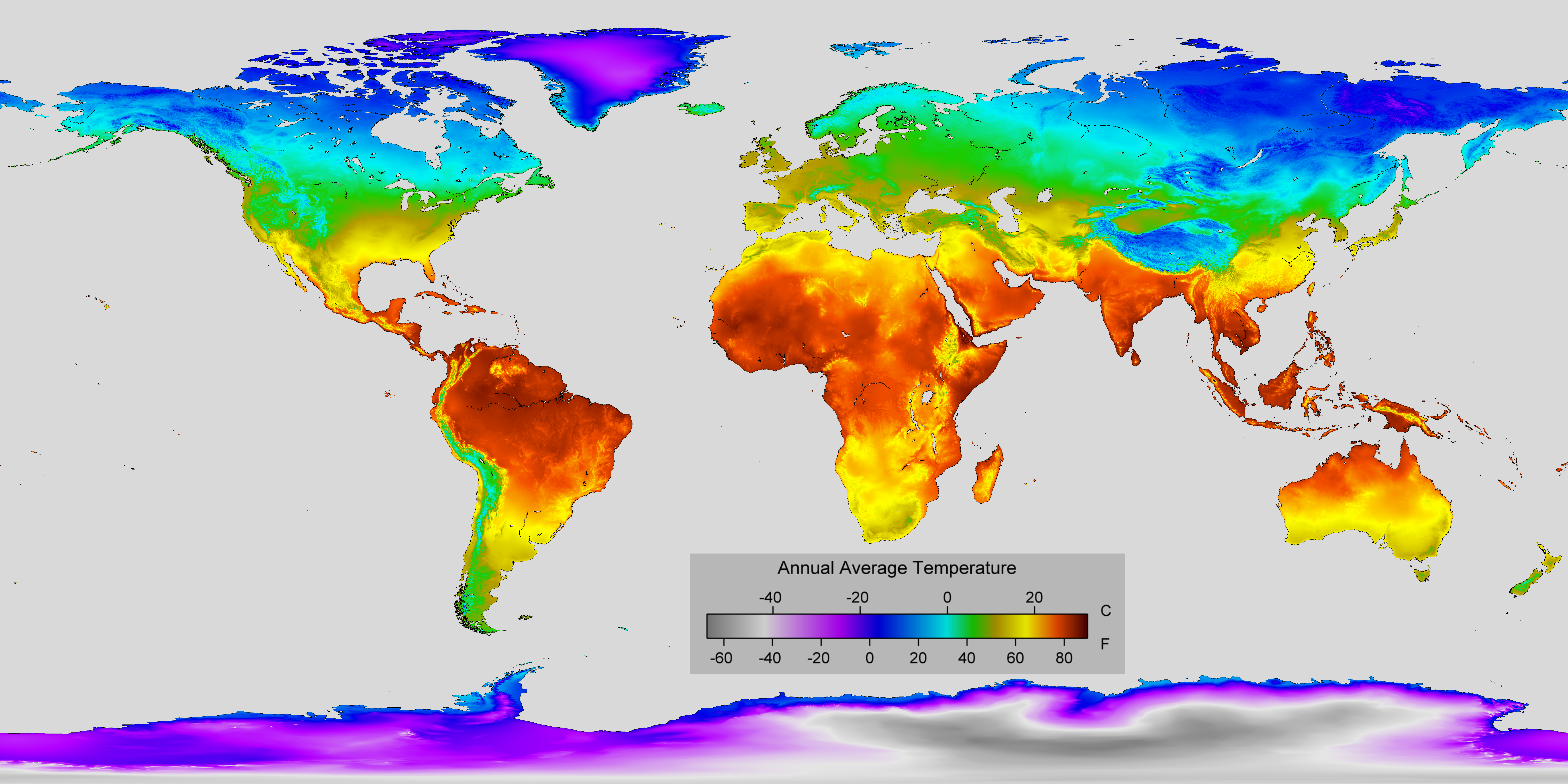
TinkersW 10/26/2024|||
Article assumes people want to live in cramped cities.. clearly this is not the case when we look at where Americans choose to live, so premise is flawed. In reality 300 more Americans would spread out and wreck the environment more than it already is.
moribvndvs 10/26/2024|||
“what the hell does my tone got to do with it?[0]”

0 - https://youtu.be/Rv71ZCd_yno?feature=shared

More comments...