Posted by pdubroy 10/29/2025
it also seems to conflate how a DAG is expressed, with how that expression is rendered
strange
Having used Graphviz for fairly complex visualizations I was initially shocked that someone would rewrite it themselves. Then I saw the breakdown of the algorithm and realized it may not be as complicated as I first thought.
All that being said, as a general rule it is hard to know what the hidden complexities may be until you are finished implementing the algorithm.
I was intrigued, but couldn't make it work reliably. Perhaps I forgot to add "make it look nice" to my prompts.
https://arxiv.org/abs/2412.04237v3
https://github.com/microsoft/LayoutGeneration/blob/main/Layo...
There is no single layout definition that looks good for all applications. What looks good for one type of graph data (flow charts, org charts, ASTs, family trees, etc, etc) may not look good for another.
Once you've reduced a desired type of layout to a set of layout rules, then I don't think implementing it is the bottleneck, and it seems this part could even be automated if wanted (e.g. evolve layout to best meet constraints).
One small improvement they could probably make is the ability to rearrange outputs at the bottom to reduce crossings. Just from the very first example it seems flipping the 0 and 1 outputs on the bottom graph would be nicer.
For anyone else interested in this general area, Steve Ruiz and Lu Wilson from tldraw often tweet a lot of fun nitty gritty edge cases in graph drawing.
From EPL:
> If a Contributor Distributes the Program in any form, then: a) the Program must also be made available as Source Code, in accordance with section 3.2 ...
Except in startups that really embrace the idea of open source, no "serious" company will offer any portion of their source code under EPL license, even if that's just the modified/derived part of it. Not a chance.
For most companies, in reality, there are only two types of licenses -- copyleft and permissive, no middle ground. You either don't touch it with a 10 foot pole or do whatever you want as long as you copy and paste the attributions.
Isn't the EPL "weak copyleft", so LGPL-ish? Would companies raise similar issues about glibc and GNU libstdc++? Just curious.
I don't know enough about all those other libraries and their licenses, but I do know that as long as we don't ship those libraries, especially modified versions, it's likely ok (of course that's simplified). Some internal tooling depends on GNU tools but we are just users. For things like glibc, it's just a standard system library, so linking with it is not a problem. (I am sure legal has looked at this.)
But GPL/LGPL software is definitely the minority of software we use in any way. Basically they need to be avoided as much as possible.
Doesn't this only apply to contributors and dev users?
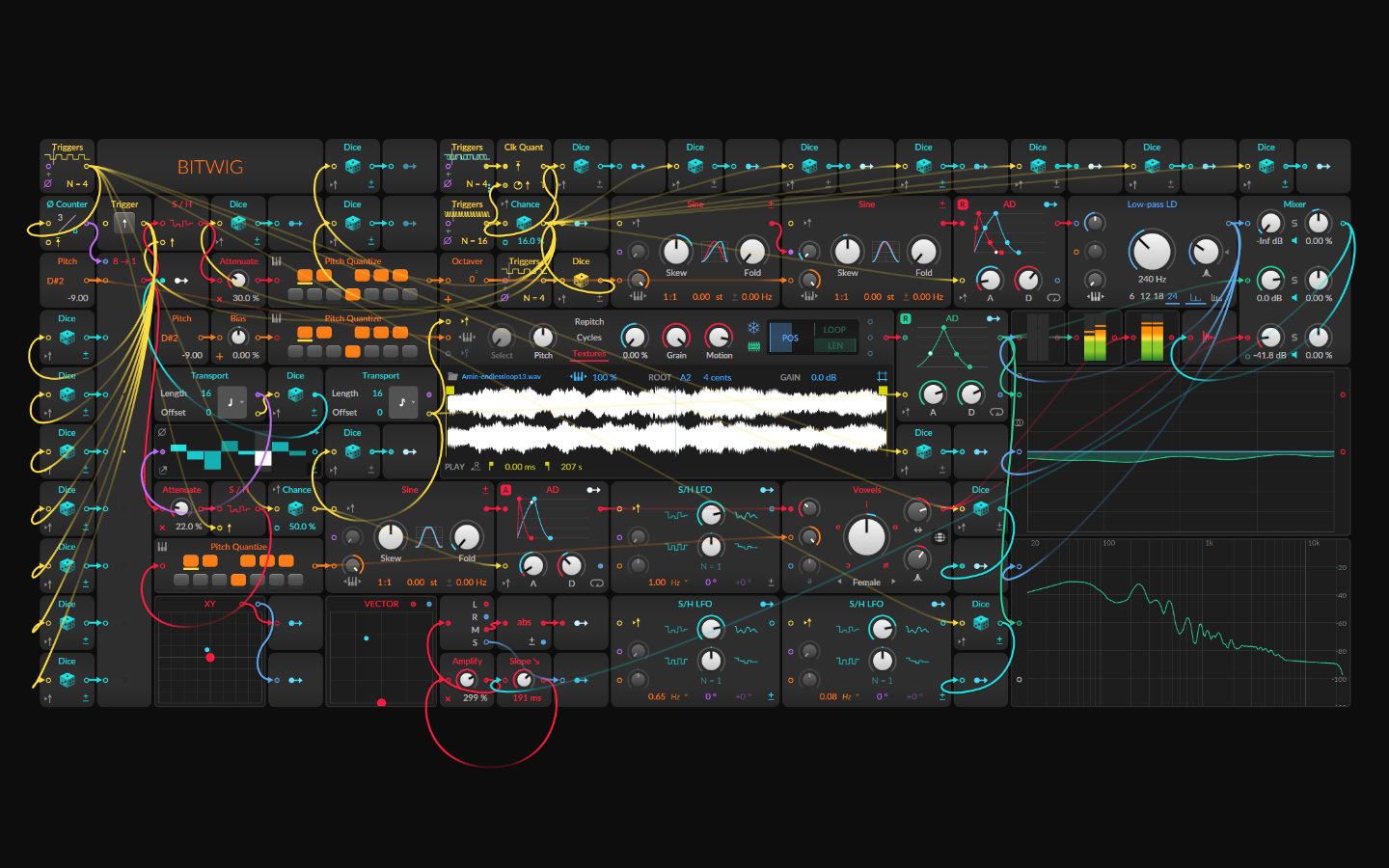
“Contributor” means any person or entity that Distributes the Program.I love how bitwig solved it: gravity, color coding, stiffness, directionality (ins on the left, outs on the right).
https://polarity.me/img/bitwig-course-02-whatisthegrid-3.jpg
1. Make graphs from Clang's AST.
2. Invent some style flourish to help follow an edge that becomes part of a bundle of many edges.
A pure AST wouldn't even have that information - it'd have the syntax, but not the semantics.
In any case, this experience gave me a new appreciation for compiler developers!