As a fellow traveller, I offer one caution: learn to turn this down in personal relationships as it can be counterproductive. It took decades for my wife to finally get through and explain not every problem she voices is something that needs a solution. Some times people just want to be heard. It bugs the hell out of me because I tend to need to solve All The Problems before I can do any self-care, but rather than seem heroic, I think this attitude can seem transactional or uncaring as though everyone is just a screw that needed a bit of tightening, etc.
Often when someone wants to talk about a situation involving difficult feelings, they're actually trying to process those feelings: to understand where the feelings are coming from, to be validated, and to be able to take a broader perspective.
You can help by being curious about what they're saying, reflecting it back to them in your own terms, explaining how what they're feeling is understandable, and offering context or alternative viewpoints. These are actually complex problem-solving skills, although they can all fall under the umbrella of what people mean when they say "to be heard".
As a man, I've realised that once my emotions feel validated and accepted, I relax and the practical solutions just pop into my mind.
If you’re speaking to a rational person with good intentions and good self-management this can help a lot.
If the other person doesn’t have good emotional regulation and is prone to catastrophizing, exaggeration, or excessive self-victimization then validating and reinforcing their emotions isn’t always helpful. It can be harmful.
I know this goes against the Reddit-style relationship stereotype where the man must always listen and nod but not offer suggestions, but when someone is prone to self-destructive emotional thought loops behind their emotional validator can be actively harmful. Even if validation is what they seek and want.
One comment I'd make is the difference between "valid" and "rational". Emotions and feelings are always "valid", in the sense that they are a natural consequence of events and prior conditioning. But feelings are rarely "rational" - they often don't reflect the complete truth of a situation. For example, suppose someone says "Jennifer sent me this short snippy reply today, I swear she's upset with me about something and won't tell me what it is". It is perfectly legitimate to validate that you can see where that fear comes from, but nevertheless offer alternative possibilites: maybe Jennifer is going through a tough time personally, or has a really tight work schedule at the moment. You don't have to fully buy into someone's thoughts and feelings in order to help them process them. In fact this is rarely going to help.
If “validating” someone’s emotions comes down to simply saying that, yes, I agree you felt that way, then I suppose that’s true.
But when people talk about validating other people’s emotions it implies that they’re saying the emotional response was valid for the circumstances.
I have someone in my extended family who has a strong tendency to catastrophize and assume the worst. When she was in a relationship with someone who constantly validated her emotions and reactions it was disastrous. It took someone more level headed to start telling her when her reactions were not valid to certain situations to begin stabilizing the behavior.
There’s a hand wavey, feel good idea where we’re supposed to believe everyone’s lived experience and emotions are valid, but some people have problems with incorrect emotional reactions. Validating these can become reinforcing for that behavior.
I’m not saying we should start doubting every emotional reaction or white knighting everything, but it’s unhealthy to take a stance that validating other people’s emotions is de facto good.
> Emotional validation is a process which involves acknowledging and accepting another individual's inner emotional experience, without necessarily agreeing with or justifying it, and possibly also communicating that acceptance.
https://en.wikipedia.org/wiki/Emotional_validation
It sounds perhaps like your family member's former partner was going further than validating the emotions, and trying to justify or prove them right. But this is quibbling over semantics; I think we both agree that challenging someone is sometimes the kindest thing to do.
In real human conversation, when someone is expressing an emotion they aren't looking for other people to confirm that they are indeed experiencing that emotion. That's not even a question up for debate. They're looking for people to share in that anger, sadness, or frustration and confirm that it's a valid response to the situation.
The overly academic definition doesn't reflect how people communicate in the real world.
There's also a factor of consistency over time: It's no big deal to go along with someone venting from time to time, but when someone you're close to is overreacting to everything and having unreasonable emotional reactions all the time, validating those emotions consistently is going to be viewed as an implicit endorsement.
> It sounds perhaps like your family member's former partner was going further than validating the emotions, and trying to justify or prove them right.
Not in this case. Just going along with it.
Emotional processing, in my experience, is completely separate from action. I hear that your family member had her actions validated - what she decided to do.
An emotion itself can be complex, scary and counter-intuitive. In my experience, always valid - but that doesn't mean you have the right reasons. It's often very difficult to get the right environment to actively explore where an emotion is coming from - purely because of the reactions in other people - which try to suppress, deflect, minimize, etc.
Strangely, simply agreeing or validating someone's outcome is actually a way of minimizing or deflecting the scary expression. Let's not go deeper, let's not figure out where this is coming from - you just go with your gut and act.
Getting to the root of an emotion can come in waves and many iterations. It can be incredibly useful to try and completely unhook action from it.
I've had very strong emotions from events that were almost always "right emotion, wrong reason/story" and I've slowly corrected the 'why' multiple times over.
A lot of those corrections took removing people from my life that made it hard to feel or have access to those difficult emotions.
I wonder if you value that family member or just the idea of them. Value them only when they're 'stable'? Want to get in the muck with them to find where instability comes from? It's okay to not. It's less okay IMO to stay connected to someone you require change from. If you don't like behavior, say it and leave/create much space. Give them agency to choose, agency to fail, agency to be someone you don't like, agency to not be okay.
A lot of people in this comment thread are trying to rewrite this situation. That's not what happened.
The problem was that she would have a strong emotional reaction to something and her partner would go along with it: Validate her emotions, offer comfort, not question the validity of responding that way.
This is the problem with the overly abstract notion of validating emotions without endorsing them. If you consistently "validate" the way someone is feeling even when it's obviously harming them, you're not actually helping. You're implicitly agreeing and condoning.
'validate' is very ambiguous. 'comfort' is very different from presence. It can actually be a way of invalidating funnily enough. 'not question' has a lot going on.
I definitely hear a lot of enablement in your example. It sounds like she is better off without that.
> This is the problem with the overly abstract notion of validating emotions without endorsing them. If you consistently "validate" the way someone is feeling even when it's obviously harming them, you're not actually helping. You're implicitly agreeing and condoning.
I agree here. Validate itself is a loaded term, especially in the tech world. It sounds like it implies correctness. Maybe I'm onboard with just a need for 'emotional presence' over 'validation'.
Validation can slide into enablement. Challenge can slide into invalidation. Presence is the impossible one. Having someone you can openly explore an emotion, even just say it all without evoking a fear or anger response, a validation or invalidation response from. Let's it just hang in the air without reaction. Let's it exist without adding distance or withdrawing connection. Have endless curiosity.
I do think I am onboard with validation being a more dangerous term. I get its origin/concept - maybe trying to combat the amount of invalidation in the world but it's ironic to see how invalidating the wrong kind of validation can be.
To be honest, I'm growing even more distaste for the "validating emotions" academic concept after reading some of the mental gymnastics people are doing in this thread.
> validated her emotions and reactions
But in other instances in this thread I am not so sure each time you mention her emotions you are talking about her feelings, distinct from her actions or interpretations. There is a difference between anger (the emotion), aggression (waving hands, loud voice etc), and physical contact (undirected against objects, directed at objects, against self, against others). Maybe you are “striking nerves” since it’s not always clear which one you are referring to in terms of her “validation”. And these distinctions are not academic.
(chiming in)
It's not academic, but practical. For me, these skills have been immensely helpful for navigating both my own emotions and those of others. My relationships improved quite a bit once I started using these skills. I'm closer to more people, I can get to depth more quickly and more safely with new people, and me and those close to me are all growing/healing more quickly because we can meet our emotional needs while also gradually working to reshape those needs.
To me, "validation" is about addressing someone's actual underlying emotional needs. But it still leaves space for disagreeing with the interpretation/perception of what happened. My own saying is that we should "accept our emotions, but not always accept the story they are telling us".
> as well as all the different and conflicting definitions of "validate emotions"
What mental gymnastics do you see?
This is not emotional validation; nobody wants to be told something they can decide for themselves. Instead, they want to hear that it is okay to feel said emotion. When venting to someone, one doesn't want to hear "I understand that you feel that way", they want to hear "I understand why you feel that way". The former is a dismissal (taking the guise of a validation) and the latter is a validation. "I don't get why you feel $EMOTION about this" is the ultimate emotional sucker punch of invalidation from an active listener even though it necessarily implies said confirmation that they feel $EMOTION.
> They're looking for people to share in that anger, sadness, or frustration and confirm that it's a valid response to the situation.
Notably, "sharing" the emotions is not the only way to validate them; I do not have to feel (or even understand) one's sadness for their sadness to be valid. The second part is the only thing they're looking for and it is very unlikely to be false given the appropriate context. From another comment, "the emotional response was valid for the circumstances" is accurate when one understands "the circumstances" to include the life experiences that cause them to have such an emotional response from something that doesn't trigger the same emotions in oneself.
> overreacting to everything and having unreasonable emotional reactions all the time
There are healthy avenues for expressing such emotions as well as unhealthy ones. Validating the emotional response to something is precisely what will allow the person feeling the emotions to calm down and decide on actions that will benefit their situation. If they are invalidated, they will instead spend effort seeking that validation.
> Just going along with it.
Well, if "it" is referring to behaviors and attitudes, then there's an obvious problem (in all likelihood) but that's also distinct from emotional validation. As I said in my other comment in this thread, one can logically say "it's okay to feel that way but you shouldn't think that". I strongly doubt that is the likes of the validation being complained about here. The negatives of the situation being described do not seem likely caused merely from emotional validation. And I would bet with near certainty that the partner they met who got them to choose healthy behaviors did so by first validating their emotions.
That's not the definition the others are using, but this seems to be a game of whack-a-mole with everyone's different ideas about what it means.
That said, I think your definition highlights the problem: By telling someone it's okay to feel the emotion, you've implicitly endorsed the response.
The situations I'm speaking about involve people developing inappropriate emotional reactions that lead to self-harm. When they surround themselves with people who do this "validate emotions" game, they're implicitly gathering consensus that it's okay to react that way. The cycle continues.
It's clear that a lot of people have picked up this idea of "validating emotions" being virtuous and good, but some times what people need is for people around them to explain that their reaction is not actually appropriate or okay.
This tells me that you've not understood my meaning. One is not condoning or endorsing any behavioral response when they say the emotional response (which motivated the behavior) is valid and natural. They are distinct things and one does not necessarily follow or precede the other.
> their reaction is not actually appropriate or okay
I suspect we are talking past each other here. If "their reaction" refers to their emotions, that is not your concern; to think otherwise is wildly antisocial. If it instead refers to their actions and/or behaviors, you simply are not bemoaning emotional validation.
This is obviously nonsense. If an old woman falls over and breaks her knee, and one's emotional response is happiness - they have real problems - it's not natural or valid to feel that. If the idea of choking women to death makes one feel excited - no it's not natural or valid to feel that emotion, they have serious problems. One could go on.
Maybe you haven't met any really bad people in life - when you do you will often find they have very strange emotional responses to things.
> If the idea of choking women to death makes one feel excited - no it's not natural or valid to feel that emotion, they have serious problems.
I disagree. That is surely a natural and valid emotional response for whatever reason this hypotheticals individual feels it. Yes, they also surely have serious problems but I contend that said problems are obviously what lead to this "very strange" emotional response. Their problems are also valid, regardless of the personal damage (read: devoid of outward violence) they cause.
In this case, the response might affect their behavior such that they actually do it and that would obviously be tragic; that behavior is not valid regardless of the emotions (or lack thereof) which motivate it. Otherwise, speaking of their emotional response, I don't see a reason to condemn them for a reaction they have such little control over.
You are just wrong on this. You want to seem sophisticated and understanding, and it's just lazy stupid thinking.
We could decide on a similar word to use if you prefer. Perhaps "acceptable" from a sibling comment. Replace "valid" with "acceptable" and "validation" with "acceptance" in all of my comments and the meaning is still true; that seems to suggest I've been consistent with my use of "valid".
> You are just wrong on this.
What you mean is that we are of different minds. You try to make yours the objective one in spite of the glaringly obvious fact that opinions are not necessarily shared between differing minds.
> You want to seem sophisticated and understanding
Genuinely, what a compliment! I was just writing about my perspective. My goal with the writing was primarily to espouse my understanding of this subject while secondarily avoiding "you" statements in my comments. If you think the result sounds sophisticated and understanding, I am more than willing to believe you. If you don't think that, well, you might want to consider where those words came from because I sure noticed. (It might also help to consider that you have no means of discovering my motivation; you must have made an assumption and expressed said assumption using your own words.)
The fact of the matter is that I spent the first three decades or so of my life being extremely emotionally unstable until I (at least somewhat) learned to manage that. I suspect this "sophisticated and understanding" sense you get from my writing on this topic comes from the care with which I write about a subject so dear to me.
As soon as you start trying to apply normative judgements to someone's feelings, as opposed to their behaviour, you inevitably end up drawing an arbitrary and cutlurally informed line between what you or socirty think is okay and what's not. It's only a problem if I feel excited by someone else's pain if my consequent behaviour actually leads to the other person suffering. I have no direct control over my emotions, but I can control my reaction to them. You just telling me it's wrong to feel excited is futile and potentially counter-productive.
If you have cancer, you have a serious problem. It's not "wrong", but it's a serious problem to be dealt with. If you are excited by the idea of an old woman hurting herself or choking a woman to death, you have serious problems to deal with.
Or they are practicing buddhists. Or victims of trauma. The former doesn't need (but won't mind) validation, the latter does.
For what it's worth, imo this is included in the definition of "accepting" someone's feelings. You are saying "it is acceptable" to have the feelings.
Which is what the whole "empathy movement" of recent years seems to emphasize. The problem is that when empathy is unmoored from the objective good, this can become scandalous (not in the sense that it causes outrage, but in the older sense that it encourages evil). Not every response is a valid response. You must be able to identify whether something is good, you must refrain from actively enabling things that are bad, but you must discern whether to correct, and if so, how to correct. Not every problem is yours to correct. Busybodies think they are.
(N.b. the Catholic Church, drawing on ethical distinctions, makes distinctions between moral principle, the objectively moral status of particular acts in light of moral principles, and the pastoral needs of particular persons. So, e.g., while prostitution as a practice is roundly condemned as a matter of principle, particular prostitutes may be treated gently. This is especially true if he/she expresses remorse for the way he/she has lived his/her life (the parable of the prodigal son comes to mind).)
You’re treating “validation” as synonymous with “agreeing the emotional response was proportionate and correct.” But that’s not really what validation means in a therapeutic or even colloquial sense. Validating someone’s emotions typically means acknowledging that the emotion is real and understandable given how that person perceived the situation. It doesn’t require you to endorse their perception as accurate.
You can say “I get why you’d feel terrified if you believed X was happening” while also gently probing whether X is actually happening. That’s still validation. What you’re describing as helpful for your family member isn’t really “invalidation” so much as reality-testing, which is a different thing and can coexist with emotional validation.
Your anecdote is doing a lot of work here. We don’t know what “constantly validated” actually looked like in practice, or what the “level headed” person was doing differently. It’s possible the first partner was just conflict-avoidant and agreeing with distorted interpretations of events, which isn’t validation so much as enabling. And the second partner may have been effective not because they said “your reaction isn’t valid” but because they offered a stable outside perspective while still being emotionally supportive.
Your broader point about reinforcement is worth taking seriously though. There are absolutely cases where excessive reassurance-seeking gets reinforced by certain responses. But the solution isn’t to tell people their feelings are wrong. It’s to validate the feeling while not automatically validating the catastrophic interpretation driving it.
Any time you're "validating emotions" in the real world, there is going to be some degree of implicit endorsement that the reaction was valid.
The idea of "validating emotions" being synonymous with saying "I agree that you feel that way" is rather infantile. Nobody needs someone to agree that the emotion they experienced is the emotion they experienced.
In the early days of our relationship I would try to explain to her why her emotion doesn't 'make sense'. That just made things worse. Much worse. When she helped me understand that she needed me to validate that what she was feeling was legitimate - based on her interpretation of the events - she was able to let go and consider other interpretations.
Note that this "letting go" almost never happened in the moment, but only after the emotions abated and she had time to process the entire situation. We're talking hours, not minutes.
People frequently do need that. That’s basically what dismissive attachment styles and invalidating environments produce: people who aren’t sure their own internal states are real or legitimate. “I can see why that hurt” lands very differently than “that shouldn’t have hurt.” The former isn’t agreeing the other party was wrong or the reaction was proportionate. It’s communicating “your inner experience makes sense to me.”
The implicit endorsement concern is real but overstated. Skilled communicators navigate this constantly. “That sounds really frustrating. What do you think was actually going on there?” validates the frustration while opening space for reexamination. The failure mode you’re pointing at is when someone only validates and never probes, which is just conflict avoidance.
The “overly academic” framing is doing some rhetorical work here. These distinctions come from observing what actually helps people versus what entrenches them. Therapists, mediators, and anyone who’s gotten good at difficult conversations know the difference intuitively. It’s not academic. It’s practical.
Hard no.
In the real world, when I emotionally validate my friends or partners it looks like slowing down and being there, with them, with their emotions. Being present with their emotions then often addresses the underlying emotional need: for example, to feel heard, or to acknowledge their feelings to themselves, to feel cared for and accepted, to feel like someone has their back, etc.
None of this requires that I accept their interpretation of events. And almost always, there will be space at some point for me to disagree with their interpretation. It is much much much more effective to tease apart that interpretation once their emotions have calmed down.
TL;DR: addressing someone's emotional needs (aka "validating") doesn't imply that you agree with them about their interpretation of what happened
I guess at the risk of splitting hairs, I think it's more likely they stopped misappropriating more than they started invalidating. I see a difference between "you shouldn't feel that way" and "I disagree with that conclusion" such that one can logically say both (well, the former being "it's okay to feel that way") in the same breath.
The reality is simpler: It was basically "Yeah it sucks that <minor annoyance> happened at work, but sulking about it for 3 days is not a good way to handle that"
Whereas the "validating emotions" guy would just jump in and be a sounding board for 3 days straight
Feeling a little upset over minor annoyances is valid. Having your emotional state crumble at the slightest breeze is not. Having someone around who basically validates the latter is not good.
For what it's worth, I imagined a scenario very similar to the one you described in this comment.
> Yeah it sucks that <minor annoyance> happened at work
This is emotional validation.
> sulking about it for 3 days is not a good way to handle that
This has nothing to do with emotional validation. It can be said before, after, or without said validation.
> Whereas the "validating emotions" guy would just jump in and be a sounding board for 3 days straight
It sounds like the "validating emotions" person was validating the sulking behaviors (whether in addition to validating the related emotions or not) and saying that they were only validating the emotions.
Anyway, the purpose for my replies is not to get you to agree with that person or to change your mind about the anecdote, but to offer a more meaningful distinction of what's being discussed.
The good kind of "valid" is about whether (a) your process of measuring reality might be broken to your detriment. And by extension (b) whether your communications channel with the person you are talking to is working.
Chris Voss's mirroring is basically TCP ACKs.
Then there are the people who say that they lack validation and are just narcissists looking for yes-men. Big difference on how much of your time is being wasted.
Given by how we talk about emotions, I think they are "rational", but operate under a different set of rules than we normally apply to "rational" thinking. In fact, feelings are deeply intertwined with our supposedly "rational" thinking, to the point where I don't think there is a significant boundary. The lack of information is prevalent when feelings are in play, and I believe the same is true in general. Even physics feels far different than pure mathematics, after all. Instead of deferring to conventions in how to act when feelings are involved, as if they belong to a wholly different and mysterious world, we can make sense of the entire world. But of course, empathy, kindness, and good judgement are not exempt. None of this conflicts with what you're saying, but I think a subtle shift in mindset will be fruitful in applying it.
And because they are very-simplified ways of processing information and provoking action, they often get things 'wrong'.
I think the important bit is to recognize that emotions are separate from (although related to) the situation itself. The problem many people have is approaching emotional problems as simply symptoms of the underlying practical problem, and that the way to solve the emotional problem is to simply go directly to solving the underlying practical problem.
Now, sometimes this is the correct approach. However, many times it isn’t. Sometimes the practical problem is not solvable by you or the person you are talking to. Sometimes the practical problem is actually not really a problem and is simply triggering something else. Sometimes you just need someone to share some pain, or some joy, or just need a connection with someone.
A good emotional problem solver can navigate all of these situations.
I think you might misintrepet what "validating someone's emotions" is/should do. It's not "You're absolutely right for feeling completely sad and broken down because the cafe wasn't open", but more "That must be such a horrible feeling, to feel so sad and broken down", without saying "yes/no" to if you think it's "justified or not".
The point is that the person is feeling what they're feeling, that's what the validation and acceptance comes in, not about what they're feeling those feelings about.
In the end, you can validate someone's feelings without validating what they're feeling those about, by just saying "that sucks".
Dictionary definition of validate are things like:
- check or prove the validity or accuracy of (something).
- demonstrate or support the truth or value of.
Which don't seem like the intent of "validating" the emotion in this context.
If you say "that sucks" the other person is going to assume you're agreeing with them that the thing they're angry about sucks. They're not going to think you're saying "that sucks" that they have an emotion, as an isolated feeling that happened for no reason.
This is where the overly academic concept of "validating emotions without endorsing them" falls apart in the real world.
In actual human interaction, people don't debate if the other person actual feels an emotion. Angry people don't need other people to agree that they feel angry. They share the emotion because they want other people to agree that the emotion is right and justified.
Nobody actually says "I agree that you are feeling that emotion but I neither endorse it nor disagree with it" (in less formal wording). If you're going along with someone else's emotions, you're implicitly endorsing their reaction as justified.
Yes, actually, lots of people have healthy partnerships where they disagree with how their partner got into the situation, but can still recognize that the partner's feelings about that situation is valid, regardless, since it's an emotion their feeling, it doesn't have to be rational or logical and it's certainly not up to you to decide if it is/was neither.
This is what emotional support is, not validating their actions, but validating the emotions they're feeling, regardless of why. And not seeing some emotions as more "correct and valid" than others, they're all valid and correct, since we're humans after all.
> They share the emotion because they want other people to agree that the emotion is right and justified.
This, in your words "falls apart in the real world", because people don't speak with others always with the same intention, sometimes people want to vent, sometimes people want to manipulate, sometimes people are looking for help, and a whole other rooster of reasons. Most of the time, people speak with others about their feelings because they want connection.
I think you're stuck in trying to separate "valid, rational and logical emotions" from "the rest of emotions" while that distinction matters less than you think, and you'll be seen as very emotionally cold/distant if you aren't able to accept people's emotion because they aren't "rational" (or whatever reason you use).
I think some of you have never had to deal with a person who had harmful emotional over reactions to even small inconveniences. It's an extremely self-harmful spiral.
Having someone who validates any emotions as if they exist in a vacuum is like adding fuel to the fire. It's implicit encouragement.
Emotional reactions aren't de facto good. Working with young children is another good way to observe that not every emotional reaction is acceptable. It's also a good way to see how people can learn how to manage their emotions, but it's hard to get to that point if they've surrounded themselves with people who will rush to validate their emotions and ignore the obvious harm it's causing.
I have a two year old son and disagree with this. I wonder if you're using the phrase "overreaction" to mean both the emotion and the associated behaviour? I make sure to demonstrate that my son's emotions - sadness, anger, happiness - are always "acceptable" in the sense that it's okay for him to have those feelings. I never want him to feel like his feelings are not accepted, because that can easily leads to him hiding, avoiding, or suppressing feelings rather than acknowledging and learning how to process and regulate them. This is what basically all modern parenting books say and has accorded with my experience so far. But his behaviour can be unacceptable. It's okay for him to feel angry, but it is not ok for him to respond to that by hitting, biting, snatching etc. He needs me to help label and contextualise his feelings, and to show him how to divert those feelings into a healthier physical response.
While it might seem like these are just linguistic quibbles, I've seen so many cases of people genuinely thinking that trying to suppress their emotions is the correct way to handle tough situations, and I don't think that ever works well in the long run. At most, it's sometimes beneficial to avoid expressing strong negative emotions immediately in certain situations, but that's only a short term tradeoff to avoid exacerbating whatever is currently going on, not a long term solution to avoid consequences of taking actions under the duress of heavy emotions. I believe that people would learn to act better by mentally framing their emotions separately from their choices and allowing themselves to feel them fully and ideally express them in a healthy way. Venting to a sympathetic family member or friend can be a good way of doing this, but that's also why therapy is something that would be benefit pretty much everyone in my opinion; having a trained, neutral professional to be able to talk through emotions without having to worry about overburdening them or worrying about having to interact with them in any other part of life is hard to beat in terms of a strategy for dealing with tough emotions in a healthy way.
Thank you for this useful tip! I've recently become aware that I may not be as good a listener I thought I was - I too make the common mistake of immediately offering solutions, or talking too much about my own relatable situations and feelings, instead of trying to really listen to them and help them figure out their own world view and feelings of a particular situation (and thus understand them better too in the process).
And narcissists are soul sucking traps for good listeners.
Some people really don’t like ‘no’, especially when they have emotional problems.
What are "emotions" if not "irrational chemical reactions in our brains"? Seems really strange to decide what it or isn't "irrational emotions" for someone else to have.
I, just like you I presume, see myself as a rational and logical person (maybe you're also a programmer), but I also realize that humans are humans, and having irrational emotions is very much part of being a humans, and emotions in general is such a subjective experience.
In fact, it's problematic when people start thinking of their emotions as a chemical process that happens to them, outside of their control. A large part of getting people back on track in therapy is getting them to accept that they do have some control over how they react to situations in the world.
A lot of TikTok or Reddit style therapyspeak does the opposite: It goes to extreme lengths to try to separate the emotions or negative responses from the person, as if they're an outside force victimizing them. It's comforting to think that, because things that happen to us outside of our control seem like they can't be changed. Getting people to acknowledge that they can and should exert some emotional control over themselves is part of breaking that cycle.
If they go outside and kick a unrelated puppy to get ‘even’? That is when people start to worry.
Now the question is, which of these is which?
Right, talking about feelings is a way of regulating yourself.
Conflicts with my wife are a lot easier if I'm able to empathize with her emotional distress, acknowledging it, instead of jumping directly into logical problem solving. If I'm only looking logically at the issue, I can't really understand the issue she is having.
I like the view of the therapist Terry Real, that during conflicts you can either be right or stay connected. That doesn't mean that you hide your views, but that you also emotionally acknowledge the view of your partner. It's surprising how effectively this takes out the fire in conflicts.
Exactly, help exploring their problem, maybe direct them into one nook or the other, support a proper perspective from different angles (to a small extent within the context and constraints they provided!!!), but don't solve the riddle for them. They might not even know how they really feel about it all, yet.
This perspective was a good stepping stone for me, but then I realized I needed bigger changes to keep growing. However I defined the problem to be solved, I was still setting up a dynamic that was arrogant. I thought I was air traffic control when others were looking for a copilot. Somebody along for the ride with them, not just requesting information about them and offering commentary from the ground.
Reading _How to Know a Person_ helped me a lot.
Yes! Be an emotional rubber duck.
1. Do you want to be Helped? 2. Do you want to be Heard? 3. Do you want to be Hugged?
I'm still trying to get in the habit of using this approach more often with my partner, and as I do, it has noticeably improved our relationship. It turns out most of the time, she just wants to be hugged.
I like your 3 H's though!
This can become toxic in itself, though. Some times venting and being angry is what someone wants to do, but in a workplace environment that’s not a good thing to implicitly condone and support.
I’ve had some team members who just wanted to vent but not discuss solutions and (again, in a workplace, not personal relationship) it was a sign that something deeper was amiss: Being a perpetual victim of their circumstances and believing those circumstances were beyond their control was a safe, comforting place to exist. It was always easier to build up excuses that problems were thrust upon them by others, who could be held solely responsible for the results. In some cases I had to be very clear that they were responsible for working with teammates to address these issues together, not become a passive receiver of everything that happens with their peers.
Swooping in as the hero to solve everything for someone else isn’t a good solution, but (in a workplace environment) getting someone to switch from the passive victim mindset to the active mindset of engaging with their own problems is very important.
This is one topic where carrying advice from personal romantic relationships into the workplace isn’t a good idea, IMO.
I have a person who has distanced themselves from me because I don’t provide the feedback they crave when they do this for the eleventieith time. I only have so many spoons and that passion play feels like throwing them in the garbage disposal. I just can’t for my own well being. Sorry.
There are a lot of people reciting the academic concept of validating emotions without endorsing them in this thread, but in the real world when you consistently "validate emotions" of someone who is over-reacting, it becomes an implicit endorsement.
In the real world, the people I've known to get stuck in negative emotion states did much worse when they surrounded themselves with people who constantly validated their emotions in the academic speak that's being used in this thread.
What a remarkably condescending comment. I've been happily married for a long time.
Tangentially, you could ask: Are you addicted to being useful or to being recognized as useful.
One is your own need, the other often a covered contract where you lash out or silently resign if you don't get the recognition that you think you deserve.
Next time, maybe ask her to come up with solutions, e.g. do a brainstorm session.
If she then says she doesn't really want a solution, you can tell her then don't phrase your issues like that.
Or maybe nobody is? Why does someone has to be “at fault”?
> you can tell her then don't phrase your issues like that.
Sometimes people just want to be heard. There is value in recognising that.
“Do you want to be right or do you want to be happy?”
My wife wants to throw out our perfectly functional table to get a better looking one. Financially and practically, I am right in fighting this. Is a few hundred bucks worth making someone aesthetically-minded not feel satisfied? No, you have to pick your battles.
Relationships must be two-way streets, always.
I have made quite a lot of concessions for my wife for the current rented flat -- simply because I did not care about 99% of the things she wanted to change. I only gave her a rather loose framework: "this must fit these physical dimensions as you yourself can see here in this corner" and "I am not willing to spend hundreds to change something that is currently performing to 90% of the standards of both of us" and "how difficult it is to ship and install this?" -- and she has been mature and considerate enough to understand the boundaries and nailed them every single time so far in our 11.5 years together. And she still got almost everything she wanted and is visibly happier with the environment.
When both sides have preferences they feel safe sharing but are still reasonable above all, then things are going smoothly and flow naturally.
Of course there are the rare exceptions where I just gave up and said to her: "OK, I am leaving this to you, figure all the details out and I'll just pay it at the end of the process". I was not unhappy but she did not want to budge on a few things and I ultimately just stashed the old thing in the garage in case she understands she made a bad deal or the new thing was underperforming.
I agree strongly with "pick your battles". You have to be able to read the person in real time. It's actually much easier than most technical people think.
Which, clearly, I struggled to find a useful compromise on.
I am definitely not saying that all relationships can work out. Sometimes you have to be right and happy. I meant more for trivialities
The challenge is, some people (most) get stuck on some emotional thing, and will drain you dry if you try to even engage with them on it. It’s especially prevalent right now.
Yup. I've long learned to suppress my problem-solver nature because "people want to be heard", but then what it gets is turning me into a sounding board for people who get stuck on something indefinitely. It's easy to not jump in with solutions the first time you hear a story, but it's much harder when you hear the exact same story, with exact same underlying emotion, dozen+ times in the span of a few months. The other side is clearly not really processing their emotions - so if not that, and not practical advice, then what's the point of even talking about it?
It's really draining and in some cases I'm not in a position to disengage either.
What helps me in situations where people talk about it for the umpteenth time is trying to drill down and find the root cause with carefully worded questions. I think I might be ready to become a therapist, lol. Though my fuse is quite short due to my own stress so I don't put myself in the "I am your emotional trash bin" kind of situations.
So to me even the situations you describe can be made use of. Think of it as a long-running background task with many steps; after each retry you get a new exception stack trace. F.ex. during conversation #7 you might understand one or two causes of the problem but at conversation #12 you might already have a nice root cause and you can then try to gently nudge the person towards addressing that.
Of course you are not mandated to. It's all about what you need in this current phase of life as well; you don't have to be people's therapist. It's just what I find super interesting the last year or so -- root-cause analysis of human problems.
But when I understand that somebody just wants to whine and be a constant victim, I mentally check out. Not worth the joules that my brain would spend on that person.
And there's no solution. Nothing you can do, say, or not do or say will help. Even just listening will be perceived, after the umpteenth time, as condescending; and voicing your opinion is obviously a no go. It's lose-lose.
But if people only reach out to drop their toxic waste and leave you without the chance to get rid of your own toxic waste you feel not good afterwards. Like where you have conversations and then afterwards notice that you were not able to actually speak about any of your own problems and worries.
That's what I really like about the kids and their words of the year: They used "aura" and at first I thought what a bullshit term is that, but after a while I came to understand it. It's totally fine to listen to your stomach feelings, if someone's aura is negative or their vibes are off you don't need to give them a reason why you stop interacting, you just leave.
We've been trained to be helpful and nice to everyone but then wonder why we feel drained at the end of the day. It's because we're spending emotional bandwidth on people and things that don't give us any energy back.
The word "aura" for all of this is extremely nice. If you see a spooky person approaching you on the street at night you also don't need to explain to them what exactly put you off about them - you just switch sides.
I can only recommend to trust your feelings.
If you feel worn out after listening to other people, that's one way to avoid that, at the expense of human connection. There are other ways to not feel drained even after listening to the most horrible (or boring) stories that don't cut people (and thus yourself) off. You gain options, not lose any. You can learn to have more control over your own inner state without effort, and become more independent from what people around you are saying or doing, instead of turning your problem into their wrongdoing. Instead of having your world suddenly be full of energy vampires you need to protect yourself from.
No, none of this is comforting. For some people it is a big step to not drop everything just because someone is waiting for the bus and wants to have a 15 minute phone call in order to de-stress their own day.
> If you feel worn out after listening to other people, that's one way to avoid that, at the expense of human connection.
Not every human connection is a net positive.
> You gain options, not lose any.
Please let me complete the options I already have before putting more options on my TODO list.
> You can learn to have more control over your own inner state without effort
That's ableism.
People are unique, and while I appreciate you taking the time to write these lines you might be coming from a very different place. To be a bit snarky, maybe you are more on the energy consumer side of things than on the energy producer side. People have a magic radar for others who make them feel heard, but there is a certain bandwidth and it's limits must be respected.
It's OK not to want to be in connection with others whose behavior you don't agree with, but it's not necessary and from my perspective counter-productive for yourself and society as a whole to turn that into a permission to act in hostile ways against them, especially if you're not providing clear feedback. In fact, unless you provide that in an open way, they will not change their ways around you, so you're losing a lot of chances to influence people around you in situations where you simply cannot decide to avoid them altogether. You're not in control over which humans you interact with, and you're turning interactions into exchanges of aggression unnecessarily.
How would your mental health be if you listened to someone like Trump for even half your day?
No matter how much one meditates, they will still die if set on fire with gasoline.
That said, I do tend to get upset, when I’m taken for granted, but that’s really my own fault. I know it, rationally, but my inner brat still wants to throw a tantrum.
I, like yourself, cannot override my engineering mindset. I ALWAYS WANT TO HELP. But at one point I reframed it as an energy budget problem and how efficiently are my time and energy spent... and then it clicked.
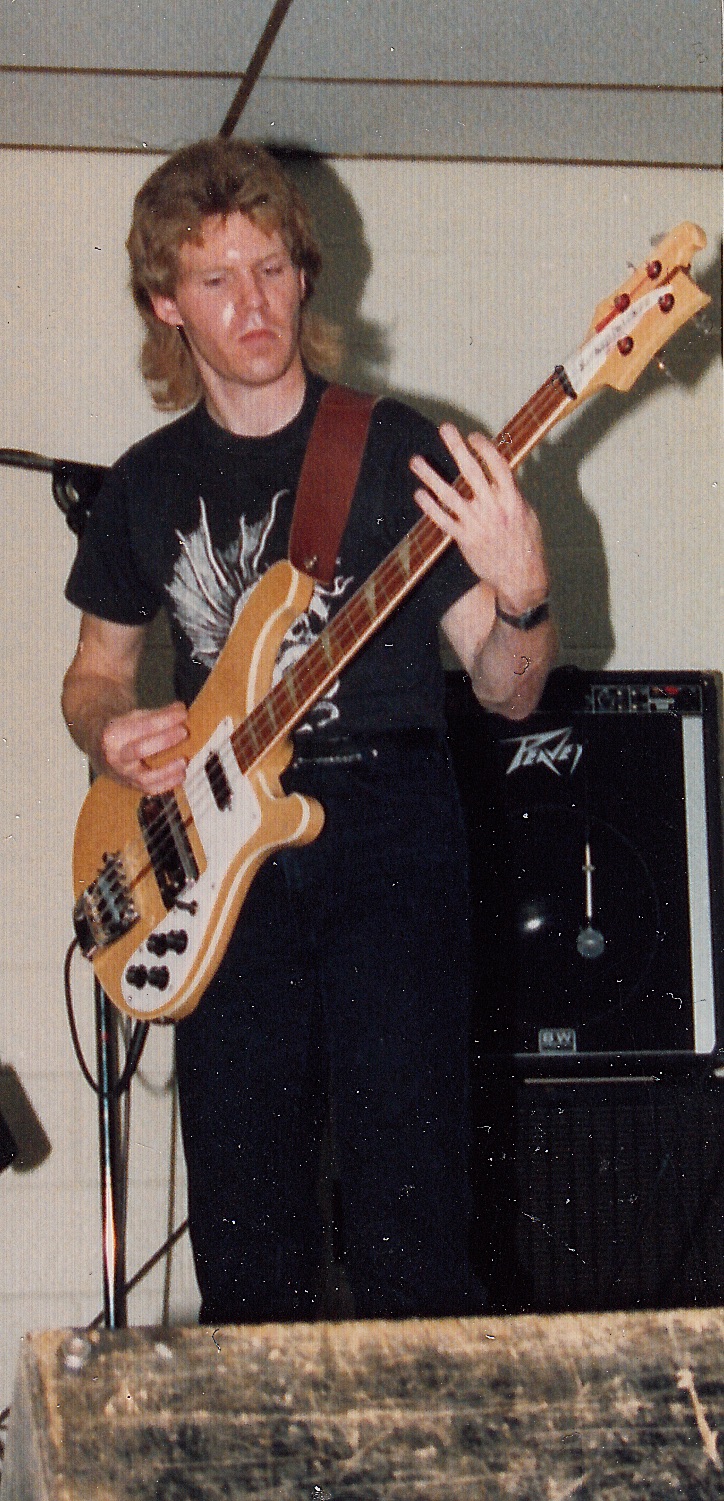
I'm "on the spectrum," which, in my case, manifests as not being very comfortable, when people give me attention. That's why I like working on "infrastructure" stuff (and also why I used to be a bass player[0]).
[0] https://cmarshall.com/MulletMan.jpg (That hair was in style, back then. I no longer look like that).
I can so relate. I once read something that shifted my perspective a bit and helped me start the work of learning to better care for myself.
It was basically somebody talking/writing about the safety instructions when taking a flight. They tell you that in case of an emergency, when the o2 masks drop down to first put your ownmas on, before helping others. Because you are no help, if you loose conciousness.
This image/metaphor , to first put my own mask on, so that I can ensure, I will be able to help others without falling over, was what helped me start this process.
I sadly can't remember if it was Brené Brown or where I originally read that.
(I didn't downvote)
Saying "oh yeah the bible mentions that" doesn't really add to a conversation - the bible mentions a lot of stuff!
However, if I downvote you because you didn't provide context, you might misinterpret it as "wow, hacker news hates the bible" (I have no opinion on hn audience feelings towards religion)
So for additional context, one could look up the "speck vs log" which seems most straightforwardly about taking care of your own issues first (although it's in the context of hypocrisy, which doesn't quite match the original thread iiuc)
I found a few others, but none quite seemed like the close match I was hoping for (Mark 12:31, 1 Corinthians 6:19-20, etc)
I would have said ‘no way is someone that evil’, but uh…. Ask most men in their 40’s or 50’s.
WDYM with the last sentence?
It could be related to the personality trait of how much of our world model is "in our mind" vs "out there":
If I speak with you while working on the world model in my mind, it looks like I just "want to be heard". But your feedback is actually very important, it's just that it should only feed my mental world model.
I am then surprised that my math coprocessor reaches for the GPIO.
I'm glad she managed to solve this problem in the end.
;)
After I started explicitly asking if she wanted “problem solving” or “listening” things improved significantly.
Ultimately things did not work out for other reasons, but I have been able to successfully apply this in a new long-term relationship.
You cannot and should not just "listen" to problems that you're not allowed to work on or expect the other person to work on. You are an active member of this persons' life with your own point-of-view and emotional needs, not a dumping ground for emotional flotsam.
There is a great YT video on this topic https://www.youtube.com/watch?v=-4EDhdAHrOg
It's not about the nail!
I also like to separate between 1) solvable vs unsolvable problems: e.g. you cannot solve a deceased relative.
Also 2) first time vs multiple repeat problems
If find it very irritate someone is venting to me repeatedly about solvable problems.
But if it's a 1 time unsolvable problem, then it's important to be in listening mode.
I am ~30 years old, hopefully I will be able to just hear, without offering any solutions. It bothers me too. I am a SWE because I love solving problems!
In my case, I've recently been wondering whether I really love solving problems, or rather just hate stupid bullshit and solving it - quickly and efficiently - is usually the best way to make it go away for good.
In many cases, the behavior is identical - I just find myself to be motivated by frustration more often than curiosity these days.
I do generally find it is easier for women to respond with empathy instead of solutions because there is no background expectation that they are capable of fixing a problem their male partner has.
Part of the setup by default, but should not take decades to discover or reveal. Similar to how women experience stuff mainly via emotions, hence what was fine yesterday may not be today albeit factually nothing changed.
101 of each adult should be also figuring out how one works (and how doesn't) and optimizing with other relevant parties further interactions.
Now that I think about it, most of my advice starts something like "Here's what you're gonna do..."
Wait, that itself sounds like a problem, but how do I fix it...
Relatable. Is true for even the simplest problems that some people have.
Sometimes they just didn't even address it yet and are only becoming adequately aware of it and here you are spelling out a plan of action during a 7 min encounter in the kitchen.
Maybe socially, but I'm not sure about naturally. It took me a long time to get where the GP is, realizing that some just like to he heard rather than offered solutions. Now I notice that my family are "fixers" and any problem or difficulty is countered with "did you do this" or "you should have done that" or "why don't you.." I now realize I don't like being second guessed in a moment like that, in contrast to the gender stereotype.
Then your wife (or husband) will stop bitching to you about their problems, and start bitching to other people about their problem (you).
I’ve watched that “you have a nail in your forehead” video again with the benefit of another ten years of life and it’s interesting how I saw what the women were saying the first time I watched it but on a rewatch it’s clearly making fun of her at least as much as him. You’re in the middle of a medical emergency and you want to just talk about it instead of calling 911. That’s a bridge too far.
And to think I always hated that trope in action and scary movies where the person wants to ask questions while being chased by a psychopath or a dinosaur. Compartmentalization is good - in appropriate doses.
advice for every engineer, ever, lol.
(also related - do you listen, or wait to talk?)
Corporate environments are almost always toxic places to fulfill your emotional needs.
It is true that finding a job that "resonates" with your personality is key to living a fulfilling life, and that software engineering is the kind of profession that is really going to fit certain personality types extremely well, but despite that corporate culture can and will take advantage of you, divide you and your work "friends", exploit your willingness to serve, and discard you like trash at any moment.
Be mindful of how much of yourself you derive from serving the financial goals of others.
Bone evidence from colonial America is the colonists worked like dogs and died young. Bone evidence from the Indians showed repeated famines.
The loyalty you are dismissing as unnatural, was painstakingly discovered by our genes, precisely because it maximized survival in our natural environment.
On a more serious note, i personally enjoy it. Why? I find software engineering intellectually stimulating and i enjoy the _process_, but i don’t (usually) enjoy the _people_. There are really only a couple former colleagues I actually keep in touch with. You know - the “real” friends so to speak.
My outside-of-work friends are not nerdy like myself and that’s why i love them. Keeps me out of my work bubble and also gives me interesting things to do and talk about on the weekends. :)
Everyone is different though. Some people genuinely enjoy going to the pub with their work mates lol. I’d rather do anything else.
A job (corporate or government) is exchanging labor for money.
Generally, people tend to be good at jobs they enjoy doing. The idea is to get educated in something you enjoy, and make that your career.
Luckily the only emotional need my work fulfills is getting money.
All jobs take advantage of you to some degree. The difference is that a corporate job pays much more, and the work load is a tiny fraction of other jobs. If you on top of this can work with something you enjoy, then you've gotten a very good deal.
Thats the reason I avoid big companies at all costs
Under capitalism, man exploits man. Under socialism, it's the other way around!
So I decided to find a worthwhile problem that deserved my talent. And I did. And I am now even more happy than before.
Part of becoming more senior is learning when each is appropriate.
I usually tell them it is more important that they should take some time (6 months - 1 year) to reflect in isolation to find their own worthwhile problems, and not get distracted by fads and drama.
I remember, decades ago, reading an article about some African politician visiting the UK. He was given a tour, which included some of the social housing. The UK bragging about how they took care of their people. He saw people sitting around with with their housing and food paid for. His comment? "How horrible!".
He found it horrible, because - from his perspective - they had no role in society, nothing to do, no purpose to their existence.
But that's not how the system works. It forces everyone into binary categorizations, with the aim of removing help if at all possible. So it becomes economically necessary for people to present themselves as helpless and stay away from work or even volunteering, because doing so jeopardizes their means of surviving the bureaucracy.
Maybe there are some exceptions here and there, but it's generally unusual to have social housing without strict policies and monitored policies on job placements. This policy exists as social housing is highly limited and the administrators wants people to get jobs so that they move out (and into a better shelter they can now afford).
https://www.amazon.com/dp/B0FFZY9V8V/
"What these retirees were describing wasn’t just disappointment in a lack of opportunities. It was an erosion in something far more fundamental—their sense of mattering, the deep human need to feel valued and to have a chance to add value to the world. We plan for our wealthspan and healthspan, mapping out financial security and physical well-being. Yet very few of us prepare for an equally essential dimension of retirement: our mattering span, or how we will continue to feel seen, useful and capable of making a difference in this next chapter of life."
https://www.wsj.com/health/wellness/the-retirement-crisis-no...
I always liked being helpful, but at this point I've sort of become "aggressively helpful", which ironically probably isn't helping. I feel a constant need to take care of people and help people, and I think it's in no small part because a tiny part of me is afraid they're going to do something horrible to themselves, or they're going to make some decision that I think is "wrong".
It's more than a little frustrating, because at some level I'm aware I'm doing it, and of course I have to ask myself "who made me the 'correct' decision-maker?", but I also can't really stop myself from doing it either, and at a certain level I'm considerably more willing to help other people than myself because I'm ultimately a coward and I'm really afraid of guilt. Many people have told me that it's not my job to assume responsibility for everyone, and they're objectively correct about this, but human psychology is stupid. Or at least mine is.
[1] https://news.ycombinator.com/item?id=29185822
[2] https://blog.tombert.com/Posts/Personal/July-2023/Guilt-and-...
A friend put it well - sometimes people are sick, and you can help them heal. And sometimes it's just terminal. First, do no harm.
What bothers me more than the actual suicide (though that's very sad too) is the fact that I chose to do nothing. I saw signs, I debated doing something, and I prioritized meeting my man-crush more than trying to do the right thing. I know that me doing something wouldn't have changed anything, I have no idea what I would even do. It just bothers me that I actively decided to not do anything.
Everyone thinks they're a good person, and everyone thinks they'll do the right thing when it matters. I certainly thought that, and ultimately I guess that's not strictly true, or at least it wasn't in 2021. I let being a coward and selfish stop me from trying to help someone, and in my mind it stopped me from doing the right thing.
I don't really believe in anything supernatural, but it feels like this was some kind of important cosmic test that I failed. Metaphorically speaking.
And I think at this point, I overcompensate; I treat people as surrogates to try and assuage some of the guilt that I have over that. If something bad happens, I can at least tell myself that I did what I could.
I realize that this kind of thinking is not healthy for me. Guilt isn't inherently bad, it's important to have guilt to learn from your mistakes and to make yourself as good of a person as you can be, but carrying this kind of guilt for someone I barely knew and aggressively trying to "fix it" by over-helping everyone is probably bad for my mental health.
At this point, and I'm a little embarrassed it took me until my 30's to reach this conclusion, but I've started living by the motto of "don't let being a coward stop you from doing the right thing". Taken to the extreme I'm not sure that's healthy either.
Second, I want to offer an unsolicited perspective that may help you. I read your linked post about Lowtax's death and how it went down for you. You're blaming the 2021 version of yourself for not making the right choice, but what I read wasn't selfishness or cowardice stopping you from speaking up - it was an assessment of your ability to make a difference. I'm not saying you should never speak up when you feel something is off, or demonstrate concern, but that person in 2021 understood the many, many barriers to saving Lowtax: the unpredictability of his response, the ambiguity of the message, the concern that it wasn't your place, the large possibility you were overreacting. What would you have done? What would you have said? How would you have been able to reach them that closer friends, family, and others would not? You are telling yourself you somehow had the knowledge, therefore the responsibility and power, but in reality you had no power and only the barest hint of knowledge. You had no idea if what you were doing was right or not, how it would be taken, how it would have been perceived, or what the consequences were. You are only _guessing_ that by taking some miraculous action you could have averted the outcome, but in truth no action might have been good enough - you could have spent a year and three months getting them the resources they need, and still they could have done this.
When someone takes their life, it isn't the fault of the lone stranger who wanted to say hello. You did not choose to be a bystander - rather, by taking their life, they made you a bystander. You have to separate your sense of moral esteem from the consequences of someone else's choices. Yes, anyone could have done something, said something - and for all you know people did!
Inaction by itself is not a moral hazard. Inaction when armed with the facts, the ability to make a difference, the understanding that the difference made will be significant or material, and where the action is scoped enough to not jeopardize the situation - this is the real hazard. In 2021, you did not have the facts or the ability to make a meaningful difference - only the slim possibility that a message in the dark might have ruined nothing and saved life. But that is fantasy talking, not genuine pragmatism.
I hope this gives you some permission and at least a framework to measure your "overhelping" against. Therapy has been helpful for me in the past when dealing with complicated emotions.
I love being an engineer and solving problems that I’m good at, which are problems too complex for most people to approach. But not everyone feels that way, some or most people don’t care or don’t understand the motivation, as they may have different motivations of their own. Learning to accept that and be confident without validation from others is very tough but possible, as you apply yourself consistently with focus and clarity, you gain a stronger sense of purpose. You are never fulfilled, but continue to pursue anyway, that is the trick I learned for myself. The trait is called equanimity and is more of a sustainable attitude vs a feeling, that is transactional. It’s easier as you get older and comes with maturity.
This doesn't mean that you don't try to achieve anything. It means that you can still be content whether you succeed or fail.
Thank you for reminding me about this word.
https://scottbarrykaufman.com/books/transcend/
cheers
https://www.seangoedecke.com/good-times-are-over/
> In other words, your interests now conflict with your company’s interests.
> It’s okay for your interests to conflict with your company’s. You get to decide what you care about, and what you’re willing to fight for. But when you act in ways that don’t further your company’s interests, you risk being seen as ineffective or unreliable. In 2025, that makes you vulnerable to being laid off.
And this one:
https://www.seangoedecke.com/a-little-bit-cynical/
I personally don't have the mental fortitude to enjoy most things about my job. There are several reasons: 1) selfishness, my interests not aligning with optimizing shareholder value, 2) shared dysfunction, all the ways we work in bad ways that is not good for anyone, 3) the sense that we are convincing managers to shove our product down the throats of their underlings, 4) laziness and other transient states (or maybe not so transient)?)
The Cynical article was curious to me. But just because I expected it to be Cynical in the sense that the author thought things were bad. But Cynical just meant merrily working within the gears of the professional system. Then having no complaints about it. No commentary beyond gaining both money and pleasure from aligning with optimizing shareholder value.
I think the only real answer is moving into management, where you can more effectively argue against spending effort on things that aren't worthwhile.
And of course there is always the other options. For myself I didn't relish either choice and now I teach programming and CS. But I'm old and this feels like a good way to end my working years.
Ya, that's the thought I have sometimes too, and then bugs attack my coal train and I have to accept I won't be useful for another 10 hours