Posted by ZacnyLos 9 hours ago
He described a cold war Russian missile they had somehow obtained and were tasked with trying to reverse engineer. Ostensibly, it was thought to be a heat seeking missile, but there seemed to be no control or guidance circuitry at all. There was a single LDR (light dependent resistor) attached to a coil which moved a fin. That was it. Total cost for the guidance system maybe a couple of dollars, compared to hundreds of thousands for the cheapest guidance systems we had at the time.
The key insight was that if you shined a light at it, the fin moved one way and if there was no light the fin moved the opposite way. That still didn't explain how this was able to guide a missile, but the next realisation was that the other fins were angled so when this was flying (propelled by burning rocket fuel), the missile was inherently unstable - rotating around the axis of thrust and wobbling slightly. With the moveable fin in place, it was enough to straighten it up when it was facing a bright light, and wobble more when there was no bright light. Because it was constantly rotating, you could think of it as defaulting to exploring a cone around its current direction, and when it could see a light it aimed towards the centre of that cone. It was then able to "explore the sky" and latch on to the brightest thing it could see, which would hopefully be the exhaust from a plane, and so it would be able to lock on, and adjust course on a moving target with no "brain" at all.
Presto! Two axis continuous flight control with a 1-bit input.
Edit: my memory wasn’t far off. It’s Starstreak: https://en.wikipedia.org/wiki/Starstreak
Annoyingly, I can't find any information online about such a simple guidance system. The earliest homing missile fielded by the Soviets was the K-13[1], which used technology reversed-engineered from the AIM-9 Sidewinder[2]. Later systems seem to be improvements upon that technology, not simplifications.
Yes, pretty much all early guided missiles of the sort were what's called "rear-aspect".
Can't see the plume - can't make a boom.
It seems this is how Russia moves in general. Hopefully, this will end at some point.
The gap between consumer electronics and mil-spec capability keeps shrinking and this is a pretty stark demonstration of where that trend leads. A few years ago this would have required an IMU that cost more than this entire build. The democratization angle cuts both ways though - the same accessibility that makes this cool for hobbyists makes it genuinely concerning from a proliferation standpoint.
My friend's brother works in munitions and had, in his spare time, designed and prototyped a missile that could be built for about 10k. He pretty much was ignored by the contractor he works for.
Shockingly, as of a couple weeks ago, they are all hot and bothered to talk.
Same in medical imaging industry.
I was talking about those that are meant for hospitals. Was peripherally involved with a fledgling startup that was developing something cheap. Hospitals straightaway said noway.
Take a look at Raytheon's manufacturing line: https://www.youtube.com/watch?v=kCCkVAHSzrc That's what it takes to have missiles that are nearly guaranteed to perform to specification every time. You can stockpile the packaged missiles in a non-climate-controlled shed for years, replenish them at sea while being showered with salt water, subject them to shock of a nearby blast while in a VLS, and they will still launch, go up to Mach 13, and catch an incoming ballistic missile nearly every time.
Sure, Iran's ballistic missiles are simpler than SM-3, but they are still subject to most of the constraints. They still need perfectly cast large size solid rocket motors that don't crack after being stored for a year, they need warheads that only go off when they are supposed to, they still need to trace every part for QA, etc. There's a vast gap, largely invisible to amateurs, between garage prototypes and stockpiled AURs.
The Ukraine war is being fought with a bunch of cheap toy style drones dropping grenades everywhere. The US got their bases blown to pieces across the Middle East by cheap drones that gently float through the air like a paper airplane in comparison to absolutely any missile.
And let's not forget. The US had napalm, helicopters, bombers, incredible logistics, cutting edge equipment of all sorts. Vietnam had a bunch of sticks in a hole covered in poop. Those sticks sent Americans crying home and we still get movies and games with them crying about how bad it was.
In war between great powers, yeah, high tech works because it's scary and civilians don't want to have that kind of stuff coming home. In a war where civilians are being targeted by great powers who terrorize them by blowing up schools and hospitals, a lot of people are thinking about how many weapons they can make to defend their home and for cheap. If America thinks an invasion is a good idea, they're going to be bringing their 50 million dollar tanks face to face with a few $100 toy rockets. And those toy rockets will be picking off tanks like fish in a barrel while a drone streams it in 4K live to the internet. I really do not think American who support current happenings are ready for the absolute mental torment they're going to endure if this continues.
Tankers moving at a slow speed, across a narrow strait.
They don't have to sink to not be commercially viable; a few deck fires negatively impact your days at sea without incident.
... but, do agree that cheap weapons are still becoming extremely important. Iran is terrorizing the middle east and strait of hormuz with cheap drones, so they are definitely important. Yeah, in the war of attrition, low cost, high-volume options are clearly very important.
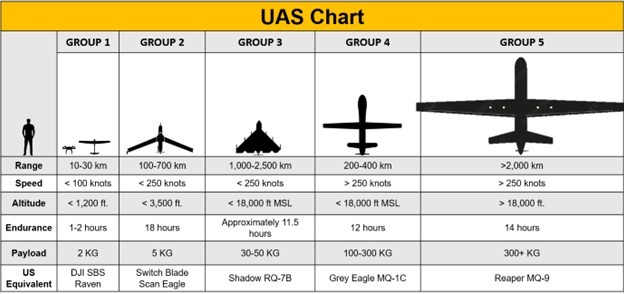
The GP is confusing Iran's neighbours not being ready to counter group 3 drones with the drones being inevitably effective. These drones are by necessity large and slow, because they need a lot of energy and aerodynamic efficiency to get their range. That means that they are vulnerable to cheap counters, which Ukraine is demonstrating very convincingly: even though Russia is now launching 800+-drone raids, the vast majority is shot down.
Even when those drones do get through, they are extremely inefficient. It's not just that they can't carry a heavy or sophisticated payload (more complex warheads are more effective, but way more expensive), the extremely high attrition ratio forces the enemy to try to target way too many drones per aimpoint. Instead of serving a few hundred aimpoints, the 800-strong raid is forced to concentrate on just a few, otherwise most aimpoints will get no hits whatsoever.
But also the only reason 800-strong raids can even be launched is Ukraine lacking the capability to interdict the launches. 800 group 3 drones have an enormous logistics and manufacturing tail, which a Western force would have no problem destroying way before the raid can be launched. For example, Iran in its current state can't launch such raids. So in practice Iran's neighbours would need to intercept only a handful of drones, which is hardly an insurmountable challenge.
[1]: https://mwi.westpoint.edu/wp-content/uploads/2024/05/FL1.jpg
Cheap munitions sometimes explode before they are launched, killing crews and destroying platforms.
Cheap munitions mean that CAS is a roulette. You waited for ten minutes for a support fire mission? Sorry, wait for ten more, whatever we launched has failed. Or maybe you're dead because the munition has hit you instead.
Cheap munitions can pin you down. Those cheap FPV drones that are supposedly cheaper than Javelins require dedicated immobile units to launch and guide to targets. Javelins are organic to infantry squads.
Cheap munitions are either very expensive or impossible. There's no cheap anti-ballistic missile and no cheap missile that can sink a warship in the Taiwan strait when launched[*] from Guam.
[*]: alright alright an LRASM would need to be flown closer by an F-35 but the point still stands
The war in Ukraine is being fought with all tiers of systems, ranging from Zircons and PAC-3 on the high end to booby traps on the low end. All of them are essential, and shortcomings on any of the tiers is ruthlessly exploited by the other side. Saying that it's only the small drones that matter betrays over-reliance on the gory FPV kill footage.
"QA, safety, blah blah blah" get implemented on every level as soon as it's feasible. You can just look at photos from Yelabuga and see how their assembly lines are not fundamentally different from Raytheon's. Ukraine is standardising their drone manufacturing. This is inevitable, because faulty munitions lead to
- killed friendly soldiers if the munitions explode pre-launch
- wasted logistic resources if they don't launch
- wasted time and targeting opportunity or friendly units not getting fire support when they fail after launch
The cost of faults is severe and much higher than just the cost of the munition itself.
It seems that you're misinformed about the real cost of modern FPVs used in Ukraine. Reports of sub-$1000 drones are years out of date and heavily relied on salvaged munitions, but there are only so many RPG warheads you can get for "free". Current FPVs are heavier, more capable, and cost a few thousand dollars. Further, it's reported that it takes dozens of FPVs to kill a single "hedgehog tank", which brings the total cost of one kill to a rough parity with "classic", "expensive" systems like the Javelin, except Javelins can be carried by a mobile squad, and launching FPVs requires a dedicated immobile unit with a long logistical tail.
Don't mistake forces not being ready to counter low-tier threats immediately with the threats being impossible to counter. Group 3 drones are very effectively countered in Ukraine, to the extent that it takes hundreds to deliver maybe a few TLAMs worth of payload to the target. There are mature systems being rolled out right now across western armies, from various gun-based solutions to APKWS. Group 2 drones are decimated with cheap anti-air drones. Group 1 drones are being handled with APSes, which work pretty well even in urban environments, as Israel has (very unfortunately) demonstrated lately.
> propulsion, warheads, arming and safety, QA, traceability, climate and shelf life stability.
You're entirely missing the point.
These do not need to be reliable for the scenario I hinted at. They also do not need to be armed.
They need to be large enough that if one of them is a higher quality rocket (not part of the $10k) that contains actual explosives, you have serious destruction on your hand. Maybe something that looks large enough for that will drive the cost up and we're talking $20k or even $100k instead of $10k.
The precise cost is largely irrelevant, as long as the total cost is a tiny fraction of the cost of a missile interception.
The point is you'd be multiplying the cost assymmetry by forcing a massively outsized response. Because if you don't try to intercept them, every future barrage will include a real rocket. If you do try to intercept them all, you'll be burning through massively expensive interceptors to take out a bunch of cheap toys.
If I was ever considering an insurgency, or a war, I'd be stocking up on vast quantities of toys, with the intent of making every radar constantly lit up by a number of possible threats.
It's a firework-grade rocket with no payload that can't even ignite reliably.
To imitate even a TBM or a MBRM, you need similar kinematics, even if you're running without a payload. Maybe your solid rocket motor would be a touch smaller because you're not delivering hundreds of kilograms of explosives, but it still has to be large because of the rocket equation. With a large motor you're looking at a lot of damage if it explodes at the launch point, so you need quality casting. You can't really save much money on the motor.
Then, you need a TEL. Because the motor is large, the launcher has to be comparable to the real thing. You probably don't want to have two different vehicles, so you keep the same vehicle; it needs to be armed, driven around, and set for launch. Not that different from the real thing.
So you've done all of that, and then you realise that your empty warheads are too light and the missiles (or warheads, if you split) don't interact with the atmosphere in the same way as non-decoy missiles do. What's worse, modern radars are perfectly capable of noticing that and discriminating the decoys. All of that effort, and you didn't win anything. Might as well add the payload.
The US and the UK spent vast amount of money chasing exactly your line of reasoning with nuclear warhead decoys. Chevaline is a culmination of the effort, and it's retired for 30 years. In the end, relying on decoys doesn't really work, they are too expensive.
Fancier CPUs change very little of this calculation, because compute is a very little part of the cost to begin with.
This is key. Are they ? The on field ones.
I wonder how much of that Ukraine is bothering with. Or Iran. Certainly Hezbollah are building down to a budget.
Hezbollah is a terrorist organisation, they don't need their contraptions to work reliably. GMLRS serves an entirely different purpose to rockets made of repurposed telephone poles, and is much more useful for a military force.
Also, don't forget the distances. Ukraine is fighting a war in their own country, with direct ground lines of communication to the frontline. On the other hand, you can fit three Ukraines just between Guam and Taiwan.
I was thinking about that. Wouldn't you be able to make it so the detonator gets armed by the operator remotely only once in the air and away?
The risk appetite countries in existential conflicts have is quite different from what we're used to. For example, there are plenty of videos of Ukrainian soldiers angle grinding cluster munitions open to extract submunitions to put on drones, but that's not a strategy that western armies can rely on.
Where you're right is repeatability. Mil-spec works the same on launch 1 and launch 500 across temperature extremes. Consumer MEMS you'd need to characterize each unit individually — fine for a demo, impractical at any scale.
Or do you mean to characterise the assembled vehicle?
While the pure gyro/accelerometer stuff does suffer from major problems the improvements in SLAM using just cameras in the last 15 years are insane.
He implemented a 1D tracker in his garage, took it to work and showed people. A few years later these bombs are taking out bridges and even sometimes hitting moving trucks.
Other than that, GPS is a one-way system, it does not know you exist, how fast your receiver is moving or "give" different information to one client vs another.
Even if it did, this is essentially a toy and moving slower and lower than a general aviation plane.
It uses accelerometers and other sensors because they can be sampled and integrated hundreds of times a second. The $5 gps module is 9600 baud serial and provides one update/second (or maybe 5/sec depending on which part number you pick).
I even have 1 that can remove up to 8 active jamming signals.
Gotta love what you can buy for $20
If China allows those unrestricted chips to be sold internationally but not domestically it would be a strategic long-term decision, I would think. Destabilize the neighbors but not themselves.
The more likely reason is that their government has simply not gotten around to restricting it.
Are you sure about this? MEMS IMUs have been popular and cheap for ~10-15 years.
I'm not sure the launch tube could withstand the heat of the rocket exhaust though. Although that might depend what it is printed with.
Merely having a device intended to guide the rocket is also the same penalty.
I'm impressed by the kid's engineering and gumption, but I think he's a bit.. misguided, if you'll pardon the pun. The video ends with shots of Russian drone war, and, bizarrely, photos of David Koresh.
I don't think this ends well.
You're omitting that the end of the video also features pictures of Martin Luther King, Vietnamese civilians during America's invasion of their country and Afghani Mujahideen freedom fighters during the Soviet Union's invasion of theirs; I think he's trying to make a point about technology enhancing the capabilities of people who are in any conflict with conventionally powerful forces, not an endorsement of David Koresh.
There now carpet bombing and murdering people in Iran, just like they mass murdered people in Gaza, and they’re doing it to cover up and distract from the fact that our government consists of raping pedophiles. That is who we are governed by. … but David Koresh excuses it and makes any opposition invalid, of close.
https://en.wikipedia.org/wiki/Carpet_bombing
The choice of targets is not legally legitimate (and the entire campaign is illegal AFAICT), and sometimes they used old/invalid intel, like what happened with that girls' school that's supposedly close to an IRGC base. Still, it is mostly individual buildings or installations rather than an attempt to flatten entire areas.
talking about "your line" is way too simplistic. think in second and third order consequences. Iran exported and financially supported terrorists because of a repressive theological dictatorship
Not so sure about South Lebanon. From whatever media coverage I saw, some look not that different from carpet bombing.
https://www.hrw.org/news/2026/03/09/lebanon-israel-unlawfull...
(they have also previously documented that Israel has done this in the past)
The meme will never die. Skynet could be hunting down the last of humanity hiding in caves, and those humans will be crying "maybe it will just be nukes, please god, don't let the robots white phosphorous us!".
It is not spectacular but it is vile and terrifying. No amount of your "rape, oh that's just surprise sex" will diminish what it is.
Two, at the very least, the most generous interpretation, the very first strike to start an illegal war of aggression that the Nuremberg trial clearly established as the “mother of all subsequent evil”, was not only on a girls school that killed dozens and dozens of young girls, but did so in a “double tap“ process where they observed that people arrived in ambulances and parents in cars to pick up very small humans, and then they hit them again with another missile. Let us be clear about what you are excusing… They intentionally splattered the guts and flesh of young girls and their parents rushing to save them all over a 300 foot diameter blast radius.
We can lie to ourselves that may have been a “mistake“ but as established during the Nunberg trials, there is no defense in claiming that if you started the illegal and immoral war of aggression.
Three, why are they hiding what is happening if it’s all above board? Why would they not permit unfettered access showing what is being targeted bombing and that the Iranians are lying when they say that thousands of civilian structures have been bombed including schools and hospitals? You trust Hegseth? Trump? Need I say more?
And all that is without even addressing that these people have done nothing but lie and lie about lying about lying.
And let’s also remember that as shocking as the files that gave been released, they have not even released even the slightly uncomfortable parts of the Epstein Files, let alone arrested any of the rapists and pedophiles that are now on yet another murder spree, starting that prosecuting everyone would cause the whole system to collapse!
If want to believe people like that, people who do nothing but lie, rape, murder and cover up for it; then I guess there is nothing else to say and you will have to deal with that on your own as it eats you up from the inside. I for one am opposed to these types of people and actions and will speak out about it even if people don’t like it. And I refuse to make excuses for it for any reason, be it personal weakness or comfort.
They also said nothing about Gaza.
I share your concern about both Gaza and Iran, but criticising people for calling out an exaggeration is not helping anyone.
Which is absurd, since all the technology he used was manufactured by the conventionally powerful forces and they can decide to not sell you their stuff.
Out of five and a half minutes of video, David Koresh appears for perhaps three seconds.
It does put a new twist on the recent controversy about 3d printers needing to be licensed, however.
Just licence everything private people can buy except (healthy food). /S
Microcontrollers and electric motors are too dangerous for the general public.
edit: Ok, I googled the guy
  > I have read the works of authors such as Jean Baudrillard, Desmod Morris,
  and Ted Kaczynski who believe that technology is harming us and the world.

https://wiki.opensourceecology.org/wiki/User:Alisherkhojayevhttps://en.wikipedia.org/wiki/Casualties_of_the_Russo-Ukrain...
"between 400,000 and 1.5 million estimated casualties (killed and wounded) during the Russian invasion of Ukraine from 24 February 2022 to November 2025"
Mostly due to artillery. Both sides are firing in the region of 10,000 155mm shells per day. For years.
The russians have taken close to 1.5 million casulties because ukraine engineering for cheap drones. Putin really, really f-ed up his "3 day military operation".
Be careful who you let manipulate those emotions.
Ascribing evil to someone who is trying to make a point in the gentlest and most respectful way possible makes you look like a crazy person, btw.
But that is not at all the actual story. Just think of how much the government has lied about and how much it constantly lies about everything all the time. You think it’s plausible they were just the most honest and righteous angels that didn’t do nothing at all in Waco? They pathological, murderous liars? I’m just trying to suggest you reconsider things, your relationship with the murderous, lying, psychopathic government.
Ironically, you seem to not understand what he is saying and doing with his inept, smug comment from a place of ignorance to protect his propaganda… a kind of self-hiding mental virus.
I get it is easier to believe we understand how the world works because we “learned it” from a government approved teacher when we were kids and we are now successful alpha slaves that have accumulated shiny things, but reality is simply that Waco was not what the government said it was.
And yet another level of irony, it is precisely what the government relies on, people simply rejecting anything that does not come from the biggest cult, government; the belief that these vile people we call government are any better than Koresh.
We are now governed by lying, murderous, raping, pedophiles … how is that different than Koresh… just on a massively larger and more evil planet sized scale?
Why did almost all Presidents up to and including Eisenhower praise Robert E Lee? Was Eisenhower a traitor also?
It’s amazing to me that people who complained about the government’s evils at various points or at the very least whine about how much of a meanie poopy-head the other team is, will just give the government a pass simply because they took the government propaganda bait; hook, line, and sinker.
The guy has a talent, and he put together a nice prototype based on OpenRocket [3], but with all due respect, this is not a rocket, and you are not going to win any war with this toy, even if all your enemy has are rocks thrown at you from pretty much similar distance.
The remix of computer games / Ukraine / Martin Luther King / Vietnam / David Koresh just adding more to the amateur spirit and confusion.
[1] https://youtu.be/DDO2EvXyncE [2] https://youtu.be/DDO2EvXyncE?t=280 [3] https://openrocket.info/
For all the technical info given in the video, there is a curious lack of any data regarding the actual accuracy of the system. What percentage of rockets tested managed to hit anything and at what range?
No lack of entrackment data generated by [edit] d̶i̶g̶i̶t̶a̶l̶ ̶t̶w̶i̶n̶ github repo of "the system".
Is there a simulation that has been documented to have the identical behavior and flight characteristics as the real thing? Does not seem like it.
If there is a difference, it is not a twin.
The other part is the limited production runs. Until last month, the DoD was generally purchasing ~100 of these annually. There's no scale economy in making these, so those 100 missiles need to support the entire production & R&D of the product.
Also if you want to harden the rocket against EMP attacks you need an inertial guidance system, and those things also demand extreme precision.
Once you add in modern electronics and guidance and reliability that cost quickly skyrockets, going up an order of magnitude at each step of complexity (advanced guided like the Javelin, cruise, ballistic, etc).
This is a rather basic (passive) seeker head by modern standards.
https://en.wikipedia.org/wiki/File:R-27_missile_homing_head,...
I think there's lots of people talking past each other on this post. These kinds of designs won't be as reliable as the existing designs, and they may have a systemic flaw, for example, susceptibility to disabling with microwaves. And they aren't going to work after sitting in an ammo depot for 15 years in the desert or after being dropped from a plane.
But these designs will cost just a few dollars more than the equivalent dumb munition (and can possibly be retrofitted), and can be two orders of magnitude more effective in the short term. The threat here isn't "guy in garage makes MANPADS", it's "IRGC converts 100's of thousands of existing unguided cold-war rockets into guided S2A and S2S missiles for $20 each". Even if it doesn't hit any target, each aircraft has a limited number of countermeasures and has to return to base if they run out or risk being hit.
Guided munition at a dumb munition price is enough to invalidate many strategies.
It clearly needs more work, but if an amateur can get this far at this low cost, odds are you'll see attempts at overwhelming attackers or defense systems by sheer volume with cheap decoys like this long before they become an actual threat in and of themselves.
Get the rocket a bit more stable, and force an attack to try to take out dozens of these because one of them might be a real threat, and you'll have created a problem.
We don't try to regulate those things out of existence like we do with new technology (drones and now 3D printers)
Kind of ridiculous that a country with more guns than people and 45k firearms deaths per year wants to regulate 3D printed plastic. Yet collecting and shooting actual guns is still an acceptable hobby in many states.
Hiya! (Grenade)
There's clearly a need for more cheap interceptor drones as well, but it's not like the US military won't start deploying those soon enough.
I don't want to use it for war. I think it would be a pretty cool technical project (if it works).
What nonviolent application are you imagining for a gps-guided rocket that is launched by pulling a gun trigger on a hand held mount?
A launcher for a climbing rope or grappling hook. Have you ever tried getting a rope up over a branch on a very tall tree?
Not joking - I considered it as a hobby project years ago until I discovered how hard it would be to do legally.
Really? I think rocket science is still not easy. Just look at how much nation states are spending on maintaining their liquid and/or solid fuel rocket programs. If they even have one, let alone both.
This book might give some insights into the why https://library.sciencemadness.org/library/books/ignition.pd...
Quote: "All this sounds fairly academic and innocuous, but when it is translated into the problem of handling the stuff, the results are horrendous. It is, of course, extremely toxic, but that's the least of the problem. It is hypergolic with every known fuel, and so rapidly hypergolic that no ignition delay has ever been measured. It is also hypergolic with such things as cloth, wood, and test engineers, not to mention asbestos, sand, and water —with which it reacts explosively. It can be It has recently been shown that an argon fluoride, probably ArF2, does exist, but it is unstable except at cryogenic temperatures.
[...] kept in some of the ordinary structural metals — steel, copper, aluminum, etc. —because of the formation of a thin film of insoluble metal fluoride which protects the bulk of the metal, just as the invisible coat of oxide on aluminum keeps it from burning up in the atmosphere. If, however, this coat is melted or scrubbed off, and has no chance to reform, the operator is confronted with the problem of coping with a metal-fluorine fire. For dealing with this situation, I have always recommended a good pair of running shoes."
Granted this is about a fuel that is AFAIK not used for MANPADs, but the joke about the running shoes could be made about most aspects of rocket propulsion.
I saw this pop up alongside its video thumbnail and nearly shit myself watching it and going "damn, that looks exactly like what's on those RU/UA drones going at each other"... https://www.ebay.com/itm/197224214645
"HS AI Vision Cube For Ultra-long-range Target Recognition tracking & Thermal" for as low as $175. I am feeling the potential ITAR violations straight through my screen.
And possibly landing on all kinds of watch lists.
I wouldn’t be surprised if some of the sellers there are just honeypots.
A name like “Ultra-long-range Target Recognition tracking” just screams “Hey, FBI, please come visit me and ask what I am building in the basement”
You could integrate acceleration to get speed - the flight is short enough to make compounding errors easy to ignore.
I think thanks to drones and RC hobbyists, there's a generally nice body of knowledge on how to get good enough data from consumer hardware to keep things flying.
‘Easy to ignore’ is not a term I would use here, especially given the motion environment of a rocket. It seems like it might be beginning to be borderline possible.
False, given how noisy MEMS IMUs are, and the accuracy required. Even Ring Laser Gyros drift quickly.
Realistically, I doubt there’s ANY system out there will be able to counter small weaponized drones that are flown manually let alone with AI, you might have some workarounds, but never a real counter.
Weaponized drones (say D_A) can be countered by other weaponized drones (say D_B), equally cheap or cheaper than D_A because the D_A is usually targeting something larger (so more payload) and typically has a longer range. D_B only needs to wreck D_A at a shorter defensive range. That's what Ukraine is doing.
You can also use drone swarms with coordinated action so that each drone in the swarm is only targeting one other drone, and automatic re-targeting if one node misses. [1]
I doubt it, as D_A's target is stationary (and could be reduced to GPS coords) while D_B's target is moving.
It's a good point, though I should point out that GPS denial is assumed in those sort of contexts as a first countermeasure so D_A likely has alternative targeting, and that smaller drones can move faster with less energy storage, which itself requires less weight, compounding the benefits of being smaller.
https://en.wikipedia.org/wiki/The_bomber_will_always_get_thr...
hardest issue as I mentioned in another comment is detection. Now on using other drones to counter a drone, there are other issues, as I built and tested some before, assuming you got the detection part done. The first one is guidance and correction mid-air, flying manually won’t really be practical due to the need for an extraordinary flying skills, which can’t be relied on in the field, the second part is the speed, you need to ALWAYS make sure the interceptor is faster to catch it up, third is the weight, I disagree about the payload part you mentioned, I have seen videos of light weight drones failing to wreck bigger ones, if you are relying on collision alone. Additionally, the telemetry/video/C&C for the interceptor, if jamming is already in place, your counter won’t work either.
The swarm will require a low latency comms link, centralized or decentralized, if the area is jammed, it won’t work. i have built a self-healing decentralized system using cellular in each drone, but that’s useless if the network is down to start with.
So they might work in a very specific use case, but not an ultimate solution to counter them.
This [2] talks about swarmer software used by Ukraine.
$1k-$2.5k gives a lot of room for tech to avoid jamming - ir or visible light, ultrasound, for in-swarm comms.
And I wonder if the battery itself could be weaponized. We have seen that a very thin layer of the right material can turn phones/pagers very destructive.
[1] https://www.twz.com/news-features/ukrainian-companies-prohib...
[2] https://united24media.com/war-in-ukraine/ukrainian-drone-swa...
https://www.ycombinator.com/companies/9-mothers-corporation
Given the war in Ukraine, wanting to build such things is certainly understandable. But still, this is the stuff of nightmares.
Why would lasers not work?
Those cheap drones are made from plastic, if you have a laser powerful enough and a target guidance system (like a camera and a PI) - then you would just need enough of them.
Not impossible but many times more expensive than the drone
And even in the case it could be useful as an addition to or paired with a tank etc.
At that point might as well spend the money to use a kinetic weapon with basic tracking and ballistic calculations.
- are cheap to shoot - do not fall on someones head if they miss (unlike firing bullets and rockets at a drone that will come down again) - do hit the target immediately if aimed right
Problems with lasers are, cooling, power consumption limiting mobile use - and indeed targeting and fog and clouds.
Those are bigger and noisier.
DJI ARGAS Series are good starting point.
Nowadays I fly nothing, but I do see them Iranian drones get intercepted from my porch in Abu Dhabi.
The fact I am watching it and not panicking anymore tells about how cooked I am.
https://www.redbull.com/id-id/worlds-fastest-filming-drone-b...
Even the fastest "real-time" LLM frameworks currently report sub-second latencies around 120ms. This is fine for high-level mission planning (e.g., "fly to the red house") but too slow to prevent a drone from hitting a tree at 50mph (80 KM/h)[1]
Whilst the Shahed-136 kamikaze drone typically flies at a maximum speed of around 185 km/h (roughly 115 mph or 100 knots).
[1] https://arxiv.org/html/2602.19534v1 [2] https://en.wikipedia.org/wiki/HESA_Shahed_136
LLMs (Large Language Models) are far from the only type of AI around. It's a pretty broad field, and there are real-time AI systems, for example, self-driving cars, which have the response times you're thinking of. [1]
[1] https://en.wikipedia.org/wiki/Artificial_Intelligence:_A_Mod...
YOLO is a good example for something that can work.
What kind of systems are you thinking about? Jet airplanes for sure are completely safe from small drones.
That feels like a bold and unsupported assertion. Ask a pilot how they'd feel about takeoffs or landings through airspace filled with adversarial drones.
Until they land then, due to their cost, they become a very juicy target to aim for.
I guess a lot of people will not be happy with this xD
Seeing people in Israel, Iran, the general Middle East as well as the Ukraine live in fear of drone strikes might have incentivised this person to come up with a potential way to deal with these threats.
Cheap air defense would equilibrate drone warfare again:
Currently drones are much cheaper that the systems that take them down.
The fact that home made drones can cause such havoc to even the best funded military is an equalizer when the military with all the power is actively trying to completely eliminate the otherside.
There are no home made devices a Gazan can build that can protect from a 2000lbs bomb.
USA/NATO/allies heavily rely on Patriot AA system. Even if you disregard the prohibitive 100x cost difference, there are about 2500 Patriot compatible PAC missiles.
This is why gulf states are scrambling to get their hands on cheap alternatives - Ukraine manages to shoot down over 90% of all drones heading their way, usually it is over 400 per day in big waves.
FPV.
But I really hate the whole weaponization of these FPV drones (as opposed to the bigger fixed wings ones), not just they ruined the fun hobby that a lot enjoy, but also increased the prices for the parts. Before 2022 whenever I talk about drones everyone is enthusiastic about them, what benefits they can bring like drone deliveries and all, after that, you get a hostile reaction or the government putting you on some watchlist.
Just to give you one figure: estimates are that between 1000 and 1500 Shaheds have been downed by interceptors during last February. That's not a 100% kill rate but it definitely isn't 1% either. And they're getting better every week.
https://www.youtube.com/@LafayetteSystems is similar project, also by actual defense contractor, and less opensource.
There is no consideration in the law whether he actually plans to use it or ever meant any violence, nor any consideration of whether it violates ITAR.
As someone who has a lot of interest in weapons law, this is probably about the only kind of weapon that can't be even legally contemplated in the USA, worst case for almost anything else you can get an NFA stamp. The USA is absolutely paranoid about yielding their air power so they come down like a ton of bricks against anyone that might want to defend against that.
(Would be cool to see an ATGM variant too!)
Nowadays you can even use the LSM6DSV320X which has both a low-g and high-g integrated which basically obsoletes the high-g ADXL375 and saves some space, but it's not quite at the price and supply reliability of the LSM6DSOX since it is less than a year old.