Worth noting that it is closed source. Would be worth contributing patches to OpenSnitch to bring it up to parity with Little Snitch.
> You can find Little Snitch for Linux here[1]. It is free, and it will stay that way.
https://obdev.at/blog/little-snitch-for-linux/
The core issue is simple and uncomfortable: through automatic updates, a vendor can run any code, with any privileges, on your machine, at any time.
-----
If the author is serious about this, then they should make their own program completely open source, and make builds bit-for-bit reproducible.
For all I know, the proprietary Little Snitch daemon, or even the binaries they're distributing for the open source components, contain backdoors that can be remotely activated to run any code, with any privileges, on your machine, at any time.
I think it's still better to make it public and only partially Open Source so that some people can benefit from it. If you don't trust us, that's completely reasonable, just don't install it.
Did not know about LittleSnitch, will definitely check it out.
TL;DR it's closed source and there's open source alternatives.
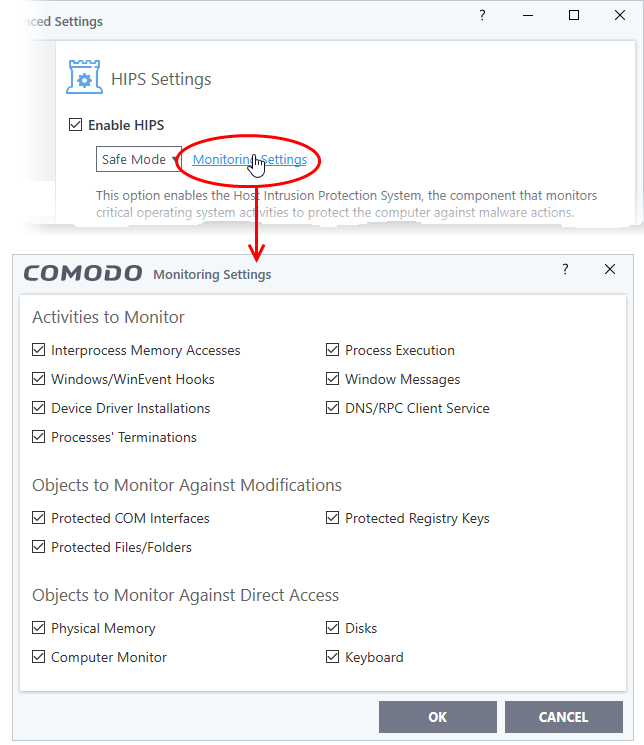
[0] https://help.comodo.com/uploads/Comodo%20Internet%20Security...
Isn't MacOS just *nix under the hood? Genuinely curious about this difference.
The systems LittleSnitch uses to do packet inspection are very much OS-specific. There's no generic standard for doing high-performance packet inspection. XNU and Linux are *very* different kernels. Linus Torvalds built Linux from scratch as a monolithic kernel because he wanted a Unix-like OS that wasn't encumbered. XNU is based on the Mach microkernel though XNU is a hybrid or monolithic kernel, not a microkernel. The point is, they have very different heritage and very different systems for... well pretty much everything. So "just *nix under the hood" is kind of true but also completely besides the point as far as packet inspection goes. And even then, while there are a lot of similarities between the core system tools of Linux and macOS, they're still quite different and unless you're limiting yourself to POSIX-standard interfaces (which are only a fraction of the system), you're not going to be able to use the same code on both systems.