Posted by 01-_- 12 hours ago
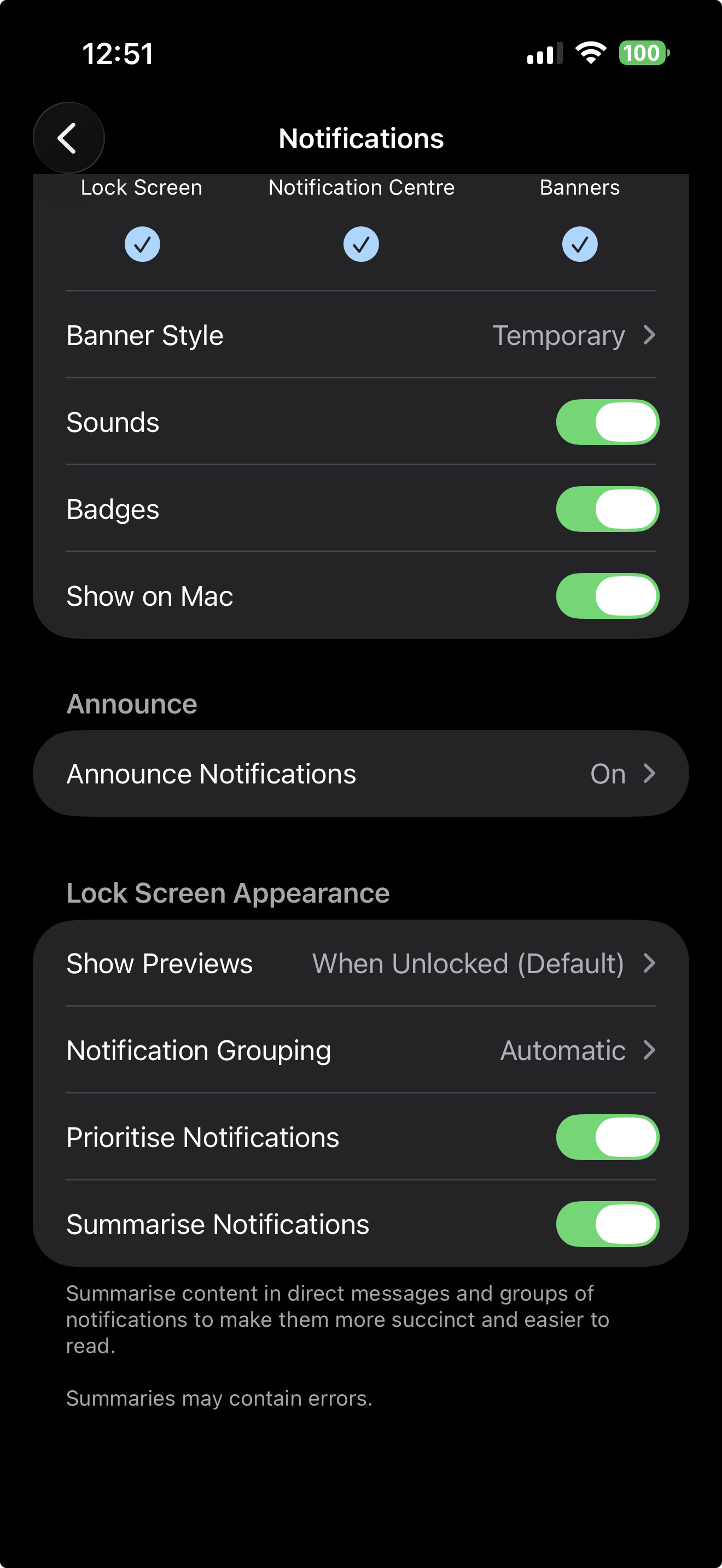
Screenshot of notification settings page: https://files.catbox.moe/3gwjoy.png
I also get that in Texas they are fine "criminalizing" protesting, but that's just part of its hyper-authoritarian "charm", and a lot of us don't think that protesting in itself should be criminal.
the verification accepts other people's credit cards and IDs. so the 'age gate' doesn't even verify the person using the device, just that someone with a credit card touched it once. it's all the privacy cost of an identity check with none of the supposed child safety benefit
Data Protection is implemented by constructing and managing a hierarchy of keys, building on the hardware encryption technologies built into Apple devices. It's controlled on a per-file basis by assigning each file to a class; accessibility is determined by whether the class keys have been unlocked.
The four protection classes, from strongest to weakest:
NSFileProtectionComplete — Files are only accessible when the device is unlocked.
NSFileProtectionCompleteUnlessOpen — A file can only be opened when the device is unlocked, but is not closed when the device is locked — it's encrypted when the last open handle is closed. Suitable for data being uploaded in the background.
NSFileProtectionCompleteUntilFirstUserAuthentication — The resource cannot be accessed until after the device has booted. After the user unlocks the device for the first time, the app can access the resource and continue to do so even if the user subsequently locks the device. Fortify This is commonly called AFU (After First Unlock). This is the default class for all third-party app data not otherwise assigned to a Data Protection class.
NSFileProtectionNone — The resource has no special protections. It can be read or written at any time. The encryption only uses a key derived from the device's UID.
The BFU/AFU Distinction — The Heart of the Signal Issue
Apple's iOS devices operate in two key security states that directly impact data accessibility: Before First Unlock (BFU) and After First Unlock (AFU).
When an iPhone is in the BFU state, it has been powered on or rebooted but not yet unlocked with a passcode. In this state, the Secure Enclave does not release the decryption keys needed to access most user data.
Once you've unlocked once (AFU), files protected with NSFileProtectionCompleteUntilFirstUserAuthentication become accessible, the Keychain is available, and background processes and apps can access encrypted content as needed.
The Signal notification content issue connects here because notification data (including previews) stored in the default CompleteUntilFirstUserAuthentication class remains decryptable by any process — including OS-level forensic tools — as long as the phone has been unlocked at least once since the last reboot.
They rest who "evaluate their threat models" can practice Spy-life-gymnastics by disabling it from Signal.
The article you're commenting on is about people who obviously would have wanted this disabled, but didn't have it disabled, presumably because they didn't know about this issue.