Posted by frays 5 hours ago
We’ve figured out the human replacement pipeline it seems, but we haven’t figured out the eduction part. LLMs can be wonderful teachers, but the temptation to just tell it ‘do it for me’ is almost impossible to resist.
If you remove the "without AI" and the end, I've been hearing similar anecdotes about fizzbuzz for years (isn't the whole point of fizzbuzz to filter out those candidates?)
We usually hire for problem solving capabilities and not so much for technical know-how.
That’s at least how I read your comment.
This situation in particular was a React role so there is an expectation that when you list React as one of your skills on your resume then you know at least the basics of state, the common hooks, the difference between a reference to a value vs the value itself.
These days you can do a surprising amount with AI without knowing what you are doing, but if you don't have any clue how things work you'll very quickly run in to problems you can't prompt away.
But he was a great teacher anyway. He was engaging and kept the kids in line and learning. I eventually learned the truth, and most of my classmates forgot about it. Teaching, like flying a plane or driving a train, might become more about keeping watch over a small group of people and ensuring that things don't go off the rails, and that's fine.
I think it helps that it's a very narrow field to look at, compared to fuzzy and big-picture view of social studies, for example. So much room to be confidently wrong... And sadly I can't think of a solution, LLMs or not.
E.g. in Hungary I had a university CS professor that originally wanted to be a highschool teacher and a highschool physics teacher that originally wanted to be researcher. Their choice of degree didn't determine which outcome they got. The researcher and teacher curriculum had an 80%+ overlap.
A Physics Prof Bet Me $10,000 I'm Wrong
All things I learned in school which were wrong information.
Not to mention, the current state of education is far worse. I don't think most realize how low the bar is.
My “earth sciences” teacher also once tried to argue with me against the universal law of gravitation. (no, she was not referring to Special/General Relativity. She didn’t agree two objects in a vacuum fall at the same speed regardless of mass.
We can all agree that both human "experts" and LLMs can sometimes be right, and sometimes be confidently wrong.
But that doesn't imply that they're equally fit for purpose. It just means that we can't use that simple shortcut to conclude that one is inferior to the other.
So where do we go from here?
Are they or aren't they
Now I’m certain that there exist those mythical human instructors who can do better, but that’s not worth much if 99.99% of people don’t have access to them. Just like a good human physician who takes their time with the patient is better than an LLM, but that’s not worth much either given that this doesn’t match most people’s experience with their own physicians.
Not really, not if you want to ask it deep questions. It won't have an answer that is deeper than something that you can find online, and if pressed it will just keep circling around the same response.
The reason is that this "thing" was never curious, never asked questions, and never really learned anything. It just has learned the Internet "by heart", and is as boring as a human teacher who is not really curious about the subject they are teaching, and has just got some degree by "by hearting" some text book. Of course it does it much better than a human, but it is fundamentally the same thing.
For me the best human teachers were the ones that managed to make me interested on topics that I thought are boring/useless (many times my opinion being stupid, mostly due to lack of experience).
So far with LLM I learn about things I know something (at least that they exist) and I am interested in, which is a small subset of things that one should learn during lifetime.
The kids learnt all about Team Fortress 2, Roblox, Rainbow Six etc. They also learnt how to game the learning system so it looked like they were doing their work.
You're certain that mythical instructors exist (?) who "can" do better?
Are human instructors more competent as teachers than AI teachers, or are AI teachers more competent as teachers than human teachers? No "this or that can happen," just a definitive statement please.
AI is likely a million times better student than my dimwit cybersec meatbags...er, majors, for sure, as well! Don't have a reliable way to measure or experience why/how, tho, so I'm not out here claiming it. Even if I did, why would I argue for their replacement?
[0] Episode webpage: https://share.transistor.fm/s/31855e83
Also, you could spin up your own educational agent with very strict instructions on guiding the user instead of just doing the work. Of course you can always go around it but if you're making an effort to learn, this is a good middle ground.
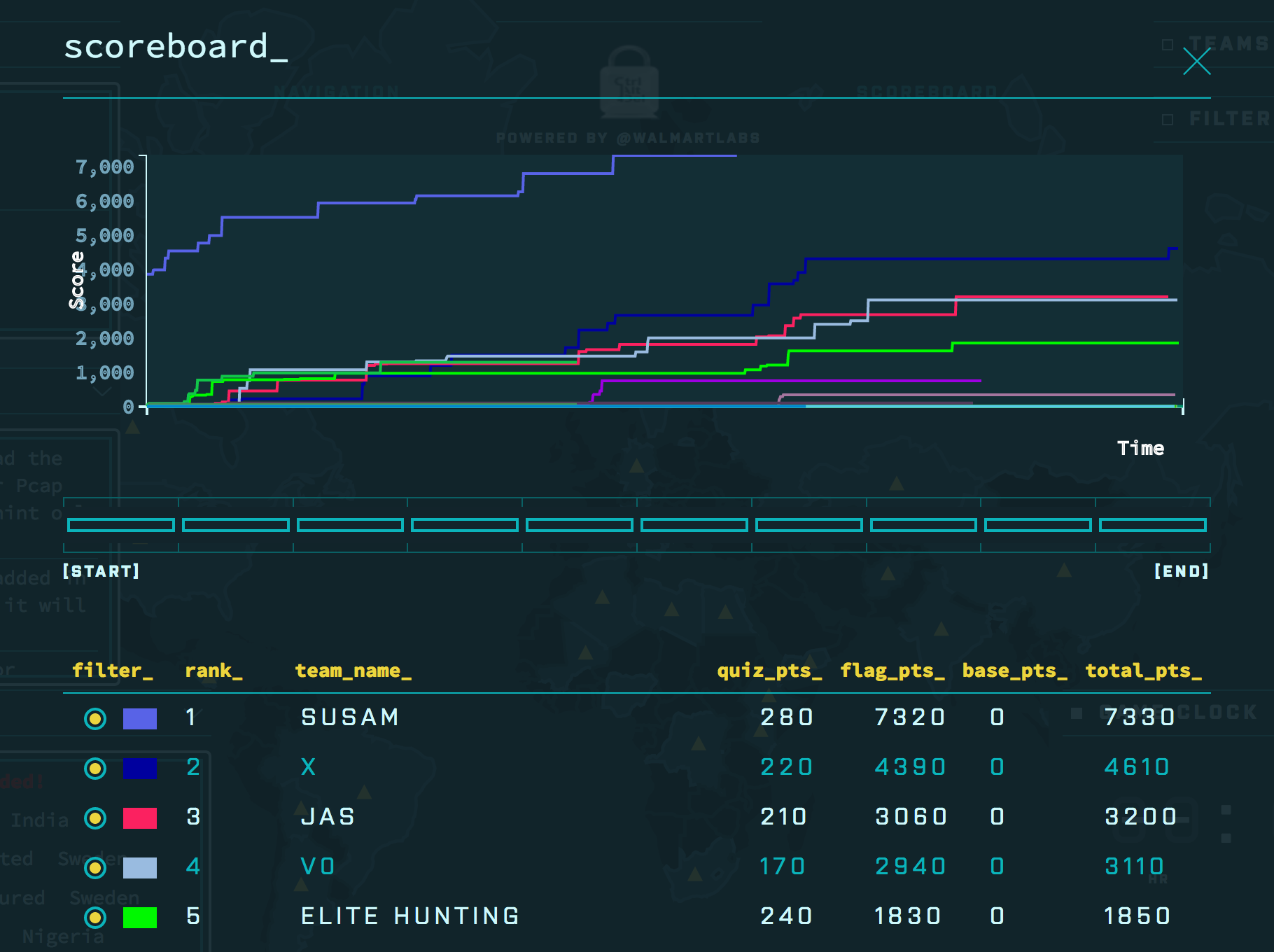
The solution is just to make CTFs harder, but when do CTFs become too hard? Maybe the problem is that 'hard' CTFs are fundementally too 'simple' where it's just a logic chain and an exhaustive bruteforce towards a solution since there really are limited ways to express a solution in plain sight.
Or maybe human creativity has been exhausted and we're not so limitless as we thought. Only time will tell.
I had another idea spring to mind: we could hide two flags, one that could only be found by ai agents and not humans or tools written by humans.
Do you publish it somewhere? Here's a sample my my js obfuscator output: https://gist.github.com/Trung0246/c8f30f1b3bb6a9f57b0d9be94d...
we have very powerful simulation tools so something like "project a pattern at these angles" wouldn't really work as you could simulate that.
I guess something cool is that we can make simulating the solution very expensive, but in real world it would be free since it's analog... As long as simulations take longer than it takes for a human to find a solution it would be a pretty good way to deal with it. I am sure people smarter than me can come up with something.
Maybe I was too early to dismiss human creativity.
There are a million places where a computer can interact with a non-digital system in a loop.
- Tune an FPGA, or a whole data-center, or just a physical computer.
- Make a drone fly somewhere.
- Design a selective toxin (or anti-toxin).
Or, you know, get more people to click on adds. All totally possible to automate.
"new" does the same thing and is probably just a better descriptor then frontier
"Frontier models break the open CTF format" is good
"Frontier AI..." means wtf is Frontier AI.
Because of course it exists (just googled it): https://frontierai.company/
Well actually I get it. In cycling motor doping, putting a hidden engine into the bike, seems more offensive than regular doping. I think this is because there is a continuum from eating well to taking supplements to injecting stuff, but having a engine breaks a fundamental idea about cycling. Similar hacking is about cleverly abusing the rules.
This stands out to me, and speaks perhaps broader than the article itself? I’m sure this has been in the spotlight before, but well put for many areas I think.
My fear is that they never get to the level they need to be at to create good software even with the help of AI. So, although an expert with AI can create great software, that is not where we end up. In stead we will have vibe coded messes by people who barely have any grasp of what is going on.
You could even go so far that anything loaded on your computer is fair game, but not more than that (certain competitive programming competition for example allow unlimited amount of paper material - for CTFs you probably need much more than that, therefore electronic).
It's a lot harder to detect cheating when your only trace is how fast someone submitted the string CTF{DUck1e_Pwned}