Posted by surprisetalk 3 days ago
>Because physical exams are performed in mobile vans in NHANES, data could not be collected in northern latitudes during the winter; instead data were collected in northern latitudes during summer and in southern latitudes in winter. To address this season-latitude aspect of the NHANES design, we stratified the sample into two seasonal subpopulations (winter/lower latitude and summer/higher latitude) before examining vitamin D status.
Yeah, I'm not surprised that the rates for vitamin D deficiency were low.
>Less than 1% of the winter/lower latitude subpopulation had vitamin D deficiency (25-OHD <17.5 nmol/L). However, the prevalence of vitamin D insufficiency in this group ranged from 1%–5% with 25-OHD <25 nmol/L /.../, even though the median latitude for this subsample (32°N) was considerably lower than the latitude at which vitamin D is not synthesized during winter months (∽42°N).
and the more northern latitude in summer:
>With the exception of elderly women, prevalence rates of vitamin D insufficiency were lower in the summer/higher latitude subpopulation (<1%–3% with 25-OHD <25 nmol/L)
Now imagine if you lived in northern Europe around the 60th parallel, where the sun doesn't get high enough in winter to produce vitamin D.
At any rate another factor is that in the Northern regions it's my experience people do their best to soak up as much sun as possible.
I grew up in central Michigan and thought the same about the sun until I spent a few years in southern Arizona. The sun there feels like a heat lamp in summer. The low humidity makes the atmosphere absorb less energy. Although it feels like it's about 5 C cooler than it actually is because sweat evaporates so quickly, but once it gets to 43 C you actually just feel vaguely ill just going outside. Standing in the sun is just not something you do. It's a very unique experience to lick your lips and have your tongue feel cold.
Of course, neither of those were as bad as Houston in August. It was 38 C and 98 % relative humidity. And, I will point out, it had not rained. That's just what it's like. You walk outside and your glasses instantly fog up and you feel like you desperately need to shower.
Those long summer evenings in northern Europe are thus not all that useful for VitD.
Lower wavelengths like IR (heat) can more easily pass through the atmosphere. And since the Sun is lower in the sky, it hits more of your body. So you might feel more of the heat, while still getting less UV.
I moved from Indiana to Norway - Trondheim, which is about in the middle of the length of Norway. During the summer, I can read outside at night even though the sun technically goes down for about 4 hours in June. It never gets darker than twilight. A few clouds means you might just have sunset all night. The sun does get surprisingly hot and very warming if we happen to have a sunny day. Jacket in the shade, short sleeves in the sun even though it is 18C/65F.
The reason for this is that the sun is at a low angle, so it hits more of your body than it does when the sun is overhead - like you'd get in Australia. This also means that while you need some sunscreen during the day - from about 10 to 5 - it doesn't burn as much. It is less intense in that way - but it just feels different.
During December, days are 4 hours of very weak light.
Since it hits body more perpendicular its not rocket science, I realized this around age 10 myself and I am not the brightest in the pack.
Not sure if I parse this correctly - I'd imagine you need more sunscreen at "low angles" due to more severe and longer exposure? Low angle -> more body surface area exposed directly at near-right angle to Sun -> more direct absorption -> more sunscreen needed?
Um most Swedes, even with not-super-pale skin get a sunburn every june. Just being outside in the sunshine for 2-3 hours without any protection and they turn "kräftröd" as they say.
Still, it’s known that your skin color is the main thing that matters, which is why Australians have the worst melanoma statistics. I guess mine tans fast enough to keep up with the seasons here.
The exposure angle of your body also has a effect, but much weaker.
(Yet I can feel that I got slight sunburn being out for about 15 minutes today. So you still need to be careful.)
In winter the UV index might often peak at 1-2 on a clear day.
This is why noon sun is the most dangerous.
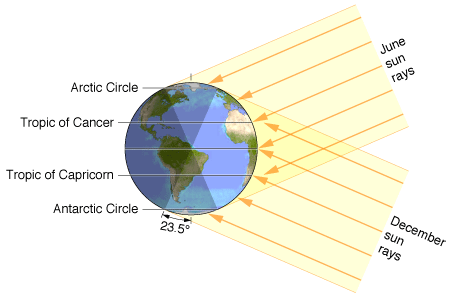
https://physics.weber.edu/schroeder/ua/EarthCirclesAndSunRay...
The only thing that varies over the year is the path it takes to get there. At the solstices (summer/winter) the path curvature is maximal while t the equinoxes (spring/fall) it is a straight line.
Before everything was an app, people had physical globes at home which could illustrate this very well.
For example, in Florida in the summer, the sun is close to directly overhead at noon. In Scandinavia in the summer, the sun is only about halfway up the sky from the horizon at noon.
As animals basically slowly starve over the winter, they consume their fat and also get some vitamin D back. It helps shore up the lack of sun in the winter.
Like... all of Finland? And most of Norway?
Both countries where the answer to "when does the sun rise?" can be "at the end of January".
And what were they doing for the other 9 months of the year?
Can redheads produce Vitamin D in these darker conditions while others cannot do so effectively?
https://www.sciencealert.com/evolution-favored-genes-linked-...
Wait, no, that's inverted. Our ancestral state out of Africa was dark skin and we evolved light skin when we were no longer subject to the UV pressures there. It makes sense to me since the advent of light skin is quite recent in our species, and the darkest skin requires a bunch of pigmentation genes to be set just right, so random mutation can easily produce lowered pigmentation, so adaptation to the Vitamin D pressure would have been quite possible. I remember looking at this ages ago and it was pretty well-known at the time but I just took a second look and it seems it is still quite established though the advent of light skin among humans is not as smooth as previously thought: https://www.anthropology.net/p/the-evolution-of-european-pig...
Just in a smell-test way, we'd have had to sustain these lighter skinned populations under intense UV selective pressure for a long enough time for them to migrate North out of Africa. That just sounds unlikely on its own.
Sunlight has many pathways in the body, and increased vitamin D levels are just one of those pathways. Swallowing one element of a many-element pathway cannot simulate the human synthesis of vitamin D! This should be obvious! Your car might not run because of bad needle bearings, but the solution is not to add them to the gas tank! First, you must always understand.
Sunlight / vitamin D is an especially aggravating issue because we have increasing amounts of research on how sun exposure improves general health. Sleep quality and regularity, mood, cancer incidence (as the article notes), eyesight, skin conditions, overall mortality, virtually every part of human health is improved by going outside. And when I say "improved" I mean improved to such a degree that it would blow 95% of prescribed drugs out of the water. See, for example, the Melanoma in Southern Sweden study where the highest sun exposure cohort had _half_ the all-cause mortality of the lowest group. Unfortunately the Western medical establishment is thoroughly captured by industry and you can't sell a pill that makes you go outside.
Of what utility is the truth in decision-making if it is such a narrow truth that it might as well be a falsehood in practice?
Alcoholics talking endlessly about flavonoids, obese people insisting in polyunsaturated fat mayo, sedentary people that don't resistance train drinking soda with protein in it.
Not sure how your plan should work?!
So if you live in a northern country and you don't like fish, I suppose it's quite a good idea to take a supplement.
Though as OP said, even if the sun isn't strong enough, there are plenty of benefits to going outside beside vitamin D.
We really need to drill down into ethnic and racial boundaries to really make sense of how much sun exposure helps us.
The strongest evidence for Vitamin D is in people who are severely deficient. Bumping up to a normal range can provide some improvements.
The health influencers started noticing that the Vitamin D studies coming out weren't matching their original hype for Vitamin D, so many pivoted to trying to make claims that most people are severely deficient and just don't know it, which provides a convenient out to dismiss the studies that didn't pre-filter for people who were severely deficient. You can find waves of people on social media repeating the idea that almost everyone is Vitamin D deficient and encouraging high dose supplementation still.
Speaking to a doctor who runs Vitamin D labs as part of her annual physical screening process, she's now actually seeing more people who have excess Vitamin D than too little Vitamin D. Upon followup she discovers that patients have listened to a podcast about Vitamin D and started taking it regularly, unaware that they're pushing their levels into the range where it can start doing more harm than good.
Vitamin D is tricky because it lasts for a very long time in the body, which means steady-state supplementation can take a very long time to stabilize. I suggest anyone supplementing for a long time get a blood test, which can be ordered without your doctor if you can't get your doctor on board.
On another topic: Fish oil has also gone through a similar cycle of being hyped up based on early results, with higher powered follow on studies showing much less interesting results.
The thresholds for 25-OH vitamin D: <20 ng/mL → deficient, 20–30 ng/mL → insufficient.
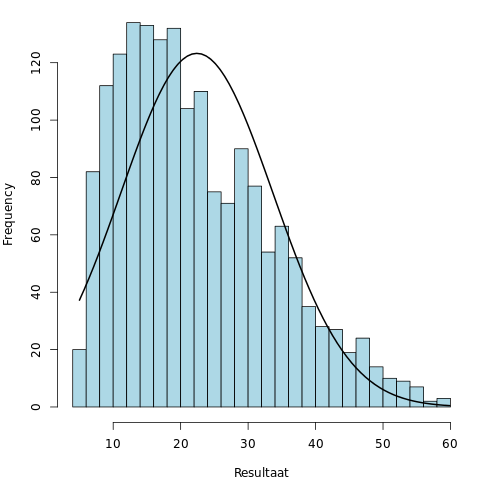
When I looked at all 1738 blood samples that had their Vitamin D tested between Feb 1, 2020 and Mar 13, 2020 (We were looking into the link between Vitamin D and COVID-19): The median (P50) was 20.1 ng/mL and the average was 22.4 ng/mL. Standard deviation: 11.24 ng/mL Half the samples were deficient, and the next 20% was insufficient.
Coming out of winter in Europe in a country with limited sunshine: most of the population is deficient in Vitamin D.
Histogram: https://files.catbox.moe/p785wx.png
The software actually does a Lilliefors normality test which returns a big No on this data.
On a personal level: I used to struggle with "winter dip". Taking Vitamin D supplements, as well as moving to South Africa, has both improved it a lot
We're among plenty of inside-dwelling nerds here. Do the test. Don't listen to folks like the parent, don't let yourself be discouraged; check your blood level and act on it if necessary, it's fast and cheap. I even had a test done at my home, you can schedule that online these days! You're much more likely to be severely deficient than have it in excess (it's quite hard to get to toxic levels anyway, you'd need to be really irresponsible about it) and once you confirm that, supplementing can help you tremendously with plenty of mental issues you may be experiencing. It won't fix you up, but it can make it possible for you to fix yourself up in the first place. And if the test shows you have adequate levels already - good for you.
(and if you're too depressed to even arrange the test, it may make sense to start supplementing blindly - but don't exceed ~10K IU D3 daily and make sure to stop after 2-3 months tops. Hopefully at that point it'll be easier for you to finally do the test to know whether to continue or not; don't keep taking high doses blindly, toxicity is hard but not impossible to achieve and you really don't want to be suffering from it. You almost certainly won't reach it with 10K IU when starting from deficiency, but it you happened to be on the high side already at the start it could be dangerous when prolonged)
Make sure you test after a very long time, such as a year of steady supplementation. A lot of the excess Vitamin D cases were taking less than 10K IU daily.
This is the entire issue. You get vitamin D from the sun. The concept of "steady supplementation" of vitamin D is not logical, unless your sun exposure is also steady, which is where the not-so-useful guidelines come from: some mean of some distribution of some skin tone of sun exposure, leaning on the "less" side of things, with current recommended values based on means from over 50 years ago.
I would never take 10k steady, because I don't live in a cave!
https://www.questhealth.com/product/vitamin-d-test/17306M.ht...
Definitely not the cheapest place to order the test from, but it will get the job done.
On the other hand, when our body synthesizes Vitamin D itself it seems to regulate that process to prevent overdose. So I've just settled on supplementing in the winter based on my best estimate of the correct dosage, then let my body do its thing in the summer. No issues so far, and supplements have had a major impact on my fatigue/energy/depression levels in the winter
But just as a human experience, the first time I ate cod livers, it was hard to accept. Then I started spreading them on toast for breakfast, and realized that they were quite delicious, but very very much an acquired taste (and I eat almost everything).
As far as Vitamin D, there does seem to be a correlation between deficiency and severe coronavirus disease
https://www.mdpi.com/2075-1729/15/5/733
[edit] to say, I love chicken and cow liver, but it took awhile to get a taste for fish liver. Pork liver, however, is putrid. I don't think I could eat that again.
Which is absolutely delicious, even for a kid; it’s one of the meals I still remember loving. You should try it!
It was taken for its Vitamin D, not for its omega 3s.
In a lot of things it was pretty good at what they used it for though, that does continue to be true.
Not really. It isn't possible to be severely deficient in vitamin D without knowing it. By definition, if you are severely deficient in vitamin D, you have rickets.
> almost everyone is Vitamin D deficient
This was the red flag that made me realize it was BS early on. If everyone is deficient, then it must not be that important.
Most people are overweight. Does that make being a healthy weight not that important?
Here are a few highly-cited articles to get you started:
https://link.springer.com/article/10.1186/1471-2458-9-88 https://www.nejm.org/doi/full/10.1056/NEJMoa1614362
I suspect that a relatively low percentage of people in a solid number of wealthy countries meet these qualifications.
> If everyone is deficient, then it must not be that important.
This isn't sound logic. Something being common doesn't make it unimportant or less of a problem.
Except for the things that you get from sunlight, not diet.
> If everyone is deficient, then it must not be that important.
But nobody who lives in e.g. East Africa and spends a lot of time outdoors is deficient.
So it's actually pretty reasonable to say that a modern indoor lifestyle combined with long winters would truly lead most people in those regions to being deficient.
Many things about our society are extremely new compared to the conditions for which our bodies are evolved to be in.
How do you think they define healthy levels of other hormones like testosterone and estrogen? They look at the range of levels for them, they look to see when they think diseases start, and they say those are correlated and you should adjust.
All cause mortality is correlational for vitamin D. Various disease outbreaks (common cold, etc) and severity are correlational for vitamin D. etc We even know by which mechanisms so it's not like this is far fetched stuff where we're overlooking things.
This kind of stuff slaps you in the face if you live in the northern half of europe. To then think us now spending the majority of our waking hours indoors and the prevalence of those things and seasonal depression in winter when one leaves in the dark and comes home in the dark all has no effect....I think that's just hubris.
And somebody may not even realize this until they decide to start downing a few more chicken breasts per day and suddenly see their energy levels skyrocket, their hunger diminish, and so on. But if you surveyed them prior, they'd claim to feel perfectly normal.
Another one is testosterone which is extremely unfortunate because there's no remotely natural way to meaningfully regain significant amounts of it, but TRT is a life changing thing for many people who have low testosterone which in modern times is a huge chunk of all men and essentially all of them over a certain age.
I would suspect you're a man under 60.
I don't think your statement applies to the elderly (e.g. my mum needing D and Calcium for osteoporosis).
And I've seen many active healthy female friends under 60 actually need suppliments (I'm ignoring the stereotypical yoga worried well): plus pregnancy or health issues have an impact too.
But maybe I'm a victim of sampling bias since the men I know seem much less likely to see a doctor.
Although feeling bad, going to a doctor, getting labs, taking a calcium supplement is completely legitimate and a very different story from watching a YouTuber say ‘everyone is vitamin D deficient’ then going out a buying a bottle of supplements.
I’m going to go out on a limb and guess that people who get outside a lot protect their health through both natural vitamin D from UV light exposure and cardiovascular exercise.
The original data was a small number of studies with a small amount of old (1980s?) data that found a slope with so-so correlation.
The revised math finds a much smaller slope with what appears to be much worse fit to the same old data. The data was nearly horizontal before, but after the math changes it's much further away from 0.
The original study was making predictions near the data. The revision is doing massive extrapolation, far away from the range of what any of the studies tested.
I'm not a statistician, but it's not surprising to me that it's being ignored.
Likewise, 23ng/ml while taking 2000iu/day of dry vitamin-d.
Switched to 5000iu +K2 in MCT oil, -- 8 months later I'm at 64ng/ml.
Those are both very important. I take a Vitamin D + K2 softgel with a meal that has some fat in it.
I started taking them at the recommendation of my podiatrist after I broke my foot last winter (third metatarsal fracture, specifically, ouch).
As for supplementation, sunlight has been estimated at providing up to 20,000IU per day, which I think (not medical advice due to the lack of study), from a mechanistic point of view, suggests an upper limit to daily supplementation.
https://pubmed.ncbi.nlm.nih.gov/33549285/
Look at the molecular structure
https://en.wikipedia.org/wiki/Vitamin_D
that's a freakin' steroid with one of the bonds in the rings deleted
The "Vitamin D" moniker has just stuck around since it was named in 1922.
[1] https://pubmed.ncbi.nlm.nih.gov/32918215/
[2] https://karger.com/bpu/article-abstract/41/1-3/130/328295/Su...
I never heard that in Germany. I only heard that if you use certain medications like cortisone that vitamin d could be problematic. Most doctors will give vitamin d supplements when prescribing cortisone, at least in Germany.
I do take it in the winter, but I'm quite skeptical regarding the panacea hype.
I have seen neurologists, imunologist, infection diseases specialist, everything is boreliosis qack and even somatic doctor...
Funny thing is before i got sick i spent 3 months on tenerife, so no reason for me to have low vit D. But it was probably depleted by immunity trying to fight the repeated infections.
so yeah, get your vitamin D checked if you feel weak, low on mood or anything out of zen
I landed on just above deficient when tested.
My wife was on kind of same regime, but didn't follow it very strictly. She was deficient, but not extremely.
It was quite surprising, because I got warned when buying 4k unit tabs that they were quite strong and pharmacy clerk suggested taking less.
I tend to have some eczema on my scalp that sun really helps with.
Maybe a lamp that costs the equivalent of a week of holidays in a warm place could be justified after all.
I wonder if taking mushrooms soaked in the sun improves absorption compared to supplements?
The point about letting the mushrooms soak up sunlight to boost their vitamin D content is totally true and absolutely fascinating though!
> When commonly consumed mushroom species are exposed to a source of ultraviolet (UV) radiation, such as sunlight or a UV lamp, they can generate nutritionally relevant amounts of vitamin D. The most common form of vitamin D in mushrooms is D2, with lesser amounts of vitamins D3 and D4, while vitamin D3 is the most common form in animal foods. Although the levels of vitamin D2 in UV-exposed mushrooms may decrease with storage and cooking, if they are consumed before the ‘best-before’ date, vitamin D2 level is likely to remain above 10 μg/100 g fresh weight, which is higher than the level in most vitamin D-containing foods and similar to the daily requirement of vitamin D recommended internationally.
I didn't even know about vit D, didn't research it. I just got a panel done to get an idea of what's going on with me and discovered I was severely deficient on vit D
So, we know the mechanism, and it's quite plausible that supplementation works.
In other words, as an skeptic, I don't think it's just an epidemiological correlation.
https://pmc.ncbi.nlm.nih.gov/articles/PMC7663314/?utm_source...
> the balance of evidence tips pretty clearly in the direction that people with low-ish levels would be wise to supplement
People who are drawing blood and trying to find some correlation between vitamin presence and health at this point are just practicing divination. The fact that it can be published in a scientific journal without any sort of RCT to back it up is palpably unscientific.
The customers of these studies are the supplement companies looking for another product to sell.
I'm similar to you in experience, btw, except that I don't believe correlation is causation. But as it won't do any harm, most of us don't regularly monitor our Vitamin D levels, and Vitamin D supplements are cheap -- it becomes a harmless form of Pascal's wager that I'm happy to keep making. Nothing to lose except a very, very tiny amount of money.