Posted by NaOH 19 hours ago
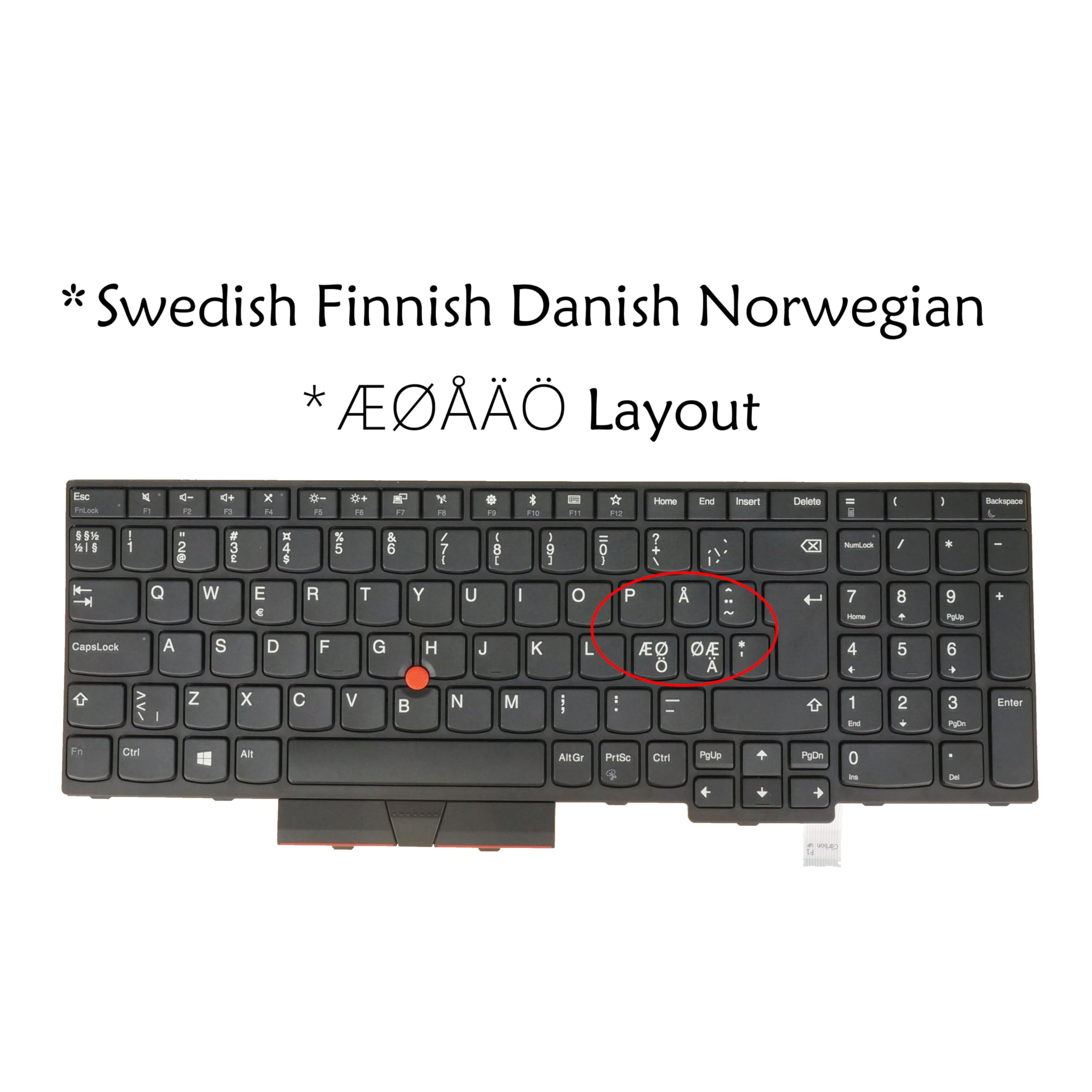
You have to change letters (e.g. å is not a with an accent. It's a different letter) and read it like you don't know the language.
When all else fails, you can always go back to the basic international language of gesturing, pointing and acting out the use of something to get to your point. (Or more boringly, point at the name on your phone)
You could also try adapting pronounciation to what they might expect first, and then if you establish a friendly conversation, offer the real Swedish pronounciation next.
It sounds like that would be very much what use of Swedish names in a global brand should invite, and not annoyance for Swedes :)
Doesn't really work for the kind of products they sell. E.g. going to the spare parts place and asking for a replacement part for Mörbylånga or Nackanäs. And I don't know the international gesture for a table. Besides, they have many tables.
I don't think saying "Bläddra", and signing that you're flipping through a book, helps at all either.
> You could also try adapting pronounciation to what they might expect
Right. This is what one has to do. But it feels like if you were to go to Russia and slowly and loudly say "I-ski want-ski a-ski table-ski". Except, you know, not offensive because I have the objectively right way to say it and the staff doesn't.
I'm not saying it's hard to do, but since once you know a language you pretty much cannot go back to hearing and reading it as noise, I stand by that it's a bit annoying to need to simulate how someone else would mispronounce it.
And this is unlike someone experiencing their names constantly mispronounced, because the people who get it wrong literally work for IKEA.
For comparison, say there was an English store in Netherlands, and you would have to look at the spelling every time in order to "simulate" which "s" should become "sch" to make the staff understand you. Saying it the dutch way may, to you, become a tongue twister.
> It sounds like that would be very much what use of Swedish names in a global brand should invite, and not annoyance for Swedes :)
You'd think so, but while a great brand, it causes practical annoyances sometimes.
They have a great selection of products. You could say they have a smörgåsbord of products. Or as you'd have to say in English to be understood, a schmoargoesboard.
As much as it may feel that way sometimes, I don't think IKEAs in foreign countries are sovereign Swedish territory.
https://en.wikipedia.org/wiki/Metal_umlaut
> When Mötley Crüe visited Germany, singer Vince Neil said the band could not figure out why "the crowds were chanting, 'Mutley Cruh! Mutley Cruh!'"
But like those German speakers assumed German orthography, English speakers will assume English orthography when presented with Swedish words.
Only foreign words learned by sound have a chance of getting pronounced correctly, e.g. croissant or Djokovic... maybe even Smörgåsbord?
If there were a British furniture shop operating globally and using placenames for products, British people would have trouble asking the locals for HAWICK (hoik), LOUGHBOROUGH (luffburra), FROME (froom) or YNYSYBWL (anissabul)
At least you’re definitely right.
Try speaking or writing English English to US English natives.
It's more likely that the whole product catalog contains 2-3k products. [1][2][3] So no, you don't.
[1] https://www.ikea.com/us/en/cat/products-products [2] https://lar5.com/ikea (~ 2200) [3] https://namingschemes.com/Ikea_Product_Names (~ 1300)
Why should we treat a minor wiki page and some dude's personal site (who disagree with each other on totals) as authoritative proof Ikea is wrong about it's own catalog? Especially when it's not hard to find 1st/3rd party sources claiming an order of magnitude more products. Keep in mind, some things will also fall off the catalog over time.
You buy something one day, and it starts to deteriorate and become janky after a year, and you'll have a buy a new one. All products have gone through spreadsheet cost optimizations.
It wasn't always like that. If you're lucky to get your hands on an old IKEA bookshelf (Billy), it's sturdy and will last forever.
I also inherited some “regular” living room furniture after my mom passed away. It cost about four times as much as IKEA’s higher-end lines. After moving it from my mom’s place to my office, I can already see it falling apart after just three years (total lifetime as my mom only had it for two). The quality is so shite that I honestly wish my mom had bought IKEA.
In the future, I’ll either buy custom pieces from a furniture maker or choose IKEA's higher end lines for longevity and reusability.
high quality furniture loses most of its value the moment it becomes preowned, so it only makes sense to buy if you are absolutely certain you aren't going to move anytime soon, which is not realistic for most people. Ikea is just good enough.
Funny thing is, I haven't bought much furniture for ages since my old IKEA stuff has lasted for several decades and is still going strong. Their major kitchen appliances are crap, though.
I had a LACK table (9.99 euros at time of acquisition) last for 10 years before a move forced me to give it away. I also have a few random things from them (wooden cutting board, grater, I think a bookshelf) and everything is pretty OK, even the cheap stuff.
Yes, but why prefer these letters?
I don’t know Swedish. Is it because these diacritics make the names seem more exotic?
By the way, we consider them unique letters, not A and O with diacritics. The Swedish alphabet goes …XYZÅÄÖ.
Oh, and I just learned that we only officially added W in 2006. Before that, it was considered a variant of V. We still pronounce them the same, which is why many swedes will mix them up when speaking English. Mostly in the W->V direction, but I've heard the opposite happen too.
IKEA sold that too: https://www.ebay.co.uk/itm/306072403869
In Hungarian it's A, Á, B, C, Cs, D, Dz, Dzs, E, É, F... So Cu--- comes before Cs---
At least in Norwegian, ae, oe, and aa is also traditionally collated as if they were using these letters, so a word starting "aa" comes at the end of the alphabet, after z, oe and ae....
A B C Č D Ď E F G H Ch I J…
• „če“ goes after both „ca“ and „ci“, but „ác“ goes between „ab“ and „ad“
• „cha“ goes after „da“ and „ha“
We have one called jysk... They're doing alright.
of course. Haagen Dazs, Motorhead, etc have known it loooong ago
Also, the A is short for Agunnaryd, the founder's hometown. (IK is his initials, Ingvar Kamprad, and E is for Elmtaryd, his family farm.)
Your suggestion sounds a bit like spelling Apple like AIILE and using the circles to form a cool infinity symbol. Or something.
A møøse once bit my sister...
Suck on that, AI Slop Detector!
(Confession and question for dang: I actually used an LLM to generate that unicode composite to copy and paste —̈ is that against HN guidelines?)
Also, maybe semi-relevant: I made a small guessing game about the IKEA product catalogue in case someone wants to be lightly entertainment for two minutes [1].
Was very surprised to find things like “bookshelves are all men’s names”, “all names must have ä, å, or ö”, etc.
Complete coincidence that this is #2 today. Had to check that ’NaOH’ wasn’t one of my coworkers
Bookshelves → men's names
For Swedes it must be weird to be able to find a product named after yourself and your place!
I’d have guessed they used names that Swedes were less likely to identify with than names of places and people.
Plenty of people named Billy in the English speaking world, too.