Posted by bookofjoe 16 hours ago
Interesting that Waymo chooses to compare accident rates with the average driver vs the rideshare drivers their cars replace. The numbers wouldn't look as impressive because rideshare drivers are involved in fewer serious accidents than the average person.
Waymo says it has 170 million miles and I found 2 fatal accidents it was involved in (fault doesn't matter as fault is not included in the other stat either). Looks like the average is about 1.3 fatalities per 100 million miles, and about 1 per 100 million miles for CDLs. This doesn't seem that impressive.
If we want adoption, we would need it be placed in individual vehicles and it should look at removing driver liability. People will use it when they are drunk if it means not going to jail and it's readily available.
I suppose you can claim fault doesn't matter. But if you read the narratives of both fatal incidents, they are so clearly not the Waymo's fault that I don't see how you can hold it against them.
In the first [1], the Waymo was stopped at a red light when the car behind it was rear-ended by an SUV traveling at high speed. Both that car and the SUV then struck the Waymo. The SUV hit a total of 6 cars and someone in one of the other cars died. According to the police, the SUV may also have been involved in "multiple hit-and-run accidents reported just minutes before" [2].
In the second [3], the Waymo was yielding to a pedestrian when a motorcyclist made contact with the left rear corner of the Waymo. The motorcyclist fell to the ground to the left side of the Waymo, then another car tried to pass the Waymo and struck the motorcyclist, killing them. That other driver fled the scene.
If you drive on urban streets, no matter how good of a driver you are, there's a chance you're going to be involved in some sort of incident that's completely out of your control -- that seems to be what both of these are.
The nuance you describe at the end is the better interpretation: fatalities per mile driven is a useless metric since it's such a rare occurance and incredibly circumstantial that it cannot be used as a meaningful comparison metric for safety.
I wonder if they ever caught that guy?
Why? Well let us try to imagine a world where Waymo has the statistically average fatal crash rate, yet is never at fault. In this world, every fatal crash occurs at the Waymos. You just have a bunch of crazy drivers roving the streets causing fatal crashes against (or involving) unsuspecting, not-at-fault victim Waymos.
If that is the world, then are these crazy drivers only crashing into Waymos? Probably not, these crazy drivers would almost certainly be crashing into a statistically average distribution of unsuspecting, not-at-fault victims.
So this imagined world is consistent with the overwhelming majority of human drivers engaging in 0 fatal accidents at fault with a small, crazy roving subset being at fault for all fatal accidents. So, in that world, a Waymo that is only ask good as the statically average driver would actually be infinitely worse than the overwhelming majority of human drivers. If you only replaced the 10th percentile driver (90% of drivers are better), you would actually be increasing the fatality rate. Only by displacing that crazy subset would you actually be decreasing the fatality rate.
Are we in that world? The Waymo numbers on fatal accident involvement with no fault actually kind of point in that direction (though the mileage numbers are still too low to make a strong conclusion). Seemingly massive crash and injury reduction due to massive reduction of at-fault crashes, but the fatality reduction does not seem proportional. Another possibility is that the Waymo driving distribution is biased toward being in situation that result in more no-fault fatal crashes.
But, that is all just conjecture and thought experiments. Unless we have better data, we unfortunately should be restricting ourselves to apples to apples comparisons which, in this case, do not conditionalize on fault.
Though, to nitpick on the original post, I think that the 2 fatal crashes in 170 million miles (~85 million miles per fatal crash which is similar to the USA human average of ~83 million miles per fatality), is probably not the correct analysis. The average fatal crash is probably 2 vehicles and 1 fatality. So, the 85 million miles per fatal crash versus 83 million miles per fatality is probably fine in the crash vs fatality direction. But I am pretty certain you would actually need to double the 170 million to account for the "statistically average mileage of the other cars".
Otherwise, if we have exactly two cars in the world each with 100 million miles and they engage in one fatal crash with one fatality, then we would conclude that car 1 has 1 fatality per 100 million miles and car 2 also has 1 fatality per 100 million miles. Naively averaging them, we could conclude that the overall fatality rate is 1 per 100 million miles. Therefore, over the 200 million miles the two of them drove, there were 2 fatalitys. Obviously incorrect, so we almost certainly need to weight them by their relative proportion when aggregating them.
I havent read the doc and I am not arguing either way, just saying that you can cause an accident in other ways than by ploughing into someone.
Now, really? As far as backwards logic goes, this is up there. Better to break the law and endanger others because what, some can't drive for shit?
All the while all I could think was "you're spending your time making it more likely for a collision to happen, all to 'anger' a toaster with 360° camera coverage".
One advantage of existence of self-driving cars is the state can permanently revoke someone's ability to own or operate manually driven motor vehicles, without the argument this is ruining their lives.
Miraculously everyone else suddenly learns how to drive and doesn't try anything stupid
Plus waymos become v spicy if someone attacks while ur in it
Copenhagen is littered with electric hire bikes, very often just a few steps from a bike rack with empty spaces.
Only one of the companies makes users photograph the bike to show it's been returned to a suitable spot.
Whenever we mention that drivers harass and kill cyclists, there is somebody retorting that "cyclists don't follow the rules of the road", as if it somehow justified road violence against all cyclists, law abiding or not. It is a complete non-sequitur that pops up every time we point at the main source of death and dismemberment in our cities: drivers. [0] [1]
[0] https://www150.statcan.gc.ca/t1/tbl1/en/tv.action?pid=351000...
[1] https://www150.statcan.gc.ca/t1/tbl1/en/tv.action?pid=131001...
Boy, have I got news for him about car drivers...
Why would anyone ever type that comment as a response to the comment above?
In this case nxm's comment has formal problems - it is just irrelevant. True or not, it doesn't justify mowing down cyclists.
There are still some cyclists (specifically middle aged men in spandex, never women, never dressed normally) who insist on cycling on the road, giving the finger to every passing car, who will loudly tell you to fuck off if you point out that literally next to them, about 20ft off the road, there is a cycle lane. built just for them, so they can cycle safely.
Anyway, this comment is in support of the comment of johnfn. No amount of training or testing will stop the arseholes being arseholes. But it is also to point out that arseholes are not restricted to a particular form of transport.
Do more cyclists kill drivers, or do more drivers kill cyclists?
* https://politiken.dk/danmark/art7185605/Rygterne-om-cykliste...
* Via: https://archive.is/https://www.forbes.com/sites/carltonreid/...
And perhaps more drivers should take up some cycling as it would make them better drivers (per a UK insurance company)
* https://archive.is/https://www.forbes.com/sites/carltonreid/...
Or using motorcycles or scooters: 2013 and 2015 UK insurance reports found riders better motorists than drivers, as did a 2014 UK police chiefs survey.
Go to any intersection in SF or LA. Set up a camera. Count the number of cars and cyclists that break a traffic law. Cars will be 5-10% breaking the laws. Cyclists will be 95-97% breaking the laws.
That's what a bunch of researchers did in Florida and found cyclists more compliant:
> According to the study, bicyclists were in compliance with traffic laws 88 percent of the time during the day and 87 percent of the time at night. The observed compliance rate for drivers who interacted with participants was slightly lower, at 85 percent during the day. (There weren’t enough nighttime driver observations to report a compliance rate.)
* https://usa.streetsblog.org/2018/01/03/study-cyclists-dont-b...
* https://web.archive.org/web/20180127052846/http://www.fdot.g...
If we got rid of the cars, we could get rid of the silly requirement that everyone needs to come to a complete stop at every intersection, which only makes sense in a world where people drive 2000 pound death machines.
Also, the conclusion is sound from the experienced event.
Do you have evidence of this? It's certainly true for some kinds of professional drivers (i.e. truck and bus drivers) but I can't find any kind of crashes/100m mile numbers for rideshare drivers.
Anecdotally as both a rider and road user I find rideshare drivers to be some of the worst. Aggressive, distracted, impatient, and overconfident. I would be very surprised to find out they are above average drivers.
I don't know how aggressive this filtering is, but it is a way to save money on the insurance costs associated with the gap insurance in rideshare. This filter alone would probably put rideshare drivers above average, but that's speculation on my part.
I would visit my mom (2hrs by car) more often if that 2hrs (each way) wasn't so stressful and exhausting and I could just be chauffeured by a self driving car while I browse the net, play a game, watch a movie, or talk to friends.
Most urban US cities have some attempt at an urban train network, and most significantly more useful than Seattle. The issue is typically more of funding and willpower - major infrastructure in an established city is expensive and disruptive to the point most don’t want to deal with it. Additionally the feeder transit infrastructure tends to be weak enough that the daily practicality is low because you have to live right on the line and your destination must also be. Otherwise you’re driving in. Finally the urban planning for surface roads has been well enough structured that the trade off for time saved in public transit doesn’t make sense. You spend time walking and doing transfers in excess of double a driving time.
Is that a flaw? If you electrify the cars to minimize pollution, automate their driving to reduce risk, ensure they collaborate to improve efficiency, I’m not sure I buy the argument any more.
By raw population numbers, most people worldwide does live in large cities with a lot of coverage by some type of public transport, not necessarily trains or subways. Buses exist.
Most people who live in cities are in cities with < 250,000 people.
Exactly how many live in cities at all is determined by where you drawn the cutoff at which it's no longer a city.
A former member of the Pinellas County[0] Sheriff's Department related a relevant story to me many years ago. It was the practice of sheriff's deputies to park near bars around closing time and wait for drunk folks to leave the bar, get into their cars and drive away. And these folks were almost always intoxicated.
One night, they waited outside the bar and a patron exited, stumbled a bit, dropped their car keys a few times, then got in their car and drove away.
Cue the lights and sirens and the deputy pulled the driver over and prepared to arrest them for Driving While Intoxicated (DWI). However, a field sobriety test[1] and a breathalyzer[2] showed the driver to be stone cold sober. When the deputy returned to the bar, all the other patrons had made their exits.
So, rather than having a designated driver, they had a designated decoy!!!
Good luck fixing that sort of attitude.
[0] https://en.wikipedia.org/wiki/Pinellas_County,_Florida
I kinda wish some day some dark wizard curses those two areas to lose 75% of their roads and parking lots and make everything a lot closer.
The Netherlands, while technically highly urbanized, has remained more like a bunch of small towns instead of a few highly populated cities like as is seen in the US, so it is much closer to the rural days of yore when the US was able to support a comprehensive, nation-wide passenger rail system.
Looking at population density if you draw a 50km radius in the Netherlands you get about 8m people. This covers lots of small cities etc. In the US you get maybe 5m in a contiguous city like Phoenix (which fills the circle) or the Bay Area. (LA is more dense and you might get 10m.)
Transit works much better in the Netherlands and much of Europe because those homes and job centres are not as evenly spaced as they are in most American cities since they developed more around public transport existing. S the effective density experienced is much higher.
Much more the opposite. European settlements were largely established before the train existed, emerging from outward rural growth rather than seeing an active urbanization movement. Trains have been woven into that after the fact to best support the rural-esq population shape.
Whereas America was built by the train. Established originally to support the same rural-esq shape idea, but, with little in the way of existing settlements, the train ended up enabling the people to purposefully congregate rather than simply expand outward, which allowed those congregations to be designed such that transportation was unnecessary; being the whole appeal of leaving friends and family behind to move into those settlements. The passenger train eventually started dying out at the height of the urbanization movement because there was no longer a mass need for it like the was, and continues to be, in Europe and other countries that grew up in those earlier times.
Also we should ignore the fact that the US already had a national rail network and STILL DOES for freight and had frequent regional rail service to even incredibly small podunk nowhere towns for decades. It's clearly impossible! We're too big! IT CAN'T BE DONE!
The US already had the nation-wide passenger rail system. At one time it was the envy of the world. It'd still be here if the riders were. But they moved on to newer technologies better suited to the landscape.
Trouble is most people doing the NY->LA run are going to choose flight instead.
A 2h autonomous car ride removes that entirely.
Honestly, I would 100% use a car for this if it weren't for the fact that doing so is literally 10 times more expensive. I'm sure this is the case for the vast majority of people that use public transport. And I just can't wait for a world of cheap electric autonomous cars where I don't need to waste my time and I can sleep comfortably on my commute.
[0] https://en.wikipedia.org/wiki/List_of_predictions_for_autono...
We should return to the idea that driving is a privilege, not a right.
It's also extremely important to normalize this data per geo and driving type (urban vs freeway miles), which Waymo does do and you seem to ignore.
Getting to be well beyond the range of “armchair HN statistician”.
Sounds like something the government should do as part of public policy deliberations.
In my dreams.
I used to bike to work in Chicago and it was surreal being able to look right into someone's car and see hardly anyone is paying attention.
I'll also never forget the first time getting hit by a car (car did left turn when I was biking straight through a green light) and right before impact seeing the driver's face illuminated by their phone while looking straight down driving into me.
If you tried to enforce self driving cars, you'd still need some level of surveillance too.
Doesn't much of america outside of cities also have the secondary problem of you physically cannot feed yourself, get to appointments, or do anything without operating a vehicle?
I hope you wouldn’t be saying this if they had killed someone in one of their crashes. How about injured? They must have. Get some standards instead of saying everything is ok.
Wait, he did all that in high school?
I heard something about "20% of drivers are responsible for most of the insurance claims" but it sounds like that one guy is jacking up the averages!
That requires enforcement which no longer exists in many cities.
As in a full on country wide prohibition? Whatever amount of road deaths that would prevent would be offset by idiots dying via drinking industrial spirits.
You already have it, people want this.
> Waymo says it has 170 million miles and I found 2 fatal accidents it was involved in (fault doesn't matter as fault is not included in the other stat either). Looks like the average is about 1.3 fatalities per 100 million miles, and about 1 per 100 million miles for CDLs. This doesn't seem that impressive.
And what do those numbers look up as the saturation of self driving cars increases?
Could you justify this? e.g. https://doi.org/10.1080/17450101.2024.2325386 (N=1890):
"What first comes to mind when you hear the term self-driving vehicles?" (coded free-text) 17% positive, 34% neutral, 49% negative
"How would you feel about riding in a self-driving vehicle instead of the existing ways you travel?" 28% comfortable, 15% neutral, 53% uncomfortable
"How would you feel about using the roads alongside self-driving vehicles?" 29% comfortable, 20% neutral, 49% uncomfortable
Keep in mind the lesson of seat belts. Which is that the highest-risk drivers are also the least likely to wear a seatbelt.
Selective recruitment is a danger in this armchair analysis, too. I don’t think 18 year olds aren’t giving up the thrill of tearing down side streets at 60mph to use a self-driving car - they probably can’t even afford one. To be honest, I am just guessing at the profile of the biggest offenders but insurance rates seem to back me up.
https://injuryfacts.nsc.org/home-and-community/safety-topics...
(Yes, I know this is completely unworkable, sadly.)
Also not sure if Waymo data includes pedestrian deaths? (NSC seems not to)
Removing liability might incentivize more people to, e.g., drive their car to a bar. I'm not sure that's a good thing. Maybe great for bars and restaurants, or possibly quality of life, but removing liability probably has other unintended consequences.
It's maybe too early tell whether criminal liability should be changed, or at least how it should be changed. If criminal liability had been removed when Tesla started making their extravagant self-driving claims, surely you'd agree it would have been too soon, and potentially resulted in more accidents. Few if any consumer autonomous driving modes are as reliable as Waymo
Absent statutory changes, common law tort will probably evolve in some states to take into consideration new incentives and norms, and that might help point the way for changes in criminal law. Those policy changes are typically driven by courts wrestling with real world cases, whereas de novo legislative changes are often driven by imaginations and lobbying.
"At-fault" Waymo crashes on 35mph city roads driven only in good weather vs. all crashes regardless of fault for on all roads including highways driven in all weather conditions
The data on https://waymo.com/safety/ reflects these apples to apples comparison.
They’ve also, when possible, done comparisons of the Waymo driver to an ideally attentive human driver. https://waymo.com/blog/2022/09/benchmarking-av-safety/
The biggest challenge is in sourcing the data. A lot of these datasets don't exist or have to be developed.
(The article itself, mixes and matches stats which is a common thing in general media).
fault absolutely matters. and with two fatal accidents, it should be trivial to find out if waymo is at fault.
it is bad faith, otherwise.
And yes, I'm aware of the fault of the incidents.
The biggest thing would be safer road/street design, but Americans are kind of allergic to that. Talk about traffic calming or road diets and a lot of folks get absolutely furious.
That said, it's essentially impossible to get rid of cars entirely, and you can see that just by looking at countries or even regions that have good transit and notice that they still have tons of cars. Even Singapore has lots of cars, and the entire country is a super-dense city-state!
So it's definitely worthwhile to develop self-driving cars and trucks, even if you have fantastic transit and biking and walking available.
You can't subsidise "better driver education" (to a meaningful sense, to my knowledge) or "banning alcohol." You literally can't do the latter. We tried, and I'll torch a supporter's house for fun with some high-proof something or other for fun if someone tries it again in 2026.
You can use direct poicy action to save lives through AVs.
So at the end of the day, we're deflecting from harm reduction to preserve a parochial mode of transport or not.
It would be a lot easier for drivers to have the following thought process: "I drank tonight, I can't drive home" rather than "I drank two beers over the period of 3 hours, am I good? Yeah, probably, let's gooo."
> I'll torch a supporter's house for fun with some high-proof something or other for fun if someone tries it again in 2026.
If you react that strongly and violently to the idea of alcohol being banned, you might want to look into your relationship with alcohol.
My understanding is that in US states a DUI (Wisconsin) is nothing but a fine, and drinking while driving isn't taken seriously at all.
So it's more useful to look at serious injury statistics as a proxy. For those, Waymo says that there is a significant reduction.
Superman: I want to get rid of guns.
Mr. Terrific: For use around the world 24×7, you’d need to replicate the T-Spheres on a massive scale. Still, you could never get rid of all the guns.
Superman: But most. You know we could.
Mr. Terrific: Just because we can doesn’t mean we should. People would resent us.
Superman: And they’d be alive to do that. Check.
Mr. Terrific: Some would fight.
Superman: Let them come then, with sticks. Think of the lives we’d save. Check.
Mr. Terrific: Smoking.
Superman: What?
Mr. Terrific: Cigarettes kill far more. People keep smoking even though they know it’s killing them. Their families can only watch them die.
Superman: And?
Mr. Terrific: You want to save lives? Jail every smoker. Check. And imprison anyone who speeds. Traffic fatalities are huge. Check. Lock up everyone who leaves a dangerous dog unchained. Check. Finally, we kill anyone who doesn’t recycle. Checkmate.
Superman: You’re not going to help me, are you?
Mr. Terrific: No, sir, I am not.
Isn't this, as all deadly decisions are, driven (pun intended) by your death rates? As more non-believers of autonomous cars are killed, the momentum of societal buy-in accelerates.
I don't know why you come across as so antagonistic to self driving cars. But even if they're only as good as humans today, then you have completely and flat out lost the argument already.
The lower auto liability and umbrella insurance premiums alone would drive buy-in.
It’s literally the riskiest thing people do with the costliest consequences.
"Interesting" is doing so much heavy lifting here.
Fully agreeing with your other points as well.
Citation definitely needed.
The last couple of human rideshare drivers I have had were AWFUL. One was so awful that I gave them a one star with "Actively dangerous remove from road, please." I never give one star reviews.
LOL, we have a machine that can now drive much more safely than average humans, and comparable to professional drivers. Yeah, this is not impressive at all. C'mon people, wake me up when we actually make some real technological progress, will ya?
(https://www.iihs.org/research-areas/fatality-statistics/deta...)
The majority of drivers are good, but some drivers are really bad. Life in USA is extremely car-centric and taking away a license is often infeasible and the offender usually drives without their license anyways. If anything, I'd like autonomous cars to give a legal out to remove bad drivers. You get a DUI, or commonly speeding? You may only take an autocar.
I take issue with this. The majority of drivers are "mostly fine as long as circumstances are favorable", not "good". People for the most part do not even know about the concept of defensive driving let alone practice it. Even the best people are fundamentally complacent in basically everything they do. They zone out sometimes, they get too close, they don't always look where they're going. They don't get into more collisions because the world doesn't throw more obstacles at them, not because they're good at driving.
Hopefully police are figuring out that one of the parties in the accident is high while they do the interview.
Evidence that is is compatible with our psyche is the fact that we're at 1.19 fatalities per 100 million miles driven, and ~50% of those being booze and/or speeding.
Imagine you had to pass a simulator test involving responding to ANY crisis while driving before your license would be renewed. Rates of driving would plummet.
I bet most drivers don’t even correctly handle a flat tire on the expressway.
The average one-way commute time in the US is less than half an hour:
* https://www.census.gov/topics/employment/commuting/guidance/...
If you can't pay attention for less than 30 minutes should you really be operating a multi-ton death machine?
Multi-dozen car pileups aren't particularly rare, with the common cause for a lot of these being "one car hits an icy patch, hits another car, car behind them tries but fails to stop in time due to the ice, rinse and repeat a few dozen times". And the root cause of that is every single driver in that collision driving too fast for conditions and unable to make the requisite emergency stop in time.
Most drivers are safer than the average, because you can’t go below 0 and some people are really bad.
https://insurify.com/car-insurance/knowledge/assigned-risk-a...
re: 2) yes that was the point. She'd have to be paying multiple thousands in an assigned-risk pool policy with that record of at-faults.
The victim's own insurance will pay if they have uninsured motorist coverage (you'd be a fool not to have it, living in LA at least), but there is basically no punishment for the uninsured driver, assuming a fender-bender. The police won't do anything. The insurance companies don't think it's worth their time to try to squeeze out something from someone who probably has almost nothing anyway.
In almost every state, you may post a bond in lieu of insurance, for an amount as low as $35,000!
Further suppose you define “good driving” as a set of behaviors but failed to include narcolepsy or similar medical conditions in your definition, then some of your “good” drivers would represent a significant risk to the general public. Thus the actual criteria the defines good driver behavior is accidents.
I'm curious how this looks with various ways of normalizing for amount driven; is that no-accident crowd the quartile of drivers who don't drive very much? The biggest factor in being in the opposite group (the 10% of drivers with 50% of accidents) is "drive all the time, commercially or otherwise".
The mean driver in the context of the USA driving environment is shockingly safe. Being safer than even the mean human driver in the USA is hard and takes a shocking amount of data to verify. Anybody downplaying it as "lol humans are so unsafe" to argue the problem feels easy to solve or can be solved by the end of the year with a little bit of elbow grease is utterly clueless.
[1] https://crashstats.nhtsa.dot.gov/Api/Public/ViewPublication/...
So it's clearly not that hard to be safer than the mean human driver in the USA. 3 of the 22 countries manage to have less than half the US rate.
That's between fatalities, not between crashes. The reported injury rate is 62 times higher than the fatality rate, and the overall police-reported crash rate is 170 times higher than the fatal crash rate.
In thread context, you're conflating a bunch of things, and it screws up your position as each additional conflation gets you further and further from your headline statistic into "??? -> Profit" underpants gnomes territory.
1) Fatalities vs non-fatal injuries. Not the same thing.
2) Crashes that caused injury vs crashes that did not cause injury. Not the same thing.
3) Crashes that did not cause injury vs crashes that could not have caused injury. Not the same thing.
4) Crashes vs unsafe behaviors that could cause a crash. Not the same thing.
5) Being "safe" in the sense of "enjoying fortunate circumstance" vs being "safe" in the sense of "actively contributing to safety". Not the same thing.
Here is a thought experiment for you to consider:
If you run a red light and the cross traffic brakes and swerves around you, so no collision occurs, were you driving safely? No, right? Then why would you think that fatalities are the true measure of driving goodness?
edit: someone else replied with data contrary to this, maybe they are right but Im leaving this here to represent the counterargument
The nice thing about a future where all cars are self-driving (this probably will happen) is that it won't only be the taxis that get replaced.
After all the first Tesla auto drive fatality was literally "that is probably a sign not a trunk"...
Autonomous cars beating the average that includes the above are still worse than a diligent driver, which anyone can resolve to be.
It's sad we don't have a better way for people in these situations to do what they need without driving. It will be incredible to have autonomous driving just for older and or disabled drivers like this.
The best part of proper infrastructure and public transport is that it makes life for the drivers easier, too!
So what should the disabled people do until that amazing public transport infrastructure materializes, if it ever even does for them at all? Sit at home and wait?
I dislike this type of patronizing superficial handweaving advice that is disconnected from the harsh challenges of building more great public transport infra (lack of funds, geography and land ownership issues, nimbyism, public safety concerns, labor/material shortages, government bureaucracy, corruption and incompetence etc).
People use cars because they have no better choice. I'd also want my city to build me Swiss levels of public transport so I wouldn't have to drive, but guess what, the infra sucks and the city is insolvent, so that leaves me with little choice for the next decades as 100% nothing will change for the better in this regard, so then car driving it is. I didn't make it this way, it's the way the city management has botched it over the last decades, but it's still on me now to adapt to it, and cars are one of the ways.
I agree with you in spirit, that everyone should have great public transport ideally, but when cities are broke and that infra doesn't exist, then that externality is burdened on the individuals because they have no other choice but still need to get to work and other places. Telling them they can "just build more infra" is like telling homeless person they can just buy a house. OK cool, but with what money?
No, the point was that instead of cities waiting until self-driving cars become an option to help get rid of terrible drivers, the cities could invest in public transportation today, and get better road safety that way.
The solution should NOT be investing in driverless cars, which are all owned by megacorps and leave people shackled to Google and Elon Musk.
You even mentioned another cliche, Geography, but then right below mention Switzerland. Same goes for NIMBYism and everything else you mentioned, how come these aren't issues when building massive 12 lane highways, but adding some dedicated bike paths suddenly turns into a quagmire that rivals the Manhattan Project in scale and difficulty?
Utrecht in the Netherlands is a perfect example of reversing course on car-centric designs. They had a canal, emptied it out to build a massive highway, then realized "hey, that's idiotic!" And turned it back into a canal and banned cars from the area completely. It's now a gorgeous city center free of cars, plentiful public transport options, accessible to wheelchair users and kids and literally everyone.
The world is literally on fire but the average person simply doesn't give a shit because they don't want to be inconvenienced.
For example the Netherlands simulatenously has world class public transport infra and the happiest and most satisfied drivers. 60% of the country still drives, it's just that it's not the only option and the drivers also take public transport and bike when it's more convenient than driving.
Given the fact that car infrastructure competes for resources with public transport infrastructure, and is vastly more expensive per person-km, and vastly more dangerous as well, prioritizing efficient use of public resources trumps personal comfort when looking at this. The same can't be said for housing, so the comparison is not relevant. Plus, there are very objective reasons for which privacy is an absolute requirement at home (mostly to do with vulnerability and sexual behaviors), which also don't apply to cars; especially since the kind of privacy you get in your own car is actually quite limited anyway - it would be both illegal and quite unsafe to drive around naked, at least in a bad neighborhood, for example.
How is that 'skewed'? It sounds like you're just listing dangerous things, and yeah of course dangerous things are associated with fatalities, duh.
It's like saying that accidental gun deaths are 'skewed' because they're associated with keeping your gun loaded and not locking it up in a safe.
The imposition is huge. We’re talking about privacy, movement and its relationships with housing/work/family management/safety.
At the very least, it needs to be plainly stated that this concept is not being studied out of curiosity. A few companies have a gigantic investment in seeing massive, government-facilitated adoption that creates guaranteed customers and gated entry.
literally any. single. thing. gets opposed on privacy grounds. and its a good move because technology by definition works by passing information around so it lends to being opposed this way everywhere.
i think Foucault is partly responsible for this with his whole panopticon nonsense.
Mostly yes, but some states like NYC its more common to take trains, taxi cabs / Uber / Lyft, etc.
> But you can't really say overall for the city that transit is how people get around.
It is 27%, but that's because of COVID. It used to be around 50% before and it's recovering to those levels.
So even now, during abnormal times, it's 27% plus walking around 40% and bikes are 5% and growing.
So non car transportation in all of NYC is 72%.
And the trend is only going one way, with transit on the way up and recovering post COVID and bikes also going up.
I wouldn't be surprised if 2030 NYC statistics put cars around 15-20%, so a quite small minority.
Well, 80% of us believes ourselves to be above average, so there's that.
I think it would be meaningful to also compare the fatality rates of the time tested and proven forms of public transit to these self driving cars too.
a) even countries known for good transit like Japan still have a ton of cars for various things, and
b) there's no getting around that the money going into self-driving cars vs public transit isn't something that can really be swapped. It's coming from a different place for a different reason.
We absolutely could invest into more trains even with the SDC money flowing anyway, it's not like the SDC money is blocking it. We collectively choose not to do this, and it's not Waymo's fault.
Then people would likely not have a issue with public transit.
But I do like what you're going with that and maybe we could have public autonomous car infrastructure that we all share. And just one large global team working on awesome autonomous vehicles. That could be little pod type vehicles for one person and bigger ones as needed. Cuz the road system is pretty broad and amazing right now.
Is public transit always more convenient than the individual car ? No, but you can make the conscious choice of not owning a car, even if you need to raise a family. Switzerland has a high rate of car ownership, because we have a lot of money to spend. But many people, even if they own a car, will sometimes use public transit, because it is convenient, safe and comfortable.
There are places in Switzerland where if you need to take a taxi or an Uber, you will have to wait more than 30 minutes before one gets there. At this point, it is more convenient to take the regional bus that goes every 30 minutes. Even if the public transit frequency is every hour, I can plan my journey to arrive on the correct time (also, public transit is synchronised in the whole country to avoid waiting times).
I can see autonomous rideshares displacing taxi service and such. I think automonous rideshares still need density to be profitable. So if you need to subsidise rideshare to cover the whole country, why not properly invest in public transit?
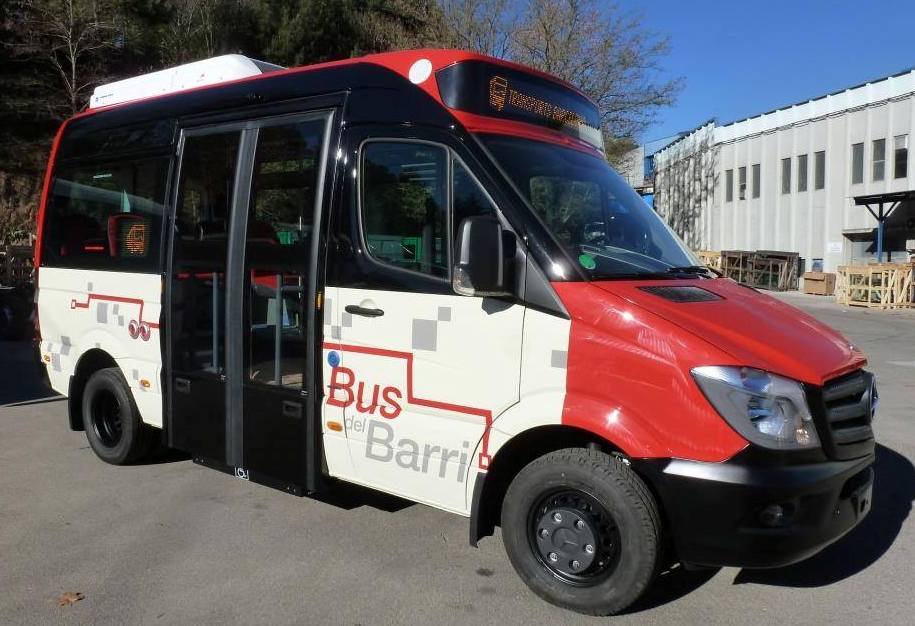
Where is that last mile exactly? In many metropolitan areas, you typically have available a broad selection of trains, subways, trams and/or buses of different sizes that takes you last mile. Some places even have special buses, like the "Neighbourhood Bus" we have here (https://www.barcelona.cat/mobilitat/sites/default/files/bcn-...) for narrow and steep neighborhoods up on mountains.
It's certainly doable, if you wanted to have last mile public transport.
If it is 2am and you need to get home as a woman, it would be a no brainer to get in an autonomous vehicle while going on public transit is a bad coin flip on being harassed at minimum.
If you are wheelchair bound and the elevator is broken, wheelchair ramp is broken, or someone is already using the wheelchair spot, you just have to wait for luck to change.
If you have sensory difficulties that make public transit uncomfortable, private transit is always the better option.
The list goes on for many reasons and people that having only public transit would harm. The idea we can get rid of or otherwise push out private transit marginalizes everyone who isn't prototypical nor should we hand-wave that they can just rely on runs-on-other-people's-time disabled specific transports to get them into city centers because private transport isn't allowed in.
Not all people are able bodied, able, or willing to use cars. Cars are killing tens of thousands a year while destroying the environment.
> while going on public transit is a bad coin flip on being harassed at minimum.
While this is going to be city-dependent, I'm a woman who frequently travels along late at night on public transit and I've never had any issues beyond annoying drunk people. You're making this up.
> If you are wheelchair bound and the elevator is broken, wheelchair ramp is broken, or someone is already using the wheelchair spot, you just have to wait for luck to change.
Making sure that public transit is wheelchair-accessible is vitally important, I'm glad we agree on that. How do cars do in that regard? They don't work at all unless you can afford a chauffeur. Your argument here is essentially "public transit is sometimes bad, so it's not worth it to make it better", which is nonsensical.
> only public transit
> private transport isn't allowed in
Ridiculous strawman. Nobody is arguing for the abolition of the private vehicle, just the ways in which we design our cities to prioritize only private vehicles at the expense of everything else. Plenty of people in transit-friendly cities own cars. Replacing a large majority of private car trips would save lives, help the environment, make things more accessible, and make cities more pleasant to be in.
Also as a disabled guy myself, public transport here in sweden is NOT accessible (despite what the swedish propaganda will claim) but even if it were, you're not going to have a stop inside your apartment, and when there's roadworks or ice or whatever and they leave you stranded 1-2km away from where you were supposed to go, having a ramp on the bus isn't going to help you that much.
Also I've witnessed drivers picking up and literally throwing out a woman on a wheelchair because the ramp didn't work. It wasn't her stop, she didn't want to get off, they were simply fed up with trying to get it to work.
Sure, NYC is one thing. But check out the ~10th largest city, Austin, where Waymo and other autonomous vehicles are (I think) in their largest deployment. Just on a map, or by density numbers, or whatever metric you want.
I'm in Austin, and Waymos rule. I walk most places, bike others, and rarely drive. I very, very rarely get a rideshare (and often get Waymo by way of Uber lottery). Autonomous vehicles exist, are real, and serve an actual need in this very low density city that most people on HN have heard of. I have 3 kids and if I could snap my fingers and swap them for Tesla Robotaxis (Waymos are better and safer!) I would in a second. I would even pay for that to happen.
If you're arguing about some idealistic society, that's one thing. In reality these things are way better than our public transit, and fixing public transit in a place this (not) dense is not as easy as you might think. The last mile is real, and people are coming from every direction and going every other direction and not willing to wait and transfers when these autonomous vehicles already solve the problems door to door so inexpensively.
Trains and subways, by definition, are not serving you in that "last mile". The "last mile" is where you disembark from the closest rapid/public transport, but you still need to travel to your destination.
That's like a 15 minute walk. And with sufficient infrastructure investments this can be 5 minutes.
Private cars are costly and spend most of their time just taking up space.
We'll see if it ever works out that way but a boy can dream.
Not so great for family trips, shopping around, etc.
I see these all the time here in the Netherlands. Very small cars. Some on the road and even smaller ones people drive on the bike paths. Small motorized vehicles, ebikes and scooters share the paths with regular bikes which works because they have usually at least two lanes, so they are more like tiny roads. Very handy.
You say it like its a bad thing.
I get it if you live in a dense metro. A car is not worth it in NYC, SF, etc. Other than that it's pretty abnormal for people not to want a car. It's usually some weird anxiety about driving. Not to mention - heaven forbid - you have a family.
Because they are completely unsafe against a twice-the-height, multi-ton Ford pickup truck.
When public transportation is designed properly it works fine for the extreme vast majority of people, and taking a taxi for the last mile if you're disabled, obese, lazy, etc. will cost you less than owning and maintaining a car.
I think you're coping, like most car owners, we bought the propaganda of freedom &Co and now we're all collectively stuck in this dumb system in which every household need to own two 2500kg hunks of steel and plastic to transport 70kg of meat 1% of the time and use public space the other 99%
When the bus (in your example) runs on a hourly schedule, while your car is always there when you spontaneously need it, then that freedom is real and not just propaganda.
I did this type of commute before where I had to catch the bus to work, which was also once every hour, and the anxiety during my early morning routine to not miss the bus was crazy since missing it meant one more hour of wait, compared to the freedom of jumping in my car without a fixed schedule while also saving 1h/day of time compared to the public transit, the difference was night and day, not propaganda.
Now if I had a train/subway to work, where I could sit down, and it ran every 15 minutes or less, then yeah, fuck driving and public transport all the way, but nobody sits in traffic for fun, but because of all options for their commute, driving is the better option.
Didn't you just say you can get around fine on the bus? Can't you just get a car if it suits you?
For me personally it's nice to have a car. It would certainly be tough if I had less resources and public transit would be more appreciated.
I didn't say that scooters were a solution for everyone, you may note. I don't think there ought to be one solution for everyone, but given the option of micromobility, I really have no use for autonomous vehicles.
I'd add that these discussions tend to handwave the reality of safety when you're on an open platform movie at high speeds, the reality that not all people are physically able, and a lot of others issues that the vocal "cars are the devil" folks don't engage seriously with.
It's getting really old, and it increasingly feels like trying to reason with the "kill all pitbulls" crowd.
They very much bike all year round, even in the north where it regularly gets to -20C(-4F) in winter. Biking in snowy sub-freezing weather is really not a big deal as long as you maintain the bike paths as well as the streets.
Source: have lived there, everyone I knew had a bike they regularly used. The only time I can recall where people I knew who usually commuted by bike didn't do so was during an unusually heavy snowstorm. They instead had to walk about half a kilometer to/from where the city had managed to plow the streets and take a taxi. That was decades ago.
Car dependent infrastructure is definitely not helpful for the physically disabled, as well as those too young, too old, and too poor to drive a car. This and a lot of other issues that the vocal and active "cars aren't the devil" crowd don't engage seriously with.
It's getting really old, and increasingly feels like trying to reason with the "Pitbulls make great family dogs" crowd.
"People have been living with viruses for all of history and beyond, why use vaccines?"
"People have been walking for millions of years, why use a bike or a scooter?"
The notion that doctors should wash their hands between treating one patient and the next was met with ridicule. Doctors were insulted by the suggestion that their hands might be unclean, so mortality rates for childbirth in hospitals were horrendous. The idea of handwashing emerged and died many times before it finally caught on, and then only at the behest of vigorous campaigning over a generation.
There is a long list of hidden costs and negative externalities associated with car dependent sprawl as well, they are well studied, but nobody want to hear that their hands are unclean. This idea one should be washing their hands a dozens times per shift is patently absurd. Physicians would be wasting hours a day just washing their hands! How would we be able to treat all these patients?
> I'd much rather all of the resources that are going into autonomous cars was instead going into proper public transit infrastructure.
You're almost certainly an American, and you probably have no idea what public transit is like in countries that have been investing in it for decades instead of focusing 95% of their resources on infrastructure for cars.
They're great for short distance travel in densely populated areas, but outside of that I doubt they'd hold up in long-term cost and efficiency vs autonomous electric cars for long.
As for parking, a fully autonomous car service would allow a car to come to you and pick you up. So it wouldn't need to park near where you are.
Or would you still need a giant spot of land to park these things outside of peak hour?
So the incentive will be to put/drive cars very close to where people are.
That whole "cars will be stored at the periphery" is propaganda.
If you account for that, cost per passenger mile on fully loaded electric bus is more than uber chauffeur.
I guess it depends on where we're talking about. The majority of the US is not inside a city. So just diverting all resources into public transportation is only serving the metros.
If we're talking about a small country then sure.
I think this isn't true for the US any more, maybe it hasn't been true for decades?
WorldBank seems to have the ubranisation rate at around 80% for the US: https://data.worldbank.org/indicator/SP.URB.TOTL.IN.ZS?locat...
There is a bit of a definitional problem, with people living in suburbs identifying as rural, as do folks in exurbs. I don't think they're considered rural, and they're concentrated enough that well-designed public transit could serve them quite well. A decent public transit system means that families in sub/exurbs can go from 2 cars to 1 car without a major drop in quality of life, but they'd save $5k - $10k per year.
As for light rail, in the US, light rail projects can typically cost hundreds of millions of dollars per mile. The NYC 2nd Avenue subway expansion cost billions of dollars per mile.
And, if you want people to stop wasting city space on parking, self-driving taxis are exactly the right solution.
It sounds like an autonomous taxi, but not necessarily. A taxi usually has only one rider, whereas a bus would have more seats, and potentially pick up and drop off other riders that are more-or-less on the way. This is Via's Microtransit[1] model, but without the cost of a human driver, it becomes much more cost-effective to deploy at large scale.
Self driving taxis have to be parked (or cruise around continuously), I guess, and that parking better be close cause ain't no one waiting for a self driving car parked 30 minutes away to get moving.
I live in the west side of San Francisco, and we may get a subway station by 2050 if we're exceptionally lucky. I'd rather have self-driving cars this decade, please.
Amtrak is public transportation. Airlines are pretty close to public transportation. Local government doesn't need to be involved.
They need not be separated. This is the entire point of the Cybercab and the Cybervan: Get self-driving cars, vans, etc. with the one job of moving people around. They only park to recharge or repair.
Where do all those cars needed during peak demand go? They're going to be parked somewhere and it's not going to be in the middle of nowhere, because that's an awful customer experience.
Solving the last mile problem also helps solve the public transit problem.
The issue in the US is that the current population configuration does not have single population points connecting to single employment points like back in the days of the mills or the factories. As such, public transit becomes difficult.
For example, the train in Southern California is hampered by the fact that you need huge parking lots and cars at the transit stops. If you can take an autonomous vehicle at either end, that evaporates and a LOT more people can now make use of the train effectively.
Unfortunately we still have trucking, but it's starting to feel we should build separate roads for them and for special cases only allow multi-axle delivery trucks on normal roads.
We could even build these special purpose, heavy duty roads out of something stronger than asphalt, like metal. Then once we have these sturdy new metal roads for trucks, we can raise the weight limit to allow them to carry heavier loads. And since there’s no little cars getting in the way, we could even group together multiple trucks going in the same direction for better logistical efficiency.
You can see where I’m going with this. ;-)
I walk 10k steps a day on a normal day, only drive when necessary to go out of my normal routes. This has an added benefit of keeping me, an aging programmer, in shape (as well as other relevant activities).
Nothing dramatic about it at all.
- autonomous cars cause fewer accidents
- so either insurance will be cheaper for them
- AND/OR human driving car insurance goes up
- even if only one happens, the relative cost of insurance will change in favor of autonomous
- driving your own car becomes a kind of "prestige" thing where only really wealthy people do it (similar to owning your own plane etc)
> - autonomous cars cause fewer accidents
> - so either insurance will be cheaper for them
> - AND/OR human driving car insurance goes up
If they were going to do that, they would have done it by now for those drivers opting into the insurance monitor device: they can literally tell that you're a driver that never took a risk, never got into a situation to brake hard, never drove recklessly, etc, and yet, the insurance cost with the device is only slightly less than the insurance cost without the device.
In any case, if this was strictly a financial decision, why would the human cost go up? The larger the percentage of SDVs there are on the road, the less likely a human driver gets into an accident, their risk goes down too, so their insurance should also go down.
In my own life I see the most reasonable/thoughtful drivers raving about autonomous driving and the most reckless ones ranting against it. YMMV.
Cars already are extremely wasteful assets in terms of resource, space and money if you live in a decently served urban area. It already irrational to have one 90% of the times.
An indirect and somewhat hidden cost like insurance is unlikely to move the needle anywhere near significantly.
Driving yourself will become like horse riding, something you do on private property for sport rather than transport.
My understanding is that it is a legal and safety liability for them to drive. The driver is employed by and the car is owned by a company that the wealthy person founded and pays so if the driver hits & kills someone, the company gets sued for a bunch of money then the liability can be discharged in bankruptcy / isolated to the company's coffers rather than the wealthy person's.
It's the same gambit as their security. I am sure more than just Gates and Musk do it but I know that both of them own personal security companies who only provide security to themselves. It's all just shells of liability shielding.
Using my phone to make a car show up when I need it and disappear when I don't feels like utopia.
They'll never stop me from riding my bike at least.
I can easily construct arguments along the lines of “cars are necessary to drive and insurance costs are regressive since they don’t scale with income so we need to have price controls on insurance for low-income drivers”. These will be quite popular.
lol
In 2015, Volvo issued a press release claiming that Volvo would accept full liability whenever its cars are in autonomous mode.
[…]
Starting in September 2023 in the United States, Mercedes-Benz takes liability for the Level 3 Drive Pilot as long as the "user operates Drive Pilot as designed," but "the driver must be ready to take control of the vehicle at all times when prompted to intervene by the vehicle."
There’s a lot of money to be made. Just look at the prices for travel insurance direct from the airline versus a third party. 2-3x.
It’ll be like BMW with the heated seat subscription fee.
Similarly, many car makers offer heated seats without a subscription fee, because of the magic of competition.
This is an excellent point.
What they do need to be is better than humans overall, and then it would make sense for them to be allowed onto the road. When they get far safer than humans, phasing out of human driving will make sense.
They reached that point a while ago, now we just need legislation and public opinion to catch up.
Full self-driving doesn't strike me as necessary to prevent deaths.
> Once drivers move from the novelty phase to the post-novelty operational phase, behavioral adaptation may begin to occur and overreliance and over-trust in the automation features potentially develop, including a greater willingness to look away from the forward road (as shown in the VCC data set). [1]
I'm not sure if this is more dangerous than strictly human-operated vehicles, but I would wager that it is more dangerous than strictly autonomous vehicles.
1. https://aaafoundation.org/research/understanding-the-impact-...
If there are additional problems caused by human drivers, it's surely that they are inclined to intentionally override the system with dangerous behaviours which is a separate problem entirely, or that their driving ability has atrophied so much from not driving they are unable to handle the boundaries of Level 4...
The actual potential for increased/decreased risk comes when the human driver rightly or wrongly actually intervenes.
If you aren't familiar with SAE AV levels, check them out. It is a common refrain that L3 AVs are a SUPER bad idea because they would be 99.9% perfect at driving but could still mess up so 'drivers' of them would become too trusting and minimally attentive which would cause accidents.
The common thing is that L3 needs to be skipped entirely so a car should either be L2 and wouldn't be good enough to drive entirely on its own for long periods (lane assist, low speed traffic jam chauffeur, etc) or L4+ where the car can drive on its own but if conditions degrade where it can't continue it is capable of finding a safe spot to stop rather than aborting in the middle of driving suddenly.
The controls vs no controls isn't really an argument. Like you said, it will basically be fine either way if the system is sufficiently advanced especially if autonomy can't be disengaged while moving.
The human part is the failure point IMO. The problem is when the human is not in the back seat, but overriding the car.
A car with no wheel, and the human in the back, is not different to one with a wheel and the human in the back, it is when the human is sat in the front only partially controlling the vehicle. That is when it is less safe.
So 2 situations, one where the human can sit anywhere and the car is just as safe, or one where the car is less safe if the human sits in one of the seats.
One of those situations is less safe than the other.
At this point, I won't agree or disagree, but it's getting more interesting all the time.
The cause was found to be drivers with 2WD losing a little traction early in their drove and subsequently slowing down, while drivers with 4WD just kept driving like normal until they were suddenly off the road.
Another statistic is that intoxicated or otherwise impaired drivers cause more than half of all fatalities. So making a solution with machine learning and cameras that could retrofit into any existing car and just deny starting the car for such drivers, and having insurance companies cut premiums for having such gadgets installed, would be much more effective than any form of self driving or similar.
https://mb.cision.com/wpyfs/00/00/00/00/00/3E/5A/A2/wkr0011....
Also, they really need to be able to detect the other really bad cause of impairment: mobile phone usage.
The only problem is not every car on the road has it yet.
Except I had to turn it off for my Ford E-Transit, because it will freak out at nothing. Sometimes it screams at me for cars that aren't even in my lane that suddenly slowed. Sometimes it misjudges a ripple in the crappy asphalt here as an obstacle I'm going to hit. There is a high chance its going to brake for no reason at all and cause an accident.
I left the warning system on, but I will never give it control over the brakes.
Not great.
Some time later, I was on a snowy road. The cars in front of me stopped, I stopped, and checked my rearview mirror. There was a truck, who clearly wasn't going to stop. I pulled off to the side, and he hit the car in front of me.
To be fair, if the cars behind you had automatic emergency braking you would be at much lower risk of getting rear-ended when there's a false positive.
I realize this relies heavily on the questionable sanity and ethics of insurance companies. Even if they agree you aren't personally at fault, they'd probably just increase the premiums for everyone with that model, rather than sue the car manufacturer.
The same for skiing you don’t have eyes on the back of your head, one behind you is responsible for not crashing into you.
In car you have rear mirrors but if you have something in front of you and breaking you are not going to look in the mirrors.
Yep. ADAS should be mandatory like seat belts and airbags. A regulatory body should be able to come up with a minimum standard for it.
Even when it doesn't slam on the brakes, if you were concentrating on the road, those jarring beeps can just as easily break your focus on driving as they can break your focus on a distraction. I think it's better to avoid distraction by keeping cruise control off, and you can compensate for having human-level reaction time by following at a safe distance and staying in an appropriate gear or setting an appropriate level of regenerative braking to avoid mindlessly getting too close to the car in front of you.
I think that too often, driver assist features are being added to cars to compensate for the other features (like adaptive cruise control) that encourage drivers to mentally disengage from the task of driving. There's also the fact (well, opinion) that driving a car without electronic assists and nannies is fun and engaging (especially on back roads with the windows down and the radio up). Riding in an autonomous vehicle is just as dull as riding on public transportation, all while being less efficient, less social, and worse for the environment.
It would be interesting if we could somehow test how the reduction in crashes with the introduction of driver assists would compare with if we had just banned cruise control, introduced minimum visibility and minimum suspension stiffness standards, and mandated manual transmissions.
Then there's the fact that automatic emergency braking requires the software algorithm to make decisions based on data that is a lot more complex and ambiguous than the data used by electronic stability control and ABS systems. It's much easier to detect steering angle and wheel slippage than it is to detect how an object in the distance is likely to behave.
As a very simple example, i sat my driving test in the Netherlands. Literally the first thing my driving instructor taught me was that tires have finite grip and that changing speed or direction requires grip. Doing both at the same time, as you do while driving along a curved highway off ramp can be very dangerous in slippery conditions.
Many, many times, the auto braking and lane centering system in my hyundai car has caused the car to skid in light snow. i have lost count of how many times this has happened. With my previous "non smart" car, this never happened because i know how to drive in the winter.
Respectfully, not all driving conditions and styles are dangerous.
The data to differentiate these levels is pretty limited for a variety of reasons, and the problem only worsens when you conflate AEB with ADAS as the IHS/IEEE do in this article rather than use an OEDR-based definition.
Due to the nuances of my vehicle, the built-in hands-on-wheel nag was still active and required (small) driver wheel inputs every 10 seconds to prevent the beeps. Just keeping both hands on the wheel was enough to pacify the nag. But this forced me to keep attention on the vehicle, more than OpenPilot's face direction detector. Anecdotally I am certain this kept me more engaged than if I could have gone hands off.
The net effect was I had more capacity to be aware of what was going on around me on the road, AND I didn't feel nearly as fatigued at the end of the drive. Keeping the car between the lines consumes a little bit of cognitive energy constantly, which compounds over a long drive. Freeing up that load allowed me to pay more attention to what was happening on the rest of the road. And the mental burden was still half as much--I felt like I had driven maybe 4-5 hours instead of 9.
I have some ideas for how I might disable the built-in nag, but I'm pretty sure doing so would make my car less safe. The current configuration might already achieve the safety maximum for ADAS based on front-facing cameras only.
It increases situational awareness while reducing fatigue, and I think that anything further I try to do will adversely affect one or both of those effects.
Article is short on data instead referencing a bunch of aggregated IIHS studies.
They put safety above all else and actually goal to it.
> It was Levandowski who...had persuaded Google’s leadership to spend millions of dollars inventing self-driving cars.
> Some of the biggest fights involved risks that Levandowski was taking in self-driving experiments. ... “If it is your job to advance technology, safety cannot be your No. 1 concern,” Levandowski told me. “If it is, you’ll never do anything. It’s always safer to leave the car in the driveway. You’ll never learn from a real mistake.” [0]
[0] https://www.newyorker.com/magazine/2018/10/22/did-uber-steal...