Posted by cdrnsf 1 day ago
The problem with Chinese imports and the American auto industry gives me serious flashbacks to the 1970s, when cheap Japanese compacts came in and took business away from American automakers.
Seems to me the American auto industry can't learn to adapt until some foreign competitor comes in and repeatedly kicks them in the nuts.
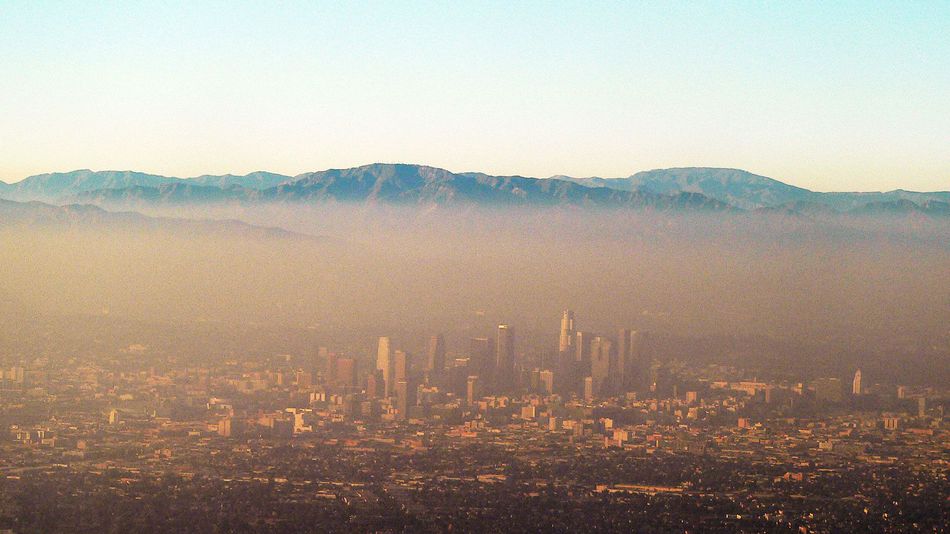
That's why smog rules vary per county.
The real "let them eat cake" is the biggest polluters externalizing the costs of that pollution down to the people, all while the state is dismantling the EPA and clean energy.
Imagine if we had real public transportation across the nation. Less pollution AND cheaper for the average person. Wonder why that isn't happening.
Because the US is overwhelmingly urban sprawl and is not Europe. The only way to fix this is to tear down and rebuild (which we cannot afford), or accept that public transit wait times are terribly slow due to the distance between stops.
Combine that with a lack of nerve to aggressively combat crime or antisocial behavior on transit, maybe a fear of perpetuating inequality or something, and anyone who isn’t a man doesn’t feel safe trying it.
That's a bad excuse
a) because Europe isn't one single demographic but still public transport is useful, reliable and safe everywhere (from Dublin/Zurich on the low side of the population density scale to London/Paris/Madrid on the high side and Amsterdam/Hamburg/Prague in the middle).
and b) there are plenty of examples outside of Europe. Melbourne is urban sprawl. The metro area is 50 miles east to west, 30 miles north to south (more, but there's also a big bay) and a population of only 5 million. A lower population density than the Denver MSA but manages to run a train/bus/tram system that's useful, reliable and safe.
Blaming sprawl or population count, while being outshone by Canada, means it's neither of the above. Perhaps we can move on to the auto companies pushing out light rail in California in the fifties to bump their own profits, or accept that it's the American people and their ethos that has left the automobile as the claimed only option.
I'm not sure I would point the finger at "green movements" though.
Gavin Newsom warms to Big Oil in climate reversal: https://calmatters.org/politics/2025/08/oil-compromise-calif...
I think your idea is a great solution to the problem and would give politicians cover with their environmental base and a win for their constituents.
Newsom is not a refinery nor does he own any refineries. He cannot increase any production by definition.
(As a side benefit, he can also blame the need on Trump, if the environmentalists get on his case...)
Marathon Martinez (2020) converted to renewables. Crude capacity 157 MBD, Renewables capacity 48 MBD
P66 Rodeo (2022) converted to renewables. Crude capacity 120 MBD, Renewables capacity 50 MBD
P66 LA (2025) shutdown. Crude capacity 139 MBD
Valero Bencia (2026) shutdown. Crude capacity 145 MBD
The California Air Resource Board (CARB) has promulgated a revised Cap and Invest rule that threatens the viability of the remaining refineries. All the remaining California refineries have sent CARB, the Governor and the CA legislature letters pointing this out.
California is now a net importer of gasoline following these refinery closures.
This is all about keeping China down, and preserving American Hegemony. That's his definition of "making America great again". He doesn't care that you're paying more for food, gasoline, etc. and that the rest of the third world will soon be starving.
Gulf States get a swap line (can't let Wall St crash), but you get no bail out because the elites don't care that you are hurting. They care about the Gulf States hurting because that ultimately means Wall St will crash which would hurt the Billionaire elites.
So to sum up, the reason is maintain America's Hegemony and protect the Billionaire class.
I don't get it either, but that's the audience that has been cultivated.
https://today.usc.edu/las-environmental-success-story-cleane...
>Would you really want to hurt children for cheaper gas?
Nice appeal to emotion.
I'd rather have clearer skies.
https://www.clarity.io/blog/how-air-pollution-affects-childr...
https://www.clarity.io/blog/a-closer-look-at-los-angeles-inf...
"Poor air quality does not affect all parts of LA equally. Communities of color and low-income residents are disproportionately impacted by polluted air. In certain areas, traffic-related emissions, including nitrogen oxides (NOx), carbon monoxide (CO), and benzene concentrations, are up to 60% higher.
A study led by UCLA found that the air in disadvantaged neighborhoods contained not only more fine particulate matter, but also more toxic particulates as well. Places facing the most socioeconomic disadvantages “experience about 65% higher toxicity than people in the most advantaged group,” according to Suzanne Paulson, UCLA professor of atmospheric and oceanic sciences and the senior author of the study.
These same groups often have less access to health care and good nutrition, putting them at an even greater health risk. Everyone deserves to breathe clean air, and communities of color and low-income residents are unfortunately facing the worst of LA’s notorious smog."
Saving a buck at the expense of someone with no control of their situation is a choice.
https://ifunny.co/picture/yes-the-planet-got-destroyed-but-f...
Cars may burn cleaner but they still burn, and there are more of them than ever.
Easing economic pain in exchange for health pain is nonsensical. Breathe from your own tailpipe if its no big deal.
Yes. Most voters would, too. "Cheaper gas" understates how serious even a $20/week increase in living costs can be for a household on the margin.
It's reality. It doesn't go away if you ignore it. Aversion to higher gas prices isn't a luxury problem for a lot of people. Any realistic strategy for an energy transition has to acknowledge and accomodate that.
We produce more oil than we use, but we can’t refine it all.
The real cost to not processing heavy crude oil is that many refinery assets will be sitting idle because they aren't needed to process light crude.
It could help in the long term by underwritig refinery retooling. The problem is you'd almost certainly need public support for those investments, given they could be undone by the lifting of such a ban. (An export ban would also trash America's reputation with our import partners.)
Or from Alberta.
https://sherman.house.gov/media-center/press-releases/congre...
If you agree with the parent that Americans are going to feel more energy market pain in the coming months I would imagine the pressure for this will only increase.
That's not too much of a problem. A refinery tooled for heavy sour crude technically can process light, heavy, sour and sweet crude - the other way around would be an issue because you'd need to construct hydrocracker and desulfurizer stages first.
The issue is a financial one. A refinery is often a multi-billion dollar asset, and having significant parts of its value sit around unused for prolonged times means write-offs which means stonk number go down, and as we all know there is nothing more important for the economy than the stonk market.
Another, but smaller, problem is that running a refinery on different crude compositions means that the volume ratio of the various oil products changes, and the refinery may find itself sitting on more, say, heavy fuel oil than it can store, sell and ship. And once the tanks are full, production has to stop.
American oil on the other hand (As in extracted out of the ground) is actually too high quality for domestic consumption therefore gets shipped overseas and sold at a premium. The weird economics of this are made possible by globalization. While it’s not fungible on a dime it’s easy to solve and the US really does hold all the cards when it comes to the petroleum industry.
Technically, the refineries can be retooled to take a different blend, but it is expensive to do.
"U.S. crude oil and lease condensate proved reserves decreased 1% from 46.4 billion barrels to 46.0 billion barrels at year-end 2024" [1]. At February's 180 million barrel/month import rate, that's only 21 years of supply in the ground.
Reliance on oil, for America, is a long-term reliance on foreign oil.
[1] https://www.eia.gov/naturalgas/crudeoilreserves/
[2] https://www.eia.gov/dnav/pet/hist/LeafHandler.ashx?n=PET&s=M...
Also, there's the bigger geopolitical problems that creates. If the US knocks over the global energy supply and then retreats and abandons our trading partners, the knock-on effects would be even worse.
A large part of the reason WWII existed was the breakdown of international trade during the Great Depression. Countries without domestic supplies of their own were forced to grab territory instead of peacefully trading for what they needed.
We’re witnessing “American exceptionalism” transform from a brash claim to a whiny demand in real time.
"California’s inventory has averaged just over 20 days of supply over the last five years (2019–23), compared with the U.S. average of 21.6 days."
Like, they have 6 weeks, on hand, in tanks already delivered.
But, all of the ships in-bound are now done.
After the war started, there was a record number of ships, already filled, already in-transit. But now they have all reached their destinations. So there is no more incoming.
If it's going down at 1 day per week then it's not so bad. If it's closer to 0.75 days per day, that's much more serious.
https://www.economist.com/cdn-cgi/image/width=600,quality=10...
[1] https://www.energy.ca.gov/news/2026-01/california-surpasses-...
Also our infra not being 240v is hurting us. The rest of the world can just plug in overnight to any regular outlet and it is good enough for almost any commute.
My EV on a 120v outlet I can manage, but it'd be hard with a second EV.
The lack of ecosystem for good electric scooters is also sad. The weather in much of cali is perfect for it. Last time I went back to China the streets were so quiet as all the electric scooters drove by. An incredible change for the better.
I remember stepping into an apartment parking garage that was filled with scooter charging spaces, like hundreds of them. It was crazy.
Then I went to Taiwan and while walking around I barely talk over the noise from all the gas mopeds.
I joked that the streets in China and quiet and the sidewalks noisy, and the streets of Taiwan are noisy and the sidewalks are quiet.
The difference is other countries have 240 running everywhere. So apartment garages can have cars charging (slower than the max possible speed but faster than if they were on 120v), without tens of thousands of dollars in retrofits.
I just got an estimate of 3k for running basically 6ft of conduit for a new 240v line in my own garage (my breaker is right next to my door, super short run!)
Now thinking about my last condo I lived in, retrofitting even a small condo parking garage for EV chargers for, say, 20 spaces. Let's estimate 30 feet on average line run per space. Assuming a discount on price, maybe 12k per parking space to install a 240 plug, with lines split to cover multiple spaces.
The price is just absurd. That's 1/3rd the cost of a reasonably priced car.
Just the needed permits are a couple hundred.
An unmodified garage in australia will have plenty of unused 240v plugs
and if they did want to modify, they can pay to have 3-phase 415v
The 240V requirement has been overplayed, in my opinion. I still have a gas car. But my driving needs would easily be covered with 110V.
US homes don't need any significant accommodations for 240 volt infra. Plenty of US home appliances are already 240 volt; this is a solved problem.
Meanwhile $3k to get 5 feet of 240 ran in a conduit and an outlet installed in the US.
For many apartment and condo complexes, it just isn't doable as a reasonable retrofit.
If you're the homeowner you can do this work yourself, and the permits and inspections will cost a tenth of that. If you live in one of the few states where this isn't true, that's a you problem.
> For many apartment and condo complexes, it just isn't doable as a reasonable retrofit.
The problem with charging in apartments and condo complexes is not that US outlets are not 240 volts, it's that if those places provide places to park at all then there's little chance those parking spots are electrified at all in the first place.
Quotes for a new 240V line are often >$1K which is affordable in the context of a household improvement but not exactly pocket change.
When you realize as a software person everyone thinks what you do is black magic (someone told me that today actually, and I told them I could teach them if they wanted to learn), and then you realize that thinking of wiring, plumbing as black magic isn’t true, a whole world opens up.
It’s liberating really, I highly encourage everyone to try and learn these skills.
The $7.5k EV subsidy ended in Q3 2025. Everyone considering buying an EV, bought one right before Q4 2025. The percentage for Q3 2025 is 29.1%: https://www.gov.ca.gov/2025/10/13/record-breaking-quarter-ca...
It may rebound back to these levels due to the gas price increase, and many car manufacturers slashing their prices to compensate for the subsidy ending.
https://cleantechnica.com/2025/10/13/california-reaches-29-1...
Saying "it's going to be OK" doesn't change any circumstances. But it may reduce the level of panic (depending on how much the people trust the government), and that can in fact change the way the circumstances evolve.
Also, oil takes longer to get from Iran to the west coast than to the east coast. Shouldn't the east coast be the first to notice decreased shipments, because the west coast essentially has a stock still in transit for longer?
EDIT: Nevermind, now I see that 25% of CA gas is refined overseas.
The improvement in air quality is due to the clean air act, catalytic converters, and the shuttering of industry, the gas blend plays a minor part. Even then, with gas so much higher it will materially make peoples lives worse, at some point society would be better off getting rid of the blend.
Whatever they're doing seems to be working nicely.
That ended a long time ago. A modern Honda generates something like 1% as much pollution as a car from the eighties.
How do you know California's lack of new refineries is due to California hostility rather than being due to whatever caused the same lack in every other state?
A big one is a lack of pipelines.
As I understand it, California sits on so much oil, nobody has built a pipeline.
Building an energy pipeline in California is like bringing sand to the beach. The energy is already there.
For example crude oil is produced mid state in the San Joaquin valley and pumped by pipeline to the Bay Area and LA refineries.
Refined product from LA is delivered by pipeline from LA refineries as far east as Phoenix and up to Las Vegas.
Building new pipelines in California though is…challenging.
https://timesofsandiego.com/state-region/2026/04/23/prices-c...
"California’s top foreign refinery supplier of gasoline and blendstocks this decade is Reliance Industries Ltd.’s Jamnagar refinery complex in western India. "
"More than 9 million barrels arrived via this loophole in 2025"
Now, that's a tiny fraction of the 320M barrels of gas used in CA annually, but anything that affects global oil shipments will be felt in California.
> [California] imports about 60% of its crude from overseas--up from 5% in the mid-1980s- about a third of which comes from the Middle East. About 15% of the state's refined fuels are also imported, much of which depends on Middle East crude.
https://www.wsj.com/opinion/gavin-newsom-california-offshore...
Per the article, the type of fuel needed by California standards is produced at refineries in India, South Korea and Washington.
How much below the peak is current sales?
And what they secured (if they secured anything) was basically future. It's going to take years to ramp Venezuelan production back up to what it would be with decent management.