Posted by sklopec 4 days ago
This is my complaint with a lot of "graphical enhancement" mods for games like Deus Ex.
Unless they touch everything, the inconsistent level of detail is worse than consistently low-res meshes/textures.
But what really stood out to me is this line.
> a linear frame buffer where each pixel was represented by a single byte indexing into a palette of 256 colors.
Of course this is nothing new, but it just really struck me because I've been working on a blog post about texture representation on modern consoles and it is crazy how complex it has gotten: texture tiles, block compression, non-linear texel ordering (e.g. Morton order), ...
The flight simulator / magic carpet easter egg in Microsoft Excel 97 used that same shaded-colormap palette trick, plus some dithering:
https://rezmason.github.io/excel_97_egg https://rezmason.github.io/excel_97_egg/about.html
I'm impressed by your sprite pipeline and gibs animations. Your attention to detail and navigation of constraints have really paid off, I can't wait to play this sometime
I made a very similar project [0] in C 2 years ago, a chunked ray caster that could handle multiple height levels. Was one of my first C projects, pretty crappy but was fun.
Anyone have any ideas how to make it more memory efficient?
It’s full of bugs was just a for fun project
[0] - https://github.com/con-dog/chunked-z-level-raycaster/blob/ma...
I don't think someone used this approach in 1993. Textures were drawn by hand. But I think it's still fine to use such modern way of generating textures, since it may produce better-looking result.
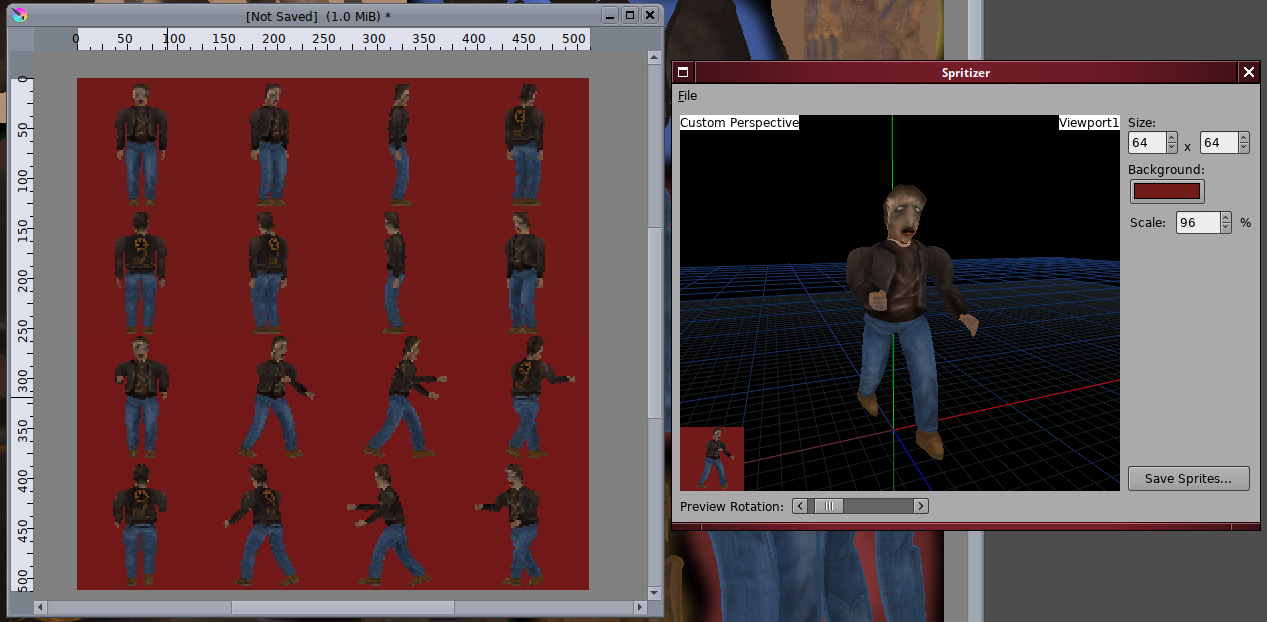
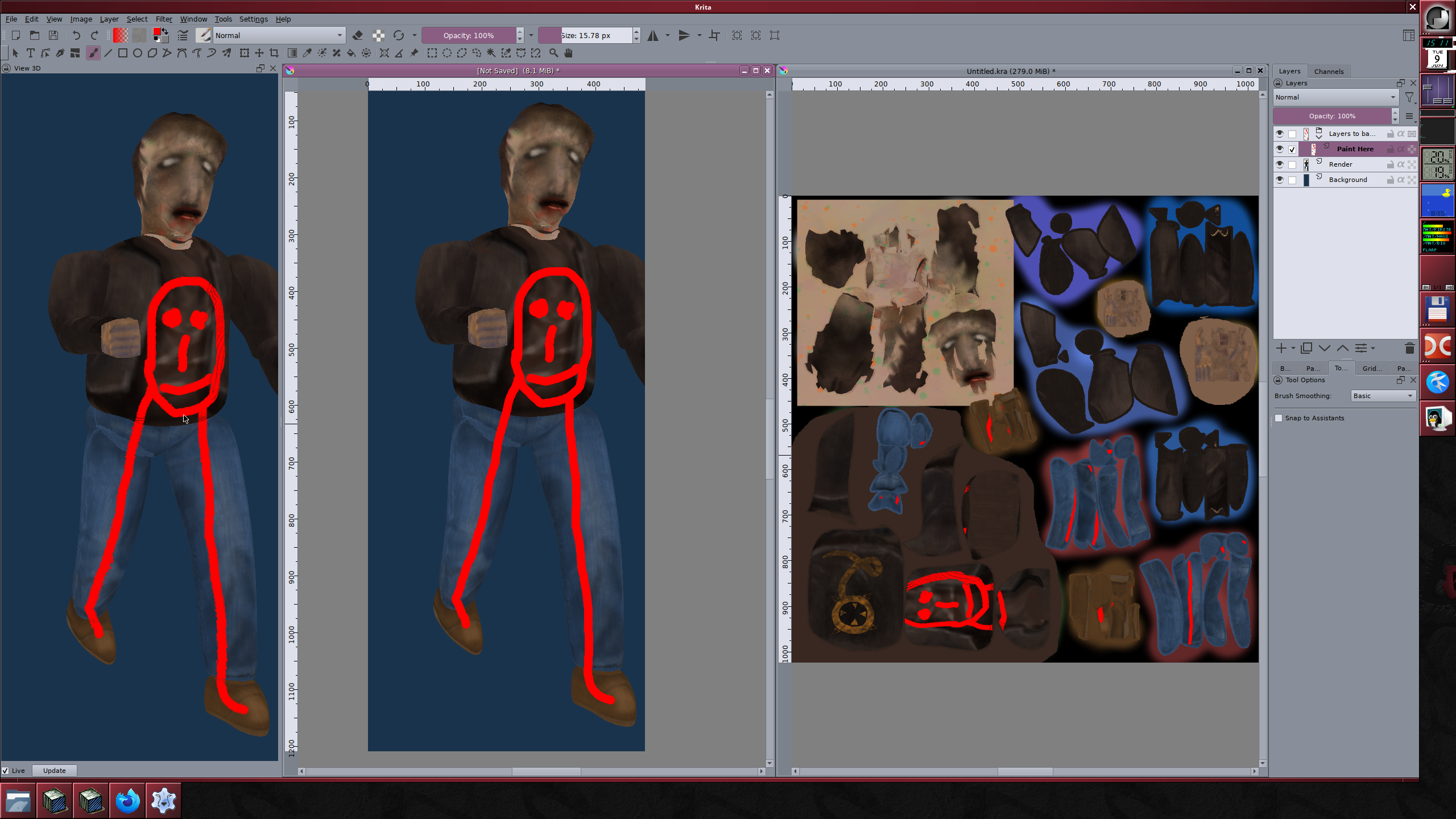
I did write a tool for generating the sprites from 3D models though[2]. It uses plain old OpenGL 1.1 to draw the sprite and grabs the framebuffer directly. It is drawn fullbright so i can paint the lighting directly on the sprite's texture (using a Krita plugin i wrote[3][4] - the model is something i threw together with Blender's default generated UV since i didn't care for the details).
I wonder if doing some sort of postprocessing (after rendering with with shading) like you do with your game would help with the finer details since i also found that rendering from 3D models to sprites creates very "mushy" results most of the time because of all the details getting lost. I notice the colors also become more saturated after postprocessing in your examples, is this after it finds the closest color in the palette or the result of the postprocess? I'd like to keep the overall hue+saturation of the model so maybe doing post-processing on a grayscale render to shade the shadows/dark areas but keep highlights as-is and then multiplying that with the fullbright image would produce results that wont shift the saturation.
[0] https://bad-sector.itch.io/post-apocalyptic-petra
[1] https://codeberg.org/badsector/PetraEngine/src/commit/14ca16...
[2] http://runtimeterror.com/pages/iv/images/95ddebc51e4dfa8a5af...
[3] http://runtimeterror.com/tools/kritaview3d/
[4] http://runtimeterror.com/pages/iv/images/535f0e09e590d8a1731...
It's the result of the Blender compositor postprocessing, just keep in mind it falls apart once you go low enough in resolution (it's an image space thing after all), so I'm not sure if that helps your case.
EDIT: Also, your project is very cool!