- This looks really cool and I hope they keep innovating on this. I love seeing new modalities develop and despite my (many) reservations and criticisms, if even one good use case comes out of it that truly helps people, it's tech money well spent imo.
- They show the reconstructed images as though they are a low resolution CT, and promise that quality will improve as they iterate. This is cool, but ultrasound is not CT. Ultrasound cannot image the lungs, as they are filled with air. You cannot find bone lesions, as the sound waves do not penetrate the cortex. You cannot image many structures in the abdomen if they are surrounded by gas-filled bowel. The brain is encased in bone, so you might get some penetration but it will be very limited. Even with theoretically perfect AI reconstruction, these scans will not be true "full body" in that there will be structures that are not reliably imaged. Imagine paying for weekly full body scans for years, everything looks fine, then its the lung cancer surrounded by air and invisible to ultrasound that kills you (that's why we use CT for lung screening!)
- The images they show are very cool, and do appear to show the correct structures. I realize this is early, but fuzzy shapes of organs is very, very far from medically useful. The whole point of screening is to identify problems early, often by definition, small. This technology looks like it will be best for seeing large, superficial (close to the skin) structures, whereas for effective screening, you want the opposite - small, deep structures.
- "Incidentalomas" or unexpected, probably benign, findings are annoying to physicians, but I in general have no problem with people collecting data on themselves where they can. To me it's similar to heart rate monitors or home blood pressure cuffs. The main issue here is education, so that patients know what the data is and is not telling them. The more complex the data, the more difficult that is.
- Many people mistakenly believe that early diagnosis is the final boss in medicine, that if only we could find every cancer early we could prevent all those deaths. There are, in fact, many, many other hurdles and bottlenecks. Many chronic, expensive diseases do not have clear imaging manifestations. The claim that "it's completely possible that with enough early imaging in the future, the world could avoid 30% of all deaths and 50% of all healthcare costs", I think, to any practicing physician, would sound completely divorced from reality.
I'm not totally sure of the value of an imaging system that only gives you very low resolution images if they're not accurate enough to determine anything from. You'd need a secondary CT or MRI anyway so why not skip to that?
My real concern is the dependence on external servers to reconstruct the images
Edit: From reading other people's comments, people are acting as if this is the first device trying to sell itself as improving pre-diagnosis imaging and this is totally revolutionary. This is not, and if any of the other products have convinced the entire medical industry that frequent imaging is beneficial then neither will this
Radiologist as well. Remember this is full wave inversion not pulsed wave B mode. You can get much more useful information from both high low frequency and capture transmitted waves.
There is promise with this and we use it for example with MRgFUS. With advanced computational models or patient specific CT/ZTE MR aberration correction it is theoretically very feasible to image the brain with ultrasound, whether that’s more useful than say portable low field strength MR is a different question altogether.
> This is cool, but ultrasound is not CT.
Not to be pedantic but since this is a tech forum I would clarify that FWI US is computed tomography by definition (at least in this and many applications). Gas degrades conventional CT too, it’s just worse with US as you have little to no forward propagation and of course innumerable interfaces in the lungs to reflect and scatter.
I've rejected a number of papers for this.
But my point is this. Midjourney Medical might train a model to produce pretty images with this technique, but the more they need to depend on deep-learning models to get usable data, the more that the match between the training distribution and patient will matter.
Given MJ's extraordinary claims and lack of detail, I thought the GP's response was well-calibrated, especially given MJ's unfortunate choice to lean into vaguely implying this has 'medical' utility, despite providing zero evidence (or even plausible theory) their approach could ever have diagnostic value greater than Butterfly's FDA-approved, handheld, full contact USB pocket scanner which is available now and plugs into a mobile phone. They are using 40 of the exact same transducer chip (designed for full contact use) from 200-400 times farther away. You can use the existing full contact Butterfly scanner today and just move it to 40 different angles. It would take a couple minutes longer, provide vastly greater resolution and is proven to have diagnostic value.
If on a website, rank the results; present the 'how I worked it out' info for the best spotters (and you could interview them). Keep the answers secret for a few weeks, then reveal them in a way that the game is still playable.
It's repeatable, every few months you could interview new experts (or the old ones again), get new models.
Kinda like the critical thinking version of images of a pelican on a bike.
I'm also interested in the broader impact of using LLMs in place of web search for general Q&A when we want 'to know things'. It's pretty clear the way LLMs are being used for knowledge acquisition now is often less accurate while 'feeling' more certain. Even if we set aside explicit hallucinations, I suspect it's still less accurate.
It's not particularly helpful; you could easily have done the 5 minutes of work.
I went back in their comment history before LLMs existed and found comments where they claim to be a doctor and sound like they know what they are taking about. I’m not a doctor but my wife and many of our friends are, so I know what they sound like.
But as far as trust goes, Hacker News has historically been a fairly high trust community. LLMs have the potential to change this dynamic, but I don’t think encouraging people to assume that every post is an LLM is helpful. I don’t think a community with that level of distrust is possible, and at that point we should just all walk away.
They're using "CT" in its literal sense: tomography*, using computers. In this case, ultrasound is the penetrating wave rather than x-ray. It is of course a very different thing than what the medical world knows as "CT" today.
The predicate is "given how we practice medicine and the limits of humans ability to interpret the imaging modalities we have."
The more specific predicate is "for my specialty would this replace or prove superior to the tools that I have?"
Both of these are totally reasonable, however the history of medicine, and science in general, is that creating new ways to look at things has a tendency to reveal information that we never knew we needed.
For example, for years I thought of blood sugar as something that was either in a good or bad range. Then I tried a continuous blood sugar monitor. The full picture of the body's response to specific foods that I ate was eye opening. There's so much more to learn when you get a higher resolution (temporal in that case) view into your body.
Another wonderfully hopeful example is the retinal imaging ML work done by google. A completely non-invasive image of the retina for diabetic issues, that also happened to be able to predict things like age, sex, smoking status, previous cardiac events and more! Just take high-res pictures of things! The body is interconnected in ways that you can infer from one system so much about others.
So while I don't think anything the Dr. said is "wrong", I think it represents a very common blinkered mindset of pragmatic practitioners who need to deliver reliable performance daily.
MJ is buying the transducer chips used in Butterfly's low-cost, handheld, pocket-sized USB ultrasound device (it's not an R&D license, they're literally buying the same chip). The repackaging is to turn it into a contactless, 360 degree-at-once, 60 second full body scanner. Every aspect of the repackaging provides the same singular benefit over the Butterfly device: convenience. Unfortunately, every aspect of the repackaging has the same two downsides: lower resolution (meaning lower diagnostic value) and higher cost.
Spoiler alert: moving the imaging transducers 200-400 times farther away from your organs and introducing a large volume of water between the transducer and your skin in no way improves resolution or diagnostic value (quite the opposite (exponentially!)). Having 40 transducers on a hula hoop ring that far away offers no value over having one transducer much closer and moving to as many angles as necessary to image the volume of interest - except it might be a few minutes faster.
So, this isn't an "exciting new approach to medical imaging." It's a marketing repackage of an existing medical product into a non-medical, higher-cost, 'spa experience' with trendy, tech-adjacent appeal and vaguely medical-ish window dressing (it's carefully disclaimed has having no medical value in this form). Since the exact same chip is already available in a much less expensive, far more ideal form that's fully repositionable to any angle, is closer (and can deform skin to get closer still), the real question is how much medically-relevant diagnostic value could MJ's repackage of the same chip offer over the existing better, cheaper implementation? Butterfly's version is already FDA approved with proven diagnostic value. And all of MJ's hype around 'AI-powered' isn't about improving diagnostics, it's only necessary to recover at least some signal from the hurricane of noise and multi-path issues created by the adding MJ's cool-looking convenience features. But slowly being lowered into that tank with the neat ambient light ring sure looks sci-fi, right?
you were surprised to find out that stress and carbs raise blood sugar?
Just look at images from the Butterfly IQ3 handheld ultrasound device which has been on the market a while (https://www.butterflynetwork.com/iq3). Midjourney is repackaging 40 of the exact same chip around a big, non-contact ring. Since MJ is placing the devices 200 to 400 times farther away from your organs and sending sound waves through a large volume of water before contacting your skin (instead of a thin smear of gel) the images will be much lower fidelity.
For a lot of these things I wonder why they don't just do multiple scans just to see how things develop. Is it a cost issue?
What's the limiting factor that prevents medical imaging from getting cheaper and more available?
I think mammography is a great example. Many people are quite surprised to hear that the Positive Predictive Value of a screening mammography is only in 10-15% range. This despite mammography being a pretty sensitive test. This is because despite good test performance characteristics, applied across a large population of relatively health people, the 2-5% false positive rate is a large number of people.
This is so far from my vision of what I want from healthcare. I want a healthcare system that is optimised around A) proactively keeping me healthy, and B) reactively helping get back to healthy when I am not. I do not care about the amount of megabytes of data I have about my body.
I understand some of the current fatigue around biohacking and chasing perhaps-irrelevant metrics, but takes like this surprise me. Do you think people said the same kind of things before the blood pressure cuff became widely available? Or heart rate monitors? Or bathroom scales?
Do we just want to walk around with blinders on because we think we feel OK right now? More data is the only way to get better at this stuff.
Do you see the problem here? "yeah, but nobody's doing that" Well, then it certainly is odd of them to frame it tgat way, isn't it?
It is perhaps not the best wording but I think it's pretty easy to take that "megabytes per second per dollar" statement and choose to interpret it less poorly, and more like "having better, cheaper and more abundant useful data about yourself and your health".
Whether midjourney helps with those goals or not is a related, but different conversation thread.
So even if it is only as good as an MRI, or even 80% as good as an MRI, if it is much cheaper and much more pleasant to go through, you will get MORE people doing it, and get it prescribed in more situations.
That's at least how I read the benefits, democratization of imaging techniques rather than just improvement.
Obviously not all data is useful or meaningful, but even with the tech we already have, there's a ton of it that we're just not collecting or using.
That’s a lot of data really fast, so if you want this 3D scan of your body, yes, you do want as much data as fast as possible. 60 seconds sounds great compared to an MRI that’s going to take 15 minutes minimum & up to an hour or more.
If you don’t want then scan then carry on as usual.
I think the point many commenters are making is that yes, lots of data IS necessary to do this scan effectively and quickly, it's not the only heuristic, and it's a bit misleading to compare it to the speed of an MRI given that this does not produce the same data as an MRI.
This is deeply silly and nonsensical framing. You don't want "lots of data really fast", you want high-quality, diagnostically useful data. If the fastest way to generate that is via 15-minute MRIs, then that is vastly more ideal than a bullshit scan that takes seconds.
But that's not the point, right? The cup cost way more than your average cup. There's a certain type of person who will spare no expense on gadgets and supplements that promise "wellness," and it doesn't matter if it actually produces results or not. Ray Kurzweil supposedly takes dozens of vitamin pills a day, and I imagine the end result is expensive piss, but guys like that will pay anything for the fantasy that they could live forever.
I'm not a doctor, so I can't say if this midjourney stuff has actual value. But considering they first plan to deliver this in a fancy spa, and that it's coming from a tech company, not pharma, my reflex is to question the medical value of this data. It just smells too much like one of those pricey, dubious wellness products, and a lot of us here are the ideal marks for such a scam.
I'm 100% OK with health-conscious yuppies that have too much disposable income being the guinea pigs paying for this until if/when it demonstrates medical value.
I would be remiss if I didn’t point out that the entire pharma industry is not exactly known for their motivation to research and develop therapies for the betterment of humanity. Case in point, the opioid crisis, wherein pharma’s goal was to just sell as much of the drugs as possible without regard for the impact those drugs were having on the people taking them.
I’m not saying this to defend tech — they’re guilty of the same things. I am saying this to suggest that if this play by Midjourney to reject VC funding and really lean into a community supported research lab works then you might end up with something closer to an altruistic approach than you would have otherwise.
Do you think the average person wants a higher resolution time series of their weight, or better access to a higher quality doctor, cheaper?
What on earth do you think that load of garble means? "50-100 years further along" is absurd.
Why do you think "more data" is necessarily meaningful, in a health context?
It tries to get you to imagine that advances in the last 50-100 years will project linearly into advances in the next 50-100 years.
This is not generally the way that science and medicine work. Even if you add in gobs of questionable data collected by companies with a bad track record of doing right by it.
They’re essentially trying to get you to believe that AI + your data will give you the kind of step change in medicine that we got from penicillin and X-rays/MRI/CT imaging. It’s a cheap rhetorical trick.
It seems straightforward. Imagine where medical care was 50-100 years ago, and then imagine they had all the data, resources, and practices we have today. In that case, they would have been 50-100 years further ahead than they were.
> Why do you think "more data" is necessarily meaningful, in a health context?
I think the only way to find out what data is meaningful is to collect and analyze more of it. That does not imply that all data is equally worth collecting.
So the idea is to just muck around with data, then ???, then make people healthier? To a hammer, every problem looks like a nail I suppose.
I don't work in healthcare, but it seems to me that the main problems in the field are:
1) a focus on addressing symptoms, not causes 2) pathologization of normal processes 3) normalization of pathological processes 4) financialization of care + doctor evaluations 5) regulatory capture by care providers
1, 2 and 3 are inherently philosophical problems, and there's no amount of data that you can toss at these problems to solve them. Thinking that data can solve these problems is itself part of the problem.
All I want is an AI that can take in basic information about my demographics, lifestyle, family history, religious beliefs, symptoms and vital signs - and then provide me information on tests I should run and drugs I should take - and then most importantly : tell me how to obtain those tests and drugs without ever dealing with some doctor who's 200k in debt from medical school and needs to appease their administrator by recommending x-many surgical procedures a quarter.
The incentives are bad - not the data or lack thereof.
(They need to be high quality megabytes, of course!)
Midjourney Medical looks amazingly cool. But it, and megabytes of data, is not what we really need.
You figure out this stuff by gathering and analyzing data. Whether or not this specific implementation will result in more meaningful actionable steps, I guess we'll see.
Both our unhealthy habits, and the "simple rules" to keep us healthy, have been around for decades. Building devices that give us gigabytes of data won't change anything. Dr Peter Attia makes a compelling argument in his book "Outlive" that science, as it is structured now, has achieved miracles when it comes to injuries and infectious diseases, but has been more or less powerless, for entirely systemic reasons, to do anything about neurodegenerative and cardiovascular diseases or against cancer and diabetes. His book is well worth reading to understand his argument--but the gist of it is that those require lifestyle changes.
The person you replied to mentioned diet and exercise, that seems like an area that would benefit directly from this type of scan. Being able to track the effect on body composition in a highly accurate way where we know exactly how much muscle and fat are gained or lost and where that's happening could tell us a lot about not only the effect on the "average person" but for each individual. I'm sure there are many other less obvious things that could be tracked using this technology.
Right now we're often in a situation where the only data you have is expensive tests ran when you're sick enough to justify them, when it may already be too late.
For data to be useful we need rigorous medical science. We have shitton of worthless medical data with little science behind it.
In the USA, an annual physical includes a good deal of blood tests covered 100% by ACA-compliant insurance plans. The problem is most people don't do it.
As a person with a few chronic conditions, I'm getting bloodwork done every few months at the cost to me of $5/mo (heavily discounted by my insurer's portion of the payment).
What I have found is people who complain about the cost of the tests either don't have insurance (with many excuses for that: I'm too healthy, I can't afford it, doctors are for sick people, etc.) or don't go to the doctor, even though they pay a healthy percentage of their income for the privilege.
Health Insurance is too expensive to not use it. Get every bit of free benefit out of your insurer as you can (gym memberships, annual physicals, drug/alcohol counselling, lots of screenings and vaccines, etc), and if they are going to charge you and/or your employer to the tune of $2000/mo, fucking use it!
When I first started getting annual blood tests there were two values in particular that were consistently elevated. A bunch more tests and some specialist visits later the explanation was that I have a harmless genetic mutation that just causes those values to be high.
A few years back I had some different values pop high. They implied scary things. More specialist visits than before. A lot more tests. After months of that all of the scary things were eventually ruled out. And then the values went back to normal. Nobody has an explanation even now.
This is just with a pretty standard battery of tests: CBC with differential, comprehensive metabolic panel, lipid panel, TSH with reflex, vitamin D. They catch enough bad things that they're generally worth ordering on a regular basis for healthy people at annual physicals. The occasional wild goose chases like what happened with me is the price we pay for catching the more serious things.
I guess we'll see just how valuable monthly whole body ultrasounds are. There's a real risk that it will catch a lot of benign things without catching enough serious things.
> I guess we'll see just how valuable monthly whole body ultrasounds are. There's a real risk that it will catch a lot of benign things without catching enough serious things.
I'm all for blood tests, I'm 1000% against everyone getting ultrasounds regularly. I have done them a few times for specific cases, and every time they have found something that looked absolutely terrifying, that turned out to be benign. And the time between ultrasound and biopsy is weeks sometimes, which is even more terrifying while you sit there wondering if you are dying.
Could this much potentially frivolous data unlocked for semi-literate worriers and conspiracy theorists lead to whole subreddits full of people freaking out about questionably meaningful physiological aberrations? Definitely. But that's just a variation of "a little knowledge is a dangerous thing," and I believe we crossed that threshold as a society some time ago. So bring on the terabytes and let's see what we can do with them.
Don't get me wrong, I'm also privileged. I can pay for pretty much any type of medical intervention that I'd need. So my variables are usually "comfort", "speed", "convenience", etc. But I know that this is NOT the most common scenario for everybody.
"More data" is quite literally irrelevant.
Stand on a scale at the same time of day, every day. Track your intake. Track your output. See your PCP for your free AWV-equivalent, and keep an eye on your metrics.
But no, we need GB of scanner outputs because some medically-illiterate (but still the smartest-guy-in-the-room) techbros want them for... reasons.
"Megabytes per second per dollar" may not be the optimal way to phrase this, but cost and efficiency are a real concern.
You want technology to train you how to avoid environmental factors and then give you treatment?
we're still very far away from eliminating humans in the loop from medicine.
This will never happen and arguably should not be the *medical* system's problem. It is just not feasible
Being able to get free tests every 6 months directly from the facility would be an example of a feasibly proactive measure the system could do for us.
Maybe you’re only thinking of a system that will somehow get people to eat healthy and exercise?
1. It kind of makes sense that an AI imagery company would apply that to other novel applications of imagery and computing and try to do something cool with it.
2. Midjourney as a brand is all over the place and this feels -off, somehow. I think from a branding pov they should have just started a different company with a different name. Perhaps a single image-focused umbrella company named [Name] with Midjourney and this medtech company as separate subsidiaries.
3. AI imagery companies suddenly making medtech products and spas feels very “we don’t know what to do, so we’re going to throw spaghetti at the wall.” That doesn’t necessarily mean it’ll be bad, just that it’s not typically what you’d do if you’re working on something super successful already.
4. AFAIK they are entirely self-funded and so this really isn’t about VC scaling or anything like that. But that doesn’t mean they’re immune to the same cultural pressures.
The founder is a hardware guy who made enough money to retire young off of the sale of his company, Leap Motion. But, he decided what he really wanted to do was cool research with cool people. So, he started Midjourney. The goal for the AI image generator was to be cool research, pay for itself, and grow the lab. It ended up making far more money than ever expected.
I was a Discord mod for Midjourney when it was still in private beta. I got to participate in some of the discussions of "WTH are we doing and how should we do it?" DavidH is very much a smart hippie idealist. He isn't really motivated by even more money beyond how it enables more fun research. MJ actively refused investment. And, actively refused partnerships that would make them money but wouldn't help build the community or the lab.
So, put together: I can totally see how this looks weird from the outside. But, having spent a few years peeking inside, I'm only surprised it took so long for them to branch out like this.
My opinion is that the money is in the verticals as the models and harnesses built around them become commodities. Specializing in a vertical, especially where hardware is involved, creates a buffer between companies and the frontier labs. The frontier labs are spreading themselves thin trying to capture verticals like finance or legal but aren’t narrow enough to be as competitive as a company that is going for a more targeted approach.
this is pretty normal, i mean you have OpenAI and Anthropic trying the same as well. OpenAI is working on legal stuff [1] and also rolled out (or said they'll roll out) ChatGPT Health [2]. Then there was Sora etc.
These companies need applications for their tokens and someone has to build them. If they can win even with one, that's a net benefit for them no?
1 - https://www.artificiallawyer.com/2026/06/02/openai-targets-t...
It also gives a vibe that they gives zero damn about to those creatives audience, or the things that made name for them in the past anymore, or that what I feel as their subscriber... I know that David Holz have his own unique way of doing things but it's still...weird!
oh, and the hypetrain on X. yikes..
Not every creative profession is something where you create something you're proud of or you own. You're often just one part of a massive machine working on a project. It's a bit hard to keep sticking to the "creative noble artist" mythical vibe when it's a 9 to 5. And it's not fair to call them not creative just because you feel like it.
Creativity is neither a property of who you are or what you do. It’s about how you do it. It’s closer to a mindset of curiosity, wonder and play. For example, many programmers have a need for creativity within coding, but don’t feel they get it at their 9-5 job, and instead work a side project (like FOSS, indie game) because it’s a more creative experience. The point is: same person, same activity yet one is more creative than the other.
The art/artifact itself is not creative. It’s the process that’s creative. Building a car can be creative. Buying a car is not. That’s not romanticizing and gatekeeping people who don’t have time to build a car. It would be genuinely misleading to equate those things.
> Creativity is neither a property of who you are or what you do
Then you say:
> It’s closer to a mindset of curiosity, wonder and play.
Which has to be the property of what you do (the process) or who you are (the personality willing to embed those values), right?
> It’s the process that’s creative. Building a car can be creative. Buying a car is not.
Sure, but the process is "what you do" which directly contradicts what you're saying.
> For example, many programmers have a need for creativity within coding, but don’t feel they get it at their 9-5 job, and instead work a side project (like FOSS, indie game) because it’s a more creative experience.
Sure but most programmers don't do it. Simillarly many artists work on projects for companies and their own projects. My point is that you cannot reduce commercial work as not creative just because it's a 9-to-5.
I really fail to understand your point with this comment since it's not really saying anything coherent.
You also say
> The point is: same person, same activity yet one is more creative than the other.
Again, if that person is doing that activity then it is what they do i.e. you're calling the process creative. And in this case, we'll call that same person to be creative since they have the drive to work on their own project after a full 9-5 job. But if they were not doing it, we'll still consider them creative since it is a basic requirement at their 9-5. That is my point - both of them are creative. Degrees may vary depending on subjective perception but that was not what was being discussed.
”What you do” was just short for the _activity_ that you’re doing, eg ”I am coding” or ”I am building a car”, which does not determine the extent of how creative it is. Building ikea furniture from instructions would be low on the creative scale, whereas making a chair from woodworking might be higher, for most people.
> Sure but most programmers don't do [side projects]. My point is that you cannot reduce commercial work as not creative just because it's a 9-to-5.
Of course not, some people find that perfect match. That said, employment is not optimized for creativity, so it simply appears unusual that it’s conducive to highly creative work. This is my theory of why many programmers pick up hobbies outside of 9-5 where they have better preconditions, whether it’s side projects (same domain) or woodworking (different domain). Some find it at their 9-5, and some don’t feel much urge.
> we'll still consider them creative since it is a basic requirement at their 9-5. That is my point - both of them are creative. […] Degrees may vary depending on subjective perception but that was not what was being discussed.
I don’t think it’s even meaningful to discuss creativity without acknowledging that it’s both subjective and that degrees may vary. And yes, problem solving is probably always creative to some degree. But the degree is the important part.
So, I wouldn’t call _them_ creative or not, because again I don’t think it’s a personality trait nor binary. Only the person doing it can tell how creative it feels. Personally I felt mostly uncreative when doing corporate work. I would have loved for it to feel creative, but it didn’t.
You really think creative people are not interested in new forms of visual expression?
This as simply being ignorant of art history.
Doing it under their main brand is very weird and I don’t quite see how it translates to creatives at all.
God forbid someone should try to do things to benefit society with their fortune.
a) You pay them handsomely
b) You do shit they like, they way the like.
Sometimes it overlaps, of course. But this is essentially the reason why people stay in academia in the hard sciences. Most of us could earn considerably more in industry.
I'm not sure midjourney can compete with the bigwigs on a). But doing healthcare stuff is probably more fulfilling to the researchers, and with less "we stole from all the artists" vibes.
Of course, if this all works out, they might me able to do a) easily :)
But I'm not convinced about their view of having people casually going to a spa every week and getting a full body scan. AFAIK, some doctors tend to avoid full-body scans. The reason is that each body is different and has its own quirks. If you do a scan for no reason other than "I can do it fast", chances are that the scan will show something unusual. But, at the same time, it is likely that it isn't a problem. And now, you will be stressed about the chance of having some health condition and spend time and money digging into a rabbit hole of what the issue could be, only to find out it was nothing.
They also don't say anything about the price of such a machine. If they really envision a future where everyone can easily get a scan, this is a crucial factor.
I understand there are many benign tumors that doctors prefer to ignore in people, but eventually when scanning becomes portable and safe enough having regular access to scans could really help a lot of conditions.
Full body scanning is expensive, and in some cases not that higher resolution. CT full body scans are cheap and high resolution, but you are being blasted with Xrays for long periods. So there is a not inconsiderable health implication.
To get good data, ideally you need to have a longitudinal study, as in you measure people monthly/weekly and then correlate that to life outcomes. The ethical issue is that you'll see lots of lumps and bumps growing, and this could lead to lots of invasive checks. You can't not check because that's not fair "here is something that looks like cancer, if we grab it now it will stop you needing chemo. But it could just be a cyst."
So, its really really expensive to have 100k people getting monthly full body MRIs for 10+ years. Even more expensive to get them at the right resolution.
I think, that if these scanners are good and that is _Very much_ not proven. Then having a long term study would be good. I however have deep misgivings about how effective field array ultrasonic scans are, also safety.
I also do not trust midjourney, a company that exists through large scale copyright infringement to handle that data safely, ethically or in a way that would allow decent science to be done from it.
Finding "lumps and bumps" or incidentalomas may be much less of a problem if you can keep a close eye on them without using CT or MRI, maybe your doctor would want a follow up MRI as a closer look but if it seems likely benign they could easily recommend you to just keep scanning with this ultrasound machine and only get another MRI or biopsy if it seems to develop in a malignant way.
The mistrust of private individuals and companies is a harmful belief when it comes to the development of new medical technology. Many groundbreaking devices were developed through the efforts of individuals, including the MRI.
the full body MRI was developed in the NHS/university along with CT scanners. But let us not pretend that modern companies have been acting in a way that is ethical. OR that there exists a legal framework that fights for the rights of normal people.
> incidentalomas may be much less of a problem if you can keep a close eye on them without using CT or MRI
They are a problem because we have no real data on cancer incidents that don't develop. (https://ima.org.uk/24626/making-sense-of-cancer-with-profess... buried in this article)
Biopsies are not risk free. General anaesthetic carries a risk. You'll be on antibiotics, the wound will have an infection risk. Also the build up of scar tissue is a real issue.
This is the ethical issue. Because suspicious lumps will need investigation, no ethics board is going to allow not investigating.
This also fucks up the data.
Its not impossible, but it needs sensible thought, thought from actual medical professionals, rather than a company who is at best operating in a legal grey zone.
The problem is that, in clinical practice, with every imaging technology there are trade-offs. Just because we see something out of the ordinary in a scan doesn't immediately tell us whether it's pathology, pathology worth investigating/treating, or if it's just a normal physiological variation.
Which means that, when "something" is seen on a scan, we must do further testing, either increasingly invasive, or increasingly time consuming and expensive.
I agree with the sentiment that if we had a way cheap, fast, and harmless way to scan an entire body we would unlock many new research areas and that it would further our medical understanding, and eventually ripen for clinical use.
However currently, I do not see any benefit in giving access to the population to such a technology, because we neither have the resources to chase down every single region of interest in a scan, nor do we have efficacious treatments for everything we might come across on a scan. Which is why we've settled on scanning things if there are other signs of disease, and only treating something when it significantly impairs life quality and/or expectancy.
Should such a quick and easy scan be in every hospital and research center? Yes. Should it be a spa for people to go to whenever they feel like? No.
we don't need to do much differently to take advantage of this data anyway. doctors already ask patients what changed recently
collect data passively. when a medical condition arises, you have a data source to correlate against the onset of the condition
currently we have almost no data, so doctors need to run multiple tests to identify possible causes
So your take is we just do the testing and ignore it's outputs entirely, until something comes up? And that is somehow different and better than current imaging processes?
> currently we have almost no data
This is absolute fucking nonsense.
Indeed, but having more data might be able to solve that? The whole problem seems to be that benign conditions sometimes look scary because we're currently not able to predict well enough whether it's something that will eventually cause problems.
If I could have daily full 3d body scans, and time lapse healing, track injury progress, visualize and correlate food and exercise.
And all I have to do is chill out about known benign cysts and tumors.
Yes I think it will help. I would take that trade off.
I already can feel a few cysts that have been with me for a long time, docs said I was fine, so I've already been through the stressful initiation of benign lumps.
Further, as someone that has spent far too much time and money trying to find the root cause of a particular issue (with absurdly frustrating inefficiencies in terms of being bounced around, insurance nonsense, etc), I am generally in favor of improving our ability to find a lot of information in a manner like this. Doctors are generally good at finding very common issues they see all the time, much worse at anything uncommon. This can be a real problem. I think it could help the world a lot if we had something like this to improve our understanding of more outlier cases, we might find a lot of issues that were hard to catch without that scale of information. I also think preemptive scanning would catch a lot of issues that go otherwise unnoticed for much longer than they should go, something that also happened to me, but is mostly an issue of systemic inefficiencies in our current healthcare system rather than something that this technology is required to solve. In my case, doing some simple checks that they felt weren't necessary because I seemed healthy would've caught it much earlier.
Was this presented as an opportunity for researchers to be able to run more large scale studies involving full scans I woukd have a different take. This is however presented as a shiny toy to be put in a spa, that gives you images you don't know how to interpret anyway, or at best gives you some AI-powered report.
The rest that you're saying points more to issues of you country's Healthcare system, and it isn't clear if and how this technology would improve that.
Fast and cheap full body scans could provide the data necessary to tune out the noise.
Instead of looking at a single snapshot of a person, you're now looking at trends over time. We probably don't have the analytical tools to effectively evaluate medical imaging with that time dimension at such scale (because I assume it would be rare for someone to get MRIs so frequently), but maybe with more data and study, we'll be able to more definitively distinguish benign quirks from real concerns.
Rather than a human comparing a couple of scans five years apart, you're talking about computationally identifying outlying regions in the data (a motion picture of the entire body) that are trending towards areas of concern.
https://www.wiserhealthcare.org.au/too-much-of-a-good-thing-...
> As well as being unlikely to be beneficial, full body general health checks in asymptomatic people can potentially be harmful. The main harms are overdiagnosis, detrimental psychological effects, negative effects on health behaviours (for example, failure to quit smoking due to reassurance of good health), complications related to follow-up tests, and unnecessary treatments.
the signal is improved by focusing on differences over time, instead of looking for insight from a single snapshot
in a production system, I look at the change log around incident start as one high signal way to diagnose the problem
I want the same ability with my own body. new pain? look for recent scan deltas, in conjunction with modern medical intuition
Why can’t learning more about unusual things we can’t see with the naked eye be the same?
“Bury your head in the sand to avoid harm” does not seem to be the right path.
Scans like this will have short term difficulties while we better figure out what’s important and what’s not but will only help long term.
Something unusual in a single one-off scan vs something unusual and changing over the course of multiple scans give two different views.
People are already doing this monthly with DEXA scans!
Actually in some cases we do know. Regular xrays are harmful, for example.
Our medical industry is set up to only evolve via highly centralized research that fully situates a diagnostic within a particular treatment path. This approach makes it more and more expensive to improve care for narrower and narrower populations - driving medicine towards being a luxury good.
I'd like to see midjourney say more about price, but I love the idea of starting some new diagnostic pathways with different principles. There are probably all sorts of low hanging fruit to be found about new treatment strategies... It just takes some faith that nature hasn't hidden all of her secrets in the one place we already know how to look.
It shouldn't be a commodified test anyone can do at any time they feel like it. There are so many examples this leading to over or misdiagnosing already. I've seen patients who thought they had diabetes because they got a CGM over the counter and it showed a blood sugar spike during exercise (as in, their body doing exactly what it was supposed to do). He also now avoids oatmeal because "it spikes my blood sugar". Surprise: reddit and tiktok are awash with such stories as well.
I've seen a patient who on a whim decided to get 24hr blood pressure monitoring done, and thought they have severe hypertension because their systolic reached 170 when they were climbing stairs and during a football match because they were cheering and shouting.
In a similar vein, there are shady practicians who offer full body MRI scans, and fMRI brain scans to the well-to-do as a way of diagnosing things, when in fact neither are specific enough to actually diagnose something on their own.
23andme tests sending patients into clinics because they found a specific SNP that may be associated with worse outcomes for a disease.
We have neither the resources nor a specific enough technology (scan shows something: not specific enough to tell us what it is, but it sure is something) to unleash these for the general population to use.
Anecdote: My wife had a high risk pregnancy. They did more than the usual scans and tests, and at one point we were told to go immediately to the NICU, spent 48h there , more tests. None of the tests really showed anything other than she was different than the normal pregnancy (I won't get into the specifics).
In the end, we have a healthy child but it was a lot of pain just going through test after test just because things were out of bands (my words).
I'm in full favour of learning better and better tests. Over time we'll have enough data to know what's urgent and what's preventative. Losing friends and family to avoidable health issues is too heartbreaking.
My only criticism from the tech video would be that they spend some time lauding the nanometer deflection sensitivity, which might lead some to believe that's indicative of the image resolution. It's not, and it's somewhat of a distraction -- that's just giving us amplitude information, which is comparatively less important than correlated time/phase across the 100k sensors. They do later on state ~mm resolution, which is still great!
Doppler and motion blur may be an issue (e.g. heart beating), as one slice requires a full ring of sequential exposures. But still way faster than MRI, so probably fine.
On a lighter note, it could seriously change the meaning of get FUCT (Full body Ultrasound Computational Tomography)!
However Ultrasound quality depends highly on transducer-skin contact.
Any physicists here to comment on the effects of sonar through liquid and the effects on image resolution and field of view?
That's why normally you're concerned with really good transducer contact (squeezing out any air) or use a gel to match impedance.
I'm a bit rusty on CT, but I'd guess the resolution is proportional to the total number of transducers in the array (e.g. larger sensing surface equals tighter resolution) since you're basically taking a Fourier transform of the incident wave.
I’m no doctor by any means, but what if, as an example, an organ fluctuates in size, or composition, naturally. A medical professional would know these things, but a random person off the street might get stressed out and start to panic, or perhaps overcompensate with their diet or something.
I think more data is generally good, but data without context or insight can be problematic.
This is just not how the FDA works. At all. You can't just email them slideware and marketing materials to keep them in the loop.
You have to hire an army of expensive compliance people (cheap ones aren't nimble enough for startups), develop the whole thing start to finish under strict design controls, and usually throw a lot of time and capital into convincing regulators your very innovative and disruptive new R&D endeavor is actually derivative enough to draft behind some existing medical device.
this is similar to how people get a lot of medical value out of chatgpt today
Chatgpt is just words. This is an ultrasound imaging system. Who knows what could go wrong: blown out eardrums from feedback, acoustic burns, wild inaccuracies that lead to misdiagnosis.
There's really no way around documentation as a way of collecting evidence that the team knows what they are doing. Things like enumerating all the possible patient risks, assessing their severity, updating the design to mitigate, and ultimately testing that it works as intended.
This is why you can't just bolt on the medical device part. Most devs will have a conniption if suddenly expected to attend lots of meetings and do a lot of paperwork. Different skillset and very expensive to switch out your whole workforce.
And FDA approval (I presume) if they want to give formal diagnoses, but I believe that if they don't get that it'll fall under the "alternative medicine" umbrella, which is very broad. But they can do whatever under that umbrella as long as it's safe.
Mostly they hate patients who have opinions
I think I'm not the target audience. I guess they are going to need to sign up a lot of people, to train on their scans + their medical outcomes. So the article is talking to people who will get enthused by it, which is more difficult after the question of 23AndMe data sale.
On the other hand, nothing here substantiates this promise. We've got a video render of what a hypothetical device could look like. It's probably more than nothing (they got exclusive license on these butterfly chips in 2025, and it's at least plausible that the best solution to the data bottleneck in an absurdly noisy system like this is real-time AI image processing)... But it's certainly less than something. It's a hype video that doesn't prove feasibility of anything, yet.
EDIT: This is all in reaction to the second video on the announcement post[0], which is much more informative than anything on the page currently linked.
What's the relation between sensor density and resolution? If their array could give femtometer resolution, how much could you drop the density when you only needed to detect forearm muscle movements through the skim.
The way Ctl-labs was trying achieve the same results always seemed like it had fundamental physical limitations due to the nature of electromyography (to this software engineer...)
The diameter of a carbon atom is 154 picometers. Nobody's going down into the femtos. And you're not going to get atomic resolution, either, because humans move around too much and things like scanning electron microscopes need very stationary samples. Even microscopic vibrations can blur the final image.
Which isn't to say that you couldn't get very good resolution...
LIGO detects length changes of 10^-18 m, or attometers, not femtometers, which are a thousand times longer. (https://www.ligo.caltech.edu/page/facts) But this does not matter at all, because this is not resolution of the body image, but the size of the vibration on the speaker. That's a technical data point that I don't see any reason to include in this presentation other than to cause this exact confusion.
The video looks in general like it's trying to impress by giving a lot of incidental information about how the device works while being very light on what it would be able to actually see -- e.g., it doesn't matter how many gigabytes your device collects if the resulting image is blurry.
Compare the website of LIGO (https://www.ligo.caltech.edu/page/facts), which also has a lot about the technical marvels (huge vacuum tubes! precision engineering!) but crucially includes the goal of this all.
Also The other thing I am unsure of is what the health effect of dumping you into an industrial scale ultrasonic cleaner. For example you can have doppler to measure blood flow in real time, but you can't do that for early pregnancy because of some health reason or other.
Some PE bro preaching miracles about a technology that I am sure they are in some way invested in making profit from does not convince me of it's legitimacy. My base instincts, from the unfortunate experience of working daily with PE bros, tell me the opposite in fact. It gives déjà vu of the Theranos hysteria.
Someone else linked to this preprint which seems related [1]. Would you take a look and say whether it seems legitimate?
[1] Whole Cross-Sectional Human Ultrasound Tomography” https://arxiv.org/pdf/2307.00110
I could see this being valuable for adipose tissue mapping or fatty-liver monitoring at a large scale, as the machines would be significantly cheaper, but this isn't some revolutionary magic bullet like the Twitter post is insinuating.
Passive sonar in the naval sense means listening only, not emitting. Do you mean imaging that relies solely on acoustic energy already present and emitted by the body? If so, then generally no. You have two types of "passive" imaging. First would be hardware-passive, as in MR elastography (most common), where the patient wears a transducer pad, and vibration is actively generated by a driver. You've then got algorithmically-passive, which is more analogue to passive sonar, reconstructing tissue stiffness from ambient broadband vibration without the emitted probing pulse, but that is very much entirely academic. I guess the question would be, why is it worth pursuing when you have something like optical coherence elastography (OCE) for non-invasive profiling. Doing it using noisy ultrasound method becomes redundant. There are other methods, but the outcome is the same.
Generally (this is true for all systems, not just humans) you need to induce energy into it to more effectively measure it's output. Think of it like a bell - if I want to hear the note it produces, it's much easier to hear what this is if I ring it with a hammer. Granted, it will be "passively" resonating to a point where, with a sensitive enough sensor, I could probably pick up the output without the hammer - but that is a pointless problem to solve. I could hit a bell with a soft hammer a million times over without causing damage to it. The lifetime of the person hitting it with a hammer is far shorter than the accumulative damage to the bell before it breaks. The same is true for humans. You could effectively run a very low-energy, 60Hz vibration through a person (which is how the pads work) for multiple lifetimes before it would cause significant damage, so there comes little point in solving that problem. As such, true "passive" imaging is functionally pointless if your outcome is "safely image a patient". You're overengineering your solution to solve a problem that is only relevant if your patient was planning on living for 1000+ years.
Is it? Linear No Threshold has largely been rejected at this point. https://jnm.snmjournals.org/content/early/2024/06/21/jnumed....
A good primer: https://pmc.ncbi.nlm.nih.gov/articles/PMC2477686/
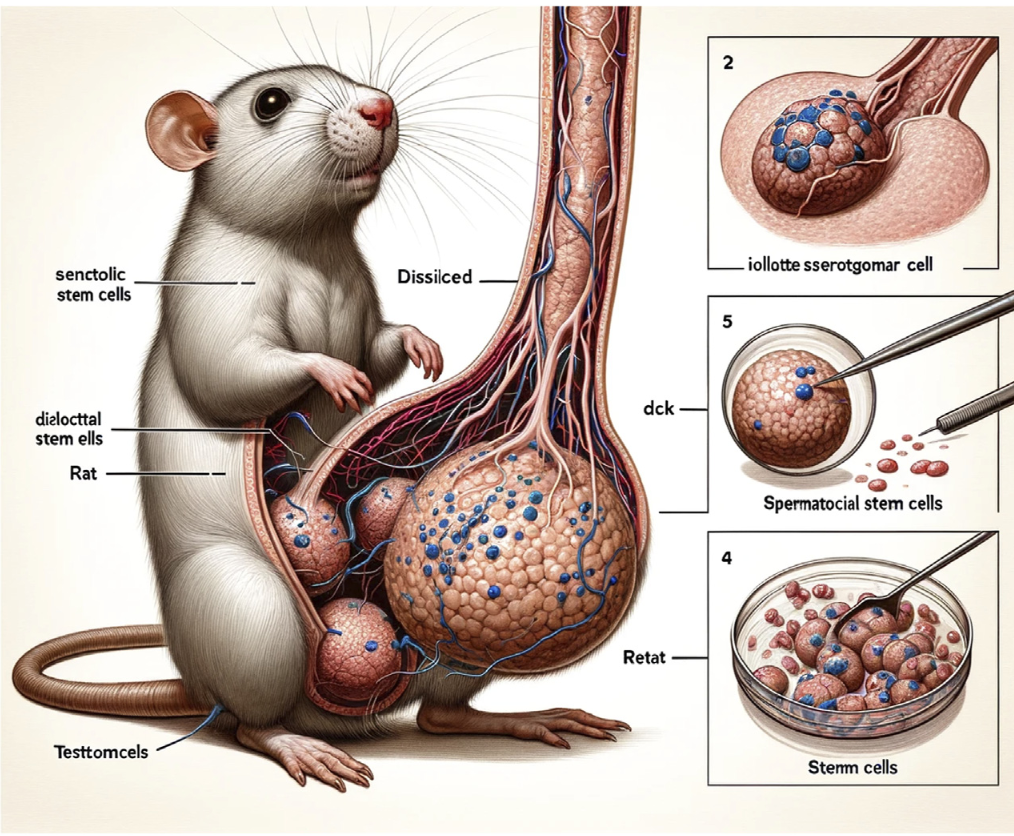
The safety of the device itself is a concern, but so is the trustworthiness of the output. Midjourney already has some very questionable history with medical imagery (like this totally legit image of rat testicles published in "Frontiers in Cell and Developmental Biology" https://upload.wikimedia.org/wikipedia/commons/c/cc/AI_gener...)
I don't think "someone used their tool to produce a silly result and used it" qualifies as Midjourney having questionable history at all.
And the safety of the data as well. Am I supposed to entrust full body scans to a startup?
(I researched more and found in the video a value) The waves are 50 nanometres, and this is basically the equivalent of having a full body ultrasound. We've been doing baby ultrasounds for decades with no ill effects, so I can't imagine this being different
Side note: kinda crazy they had medical x-rays in the 1890s. X-Ray imaging was discovered in 1985 and used clinically within 2 years.
But I do agree with your point, these days, I hope we're better about studying the potential dangers of current technologies we use.
Sorry, but this is just pure "Gell-Mann amnesia effect" vibe to me. I mean, you've just brought up a perfect example yourself! What kind of mental gymnastics does it take to still hope that this time it's not like that?
I don't wanna start the whole "vaccines cause autism" thing and whatnot, and surely you shouldn't avoid ultrasound just because of irrational fear of some yet undiscovered side-effects, but it's really amazing, how people tell fun stories about how common was the narrative about major war being very unlikely in "modern days" (because who would dare to do that with this kind of technology!) right before WW1, and then conclude with firmly believing that these days (after WW2) it sure won't happen, because humans are not that dumb. And my point is, that perhaps it indeed might have been a bit less likely, if people didn't believe that it is so unlikely to keep stepping on the same rake.
Could you expand on the term "working"? Do you mean like "working to slowly lower a person into water while videos of animated Figma UIs play back on a monitor?" Or do you mean some crazy kind of "working", like "the ring of devices we see are scanning the organs of the woman we see and the images appearing on the monitor are those just-captured organ scans?"
The video is clearly from Midjourney /s
Image segmentation is a real problem, and achieving better precision is a good goal. The "golden" standard these days is likely https://github.com/wasserth/totalsegmentator, if someone can make it even more accurate, that would be very very good. But yet again, there are infinite amounts of variations in human bodies, which means even the best models focus only on segmenting known organs, and leave anything unknown alone.
1. Imaging is expensive, just in dollars and time, even without analysis
2. Imaging is not without impact -- CT scans, especially full body scans, expose the body to ionizing radiation
3. Imaging is time-consuming
The net result of these means that full body scans are difficult to interpret. If a doctor given a patient complaint suspects a condition that is sufficiently non-specific that a full-body scan is required, then the scan will be interpreted through the lens of the known progress of the differential diagnosis. And typically these scans must be done without a healthy baseline, so minor findings in this context might have significant diagnostic power when combined with history or other findings.
But on a healthy patient, minor findings are very likely to be noise, because we don't have a great deal of experience with scans of healthy people, for the reasons above.
This technology, if it pans out, gives a way of inverting 1, 2, and 3. If every healthy doctor visit includes one of these scans, then the medical field gets experience interpreting them, and more importantly, when new symptoms occur, previous scans can be compared to determine whether a particular finding in the current scan is new or has changed.
Both showed "possible" medical issues. My though was "Great, I have a baseline, in two years I'll get another one and compare".
My wife on the other hand got a bit obsessed about her results and had what was probably an unnecessary procedure to biopsy something, which turned out to be benign.
I suppose you could argue that another way...better safe than sorry...but the stress that is caused by known uncertainty vs unknown uncertainty can be too much.
The point here is many issues can't be resolved safely with a biopsy or minor procedures, so one ends up under serious risk of a major surgery for something that would never cause any damage.
Plenty of people die this way. If not, one might even thank his doctor for saving his life afterwards.
It kinda worked, for a reasonable amount of stuff; but failed quite a lot of the time, and there's an extremely long tail of things that would have been pragmatically impossible to ever address with that method--indeed, without adopting an entirely new, unsupervised model of language, continuous in places where the old way was discrete.